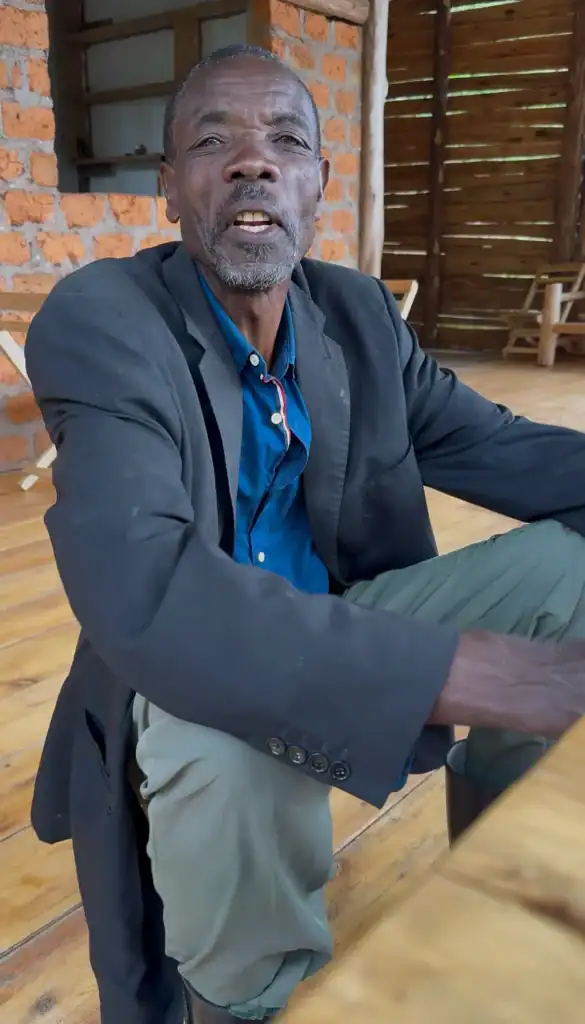
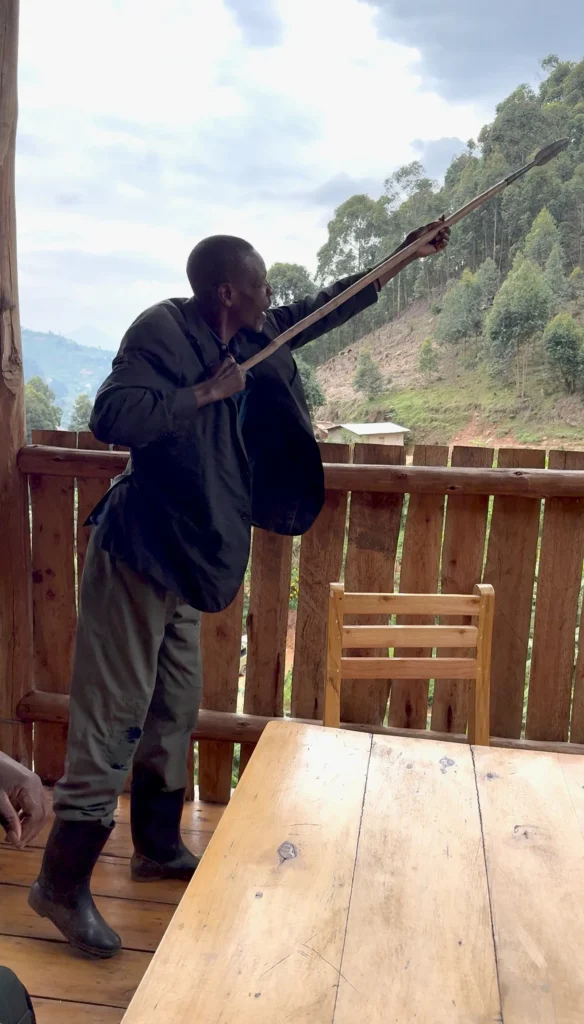
My family needed food. I needed money,” he explained. “When your children are hungry, you do what you must to feed them.
The forest was his lifeline; the only resource he could access in a place where options were limited, and poverty was relentless. Poaching wasn’t driven by malice; it stemmed from desperation.
Everything changed when Bwindi gained protected status and anti-poaching laws were rigorously enforced. Suddenly, what was once a matter of survival became illegal. But the story didn’t end there, and that’s what matters most.
Instead of just criminalizing poachers, the government and conservation groups began investing in local communities. They created alternative livelihoods, providing training, jobs, and support. They shifted their focus from punishment to partnership, seeing people not as the problem but as the solution.
For this man, his shift made all the difference.
Today, he no longer takes from the forest; he protects it. He speaks with quiet pride about his role as a conservationist and about making sure the land he once depended on for survival stays intact for future generations. His relationship with Bwindi has shifted from one of necessity to one of responsibility and even reverence.
I understand the forest now,” he said. “I know what we could lose if we don’t protect it.
Listening to him, I realized a truth often overlooked in conservation talks: people are rarely enemies of nature. Most are just trying to navigate impossible choices without better options.
Real, lasting change doesn’t come from enforcement alone; it comes from offering dignity, support, and inclusion. It stems from recognizing that the people who live closest to the land have the most significant stake in its future.
And sometimes, the strongest defenders of a place are those who once had no choice but to take from it.
His story reminds us that transformation is possible, not only for forests but also for people. And that conservation, at its best, isn’t about keeping people out; it’s about welcoming them in.