
Mi Bella Mondo

Meet the Gentle Giants

Fast Facts About Mountain Gorillas


Mountain gorillas are among the world’s most endangered species and among our closest genetic relatives. Here’s what makes them so remarkable:

Where They Live


Mountain gorillas are only found in three countries: Uganda, Rwanda, and the Democratic Republic of Congo (DRC). They inhabit high-altitude forests between 1,160 and 2,607 meters above sea level, making their habitat as rare as the animals themselves.

Population & Conservation Status

Once critically endangered with fewer than 300 individuals remaining in the 1980s, mountain gorillas have made a remarkable comeback thanks to devoted conservation efforts. Today, there are over 1,000 mountain gorillas in the wild, with more than half living in Uganda’s Bwindi Impenetrable National Park and Mgahinga Gorilla National Park.

Family Structure

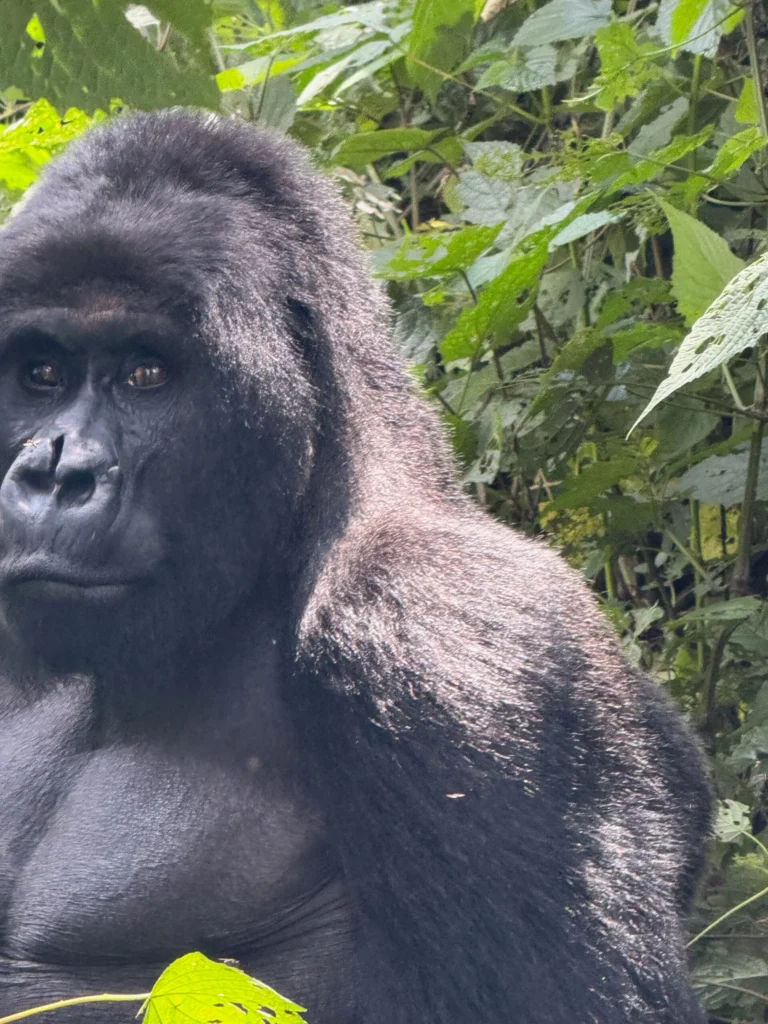
Mountain gorillas live in family groups led by a dominant silverback—an adult male named for the distinctive silver hair on his back. Families typically include one silverback, several females, and their young. When young males mature, they often leave to start their own families or live alone until they can attract females.

Daily Life

Gorillas are herbivores that spend most of their day eating leaves, shoots, stems, and sometimes fruit. They can consume up to 40 pounds of vegetation each day. The rest of their time is devoted to resting, grooming, and playing—especially the young ones, who tumble and wrestle just like human children.

Communication


Mountain gorillas communicate through a variety of vocalizations, including grunts, roars, and screams. They also use body language and facial expressions. That rumbling sound you might hear? That’s their way of expressing contentment while eating—basically a gorilla’s version of “this is delicious.”

Threats & Protection


Despite their recovery, mountain gorillas still face threats from habitat loss, disease (they’re vulnerable to human illnesses), and poaching. Strict conservation efforts—including limited tourism, health checks for visitors, and armed ranger patrols—have been vital to their survival.

Intelligence & Emotion


Gorillas display remarkable intelligence and emotional depth. They form strong family bonds, grieve their dead, and show affection through grooming and play. When you look into a gorilla’s eyes, you see something unmistakable: recognition, curiosity, and a presence that feels deeply familiar.

Why They Matter

Mountain gorillas are conservationists’ “umbrella species.” Protecting them means safeguarding entire ecosystems—the forests, the rivers, and the countless other species that share their habitat. When gorillas thrive, so does the biodiversity around them.

And perhaps most importantly, they remind us that we’re not alone on this planet. We share 98% of our DNA with these gentle giants. Their survival is connected to ours.


Scroll to Top