Mi Bella Mondo

Cristy S

The Ultimate Guide to Exploring Croatia

EXPLORE CROATIA                                  Your Comprehensive Destination Guide At a Glance Total area: 21,851 square miles Capital: Zagreb Main Religion: Predominantly Catholic (79%) Population: 4 million people Official Language: Croatian, but English is widely spoken. Currency: Euro Banking Hours: M-F 09:00-16:00 and Sat 08:00-13:00 Telecommunication: Country code: +385 Climate:Croatia has two central climate regions: Mediterranean along the Adriatic coast and continental in the interior. Mediterranean: The Adriatic coast has hot, dry summers and cool, rainy winters. Continental: The interior has hot summers and cold, snowy winters. Croatia’s climate and geomorphology have created several ecosystems, making it one of the most biodiverse countries in Europe. Travel Requirements Visa: U.S. and Canadian citizens traveling to Croatia do not require a visa for stays of up to 90 days within 180 days. ​However, starting in mid-2025, travelers must apply for an ETIAS (European Travel Information and Authorization System) authorization before entering the European countries. Read our travel tips here for detailed and up-to-date information on travel requirements. Tourist registration: All tourists staying in Croatia need to register at a local tourist office. Non-EU citizens will also be automatically registered with the police.  This is the reason why during the check-in process at any hotel or private accommodation, you’ll be requested to show your passport (the host makes a copy of your passport) or an ID card. VAT Refunds: The standard Croatian VAT rate is 25%, with two reduced rates of 13% and 5% for specific categories of goods and services. Transportation Options Main Airport: There are nine international airports in Croatia. Zagreb Airport (ZAG): Croatia’s main airport, which is the busiest and best option for visiting the northern part of the country.  The terminal can accommodate up to 5 million passengers, but there are plans to expand it to 8 million. Dubrovnik Airport (DBV): Croatia’s second busiest airport, located in Čilipi and named Ruđer Bošković Airport in 2023. It has the longest runway in Croatia and can handle two million passengers per year. Split Airport (SPU): The airport has a refurbished original terminal for some international departures and new areas for check-in, domestic departures, and arrivals. Pula Airport (PUY): Located near the town of Pula and serving as an important air traffic hub. Zadar Airport (ZAD): Located in the middle of the Adriatic coastline. Rijeka Airport (RJK): Located near Omišalj on the island of Krk. Osijek Airport (OSI): The only airport in eastern Croatia, located about 12 miles (20 km) from Osijek. Brač Airport: An island airport with only domestic flights. Mali Lošinj Airport: Located on Mali Lošinj Public Transport:  Buses: The most common and affordable way to travel in Croatia is by bus, which connects large towns and small villages, and some routes run at night. Bus stations are usually located in town centers or within walking distance, and tickets can be purchased online, at the station, or from the driver. Most buses also allow bicycles for an extra fee. Buses are the most popular form of public transportation in cities like Zagreb or Dubrovnik. Ferries: Public ferries, private boat charters, and small-ship cruises are all options for traveling by sea. However, winter months (November to April) can limit transportation between islands, as many services are closed. Uber is another option and is the main ride-sharing service operating in the country. Lyft is currently not available in Croatia. Taxis in Croatia are an easy way to travel around large cities at your own pace. They are heavily regulated across the country, and meters are standard. Renting a Car: Generally speaking, a current driver’s license from your nation of origin suffices. Some rental cars require an international driving permit (IDP). Before you leave home, check with the rental company. Make sure your rental includes the entire range of insurance coverage. Note: If you plan the border to Slovenia or other countries, the country legally requires an international driver’s permit for non-EU nationals. The authorities strictly enforce this restriction, imposing heavy fines. When we cross the border, people often ask for it. Driving in Croatia: Driving is the best way to see Croatia. We took detours and many stops along the way to explore interesting sights during our road trip. Croatian roads are generally well maintained. A recently constructed multi-lane motorway links Ploce in the south with Zagreb and Rijeka. In addition to highways, there are state highways that are free of tolls. These well-maintained roads have one lane per way; however, seaside route D1 is winding. Be cautious on narrow coastal roads and in mountainous areas. For cross-border travel to nearby countries, use vignettes if you are traveling to Slovenia, Austria, Hungary, Slovakia, the Czech Republic, Bulgaria, Romania, Switzerland, and Norway. These countries have similar systems in place, where using their highways and expressways necessitates the purchase of a vignette. There are signs in several languages indicating that vignettes are required at every border crossing. As soon as you get on an expressway or motorway, signage will appear. Keep in mind that the vignette is associated with the car’s license plate number, necessitating the purchase of a new one if you switch cars while traveling. Parking: Parking is generally free in Croatia; however, it can be challenging in city centers. City centers are typically car-free zones. Look for designated parking lots or garages. The majority of private homes and hotels offer free parking. If your lodging is located in the city center, check if parking is available before making a reservation. Parking is expensive in Dubrovnik. Travel Safety Tips Croatia is a safe country with minimal street crime and almost no violence. However, always use precaution. Take care of your belongings, especially when using public transport.  Land mines are still present in remote areas. Best Time to Visit Croatia The best time to visit Croatia largely depends on what you want to experience, but generally, the ideal time is between May and October.   Late Spring (May to June): This is one of

The Ultimate Guide to Exploring Croatia Read More »
Our Family Road Trip Through the Beautiful Balkans

  14-Day Balkan Road Trip Itinerary   Day 1-2: Zagreb, Croatia (stop in Slovenia) Day 3: Rovinj, Croatia Day 4: Plitvice Lakes National Park, Croatia Day 5: Sibenik, Croatia Day 6-7: Split, Croatia Day 8: Mostar, Bosnia & Herzegovina Day 9-10: Kotor, Montenegro Day 11-14: Dubrovnik, Croatia Our journey through the Balkans was nothing short of extraordinary. The lifelong memories created and the unique bond we formed while traveling together are timeless treasures that I will always hold dear in my heart. Discovering the grandeur of our beautiful world frequently resulted in the most memorable experiences. With every mile, a new journey awaited discovery. We enjoyed the excitement of unexpected detours, which frequently led to the encounter of hidden gems. On the open road, we choose our pace, resulting in the ideal balance of excitement and freedom. Balkan is a Turkish word for mountains. It originates from the Ottoman Turkish term Balkan, meaning ‘a range of wood mountains’. This pertains to the area of the Balkan, Rhodope, Dinaric Alps, and the Carpathian Mountains. The Balkans is one of Europe’s most underestimated regions. While travelers have explored Western European countries like France, Spain, and Germany, many remain unaware of this remarkable destination that offers a distinctive, unexplored experience for seasoned travelers. These are all the countries that have full or partial territory in the Balkan peninsula: Turkey, Greece, Bulgaria, Macedonia, Albania, Kosovo, Montenegro, Serbia, Bosnia and Herzegovina, Croatia, Slovenia, Romania, and Italy (less than 0.5% located in the Balkans). The Balkans, a region of resilience and renewal, is a captivating mosaic of diverse cultures and histories. It served as a bridge between East and West, with layers of influence from ancient Greece, Rome, and the Ottoman Empire. The 19th-century independence movements, following centuries of Ottoman rule, gave birth to new nations with distinct languages, religions, and traditions, each adding a unique thread to this rich tapestry of identities. In the 20th century, Yugoslavia brought a vision of unity to the Balkans. Its dissolution in the 1990s, though challenging, also sparked a powerful rebirth. It led to the emergence of individual nations, each embracing its own identity and heritage while fostering connections, a testament to the resilience and optimism of the region. The Balkans are located in Europe’s easternmost southern peninsula between the Adriatic Sea, the Mediterranean Sea, and the Aegean and Black Seas. The region is home to a variety of ethnic, religious, linguistic, and national groups. Our road trip through the Balkans offered firsthand experience of this resilience. Though we could not visit every country in such a short time, each place we explored reflected the region’s energetic character. We wandered through these historic cities and serene landscapes, where the past coexists with a promising, modern future. This journey gave us a genuine appreciation for the spirit of the Balkans and the optimism that carries these nations forward. Zagreb, Croatia Our Balkan road trip commenced in Zagreb, a city that is both culturally and historically significant in Croatia. We spent a day and a half exploring the tranquil alleyways, indulging in the local cuisine, and soaking up the vibrant ambiance of its buzzing squares. The following day, we eagerly collected our rental car to start our journey on the open road. Slovenia Our first stop was in Ljubljana, Slovenia. Our quick stop gave us a delightful sneak peek of Slovenia’s lively capital. We wandered through picturesque streets and enjoyed a quick, delicious lunch in the heart of the city. Energized and eager to explore further, we headed to Lake Bled, where the pristine water and picturesque island views provided an unforgettable afternoon amidst the Alps. We spent some time strolling around the lake and admiring the scenery; the tranquil environs were a welcome respite from the hustle and bustle of travel. Rovinj, Croatia As we returned to Croatia and proceeded toward the Istrian Peninsula, the landscape underwent a significant transformation. This striking region, renowned for its picturesque villages and captivating coastline, was welcoming. With its stunning vistas of olive orchards, vineyards, and verdant Mediterranean vegetation, the Istrian Region established the tone for our next stop. We often paused along the way, enjoying the lovely scenery and breathtaking sea views. We had forgotten how much time had gone on the drive to Rovinj. We stayed in Rovinj, Croatia, for the night, where the cobblestone pathways quickly pulled us in. Our day in Rovinj was a perfect blend of exploring winding streets, soaking in the coastal charm of its colorful old town, and relaxing by the Adriatic Sea. We watched the sunset and sunrise over the charming fishing boats in the harbor. The next day, we left the enchanting streets of Rovinj behind. We made our way to Pula, where we marveled at the city’s ancient Roman amphitheater. We explored its historic charm before continuing our journey. The travel to Pula proved to be quite the experience! What we thought would be a simple diversion quickly got more challenging. However, these problems just added to the excitement of our travel! Plitvice National Park Our next destination was the beautiful Plitvice National Park, a UNESCO World Heritage site known for its waterfalls and cascading lakes. We spent the day wandering the park’s lovely walks, admiring the turquoise oceans and lush landscape. As we left the beautiful Plitvice behind and proceeded toward the beach city of Sibenik, we detoured again to the little village of Smiljan. From a scientific standpoint, this place is noteworthy. Nikola Tesla, the famous inventor whose groundbreaking work in electricity and electromagnetics forever changed the world, was born in Smiljan. Šibenik, Croatia Continuing, the next stop was at Šibenik, a beach town with ancient structures and a fortress offering panoramic sea views. Split, Croatia After a night in Šibenik, we arrived at Split, Croatia’s second-largest city and home to the ancient Diocletian Palace. Wandering through its numerous labyrinths transported us back to the Roman period, witnessing a magnificent fusion of the past and contemporary.  A short drive away, the

Our Family Road Trip Through the Beautiful Balkans Read More »

Uncovering the Magic of Ljubljana and Lake Bled

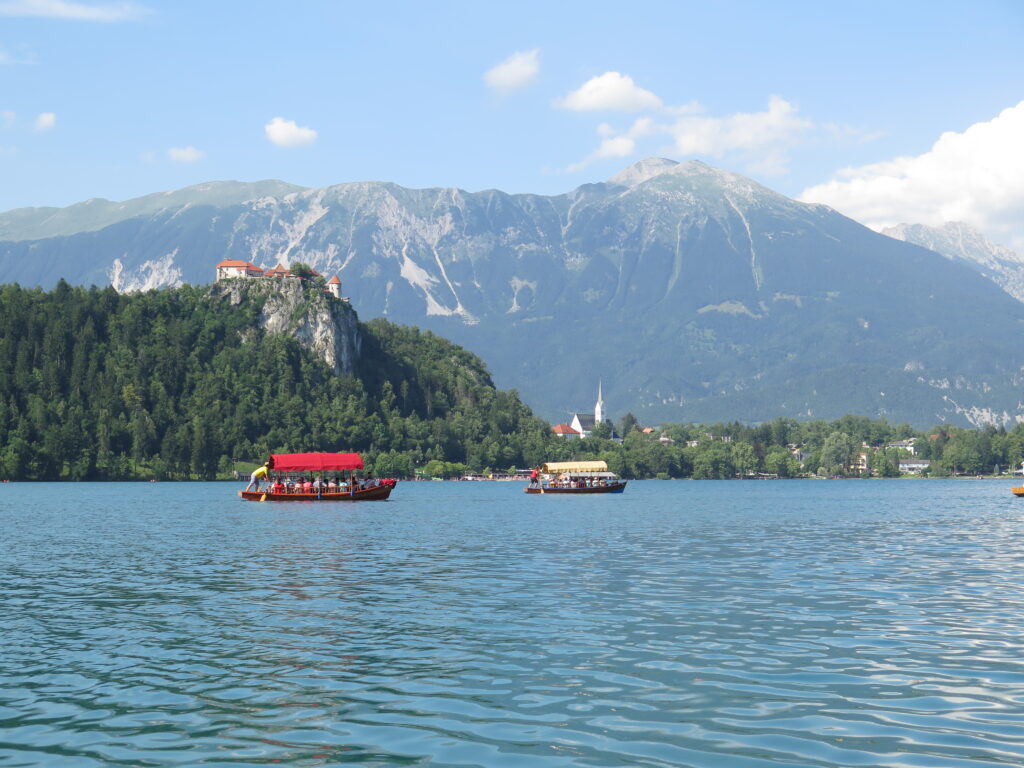
Slovenia is a small country but topographically diverse. The country encompasses portions of four major European geographic landscapes—the European Alps, the karstic Dinaric Alps, the Pannonian and Danubian lowlands and hills, and the Mediterranean coast. The distance from Zagreb is 87 miles (140 km). It takes 1.5–2 hours to drive, depending on traffic and border crossing time. As you get closer to the Croatian-Slovenian border, make sure you have your passport and any other necessary travel documents ready. In Slovenia, you’ll need a vignette (toll sticker) to use the highways. You can purchase the vignette at petrol stations near the border or online in advance. It is advisable to check any travel updates or requirements before crossing the border. The scenery began to change as soon as we crossed the border. The drive through Slovenia was scenic, with rolling hills, lush greenery, and the Julian Alps visible in the distance. We passed through small towns and villages; the road signs were clear, and the route was straightforward. Exploring Slovenia’s Enchanting Capital, Ljubljana The drive to Ljubljana, Slovenia’s capital, was smooth and picturesque, filled with views of rolling hills and serene countryside. The riverside promenades, pastel-colored buildings, and the dragon statues guarding the Dragon Bridge instantly charmed us upon our arrival in the city. The capital city has a pedestrian-friendly old town, a vibrant cultural scene, and beautiful architecture. Slovenia’s charming capital, Ljubljana, is nestled between the Alps and the Adriatic Sea. Winding cobblestone streets led to colorful buildings with red-tiled roofs and intricate facades. In the heart of the city, the iconic Triple Bridge spanned the gentle Ljubljanica River, where riverside cafes bustled with locals and travelers alike. The medieval Ljubljana Castle crowned the city from atop a hill, offering sweeping views of the old town below. Known for its green spaces and sustainability, Ljubljana buzzed with life as cyclists and pedestrians filled the streets, exploring markets, art galleries, and cozy bistros. Whether sipping Slovenian wine or visiting the lively Central Market, Ljubljana’s charm left an unforgettable impression. Ljubljana, A Perfect Lunch Stop! After a relaxing walk, we headed to Manna Restaurant for lunch. Manna Restaurant is renowned for its blend of Slovenian flavors and modern gastronomy, all within a charming and inviting atmosphere. For more details about this restaurant and to explore our full culinary experience, Check out our Food Guide for Manna Restaurant.   Soak up the sun in Lake Bled! Lake Bled is a dreamy Slovenian gem cradled by lush forests and rugged peaks. Its emerald-green waters reflected the dramatic Julian Alps, with a tiny, picturesque island at its center crowned by the iconic Church of the Assumption. Rowboats glide across the serene lake with the sound of ferrying visitors who ring the church bell, a ritual believed to bring good luck. Overlooking the lake from a cliff is Bled Castle, an ancient fortress offering panoramic views that feel straight out of a storybook. Strolling the lakeside path or savoring a slice of Bled’s famous cream cake at a cozy café, visitors find themselves captivated by the lake’s tranquil beauty and fairytale allure. We hung out and soaked up the serene beauty of our surroundings before driving onward to Rovinj. Author: CristyPhoto Credit: Nathan Latest Post All Posts Blog The Maha Kumbh Mela: A Journey of Faith and Endurance   A Gathering Like No Other The Maha Kumbh Mela is one of the most significant cultural festivals in the… The Maha Kumbh Mela Day 1: Immersed in the Sea of Humanity   First Day of the Maha Kumbh Mela The official first day of the Maha Kumbh Mela began long before… The Maha Kumbh Mela Day 2: Our Journey Beyond the Sangam   The Nearest Sangam Following our strenuous walk of over 25 kilometers the previous day, every muscle in our legs… The Maha Kumbh Mela Day 2: A Sacred Dip and A Holy Parade   An Unforgettable Experience at the Maha Kumbh Mela   Reaching the Sangam The Sangam is the revered junction of… Serendipity in Jaipur: A Journey Back in Time   My Journey Back in Time I took the night bus from Udaipur to Jaipur, leaving behind the city’s shimmering… Jaipur: A City of Temples, Thalis, and Timeless Chaos   Temples, Thalis, and Timeless Chaos When we arrived in Jaipur, the Pink City, it felt like stepping into a… Savoring Jaipur: The Ultimate Rajasthani Thali Experience Exploring Jaipur’s Best Thali Experiences Amid Jaipur’s bustling streets and majestic palaces, the thali custom unites the essence of Rajasthan’s… Daily Turmoil: The Unchanging, Timeless Chaos of Jaipur Despite Jaipur’s advancements, luxury malls, and modern conveniences, Jaipur still clung to its age-old chaos. Crossing the Street Crossing the… When Plans Fall Apart: Embracing the Unknown in India My Unplanned Trip to India I had planned an ambitious trip to five countries with a coworker I barely knew….

Uncovering the Magic of Ljubljana and Lake Bled Read More »

Zagreb’s Historic Charm: A Stroll Through Time in Croatia’s Capital

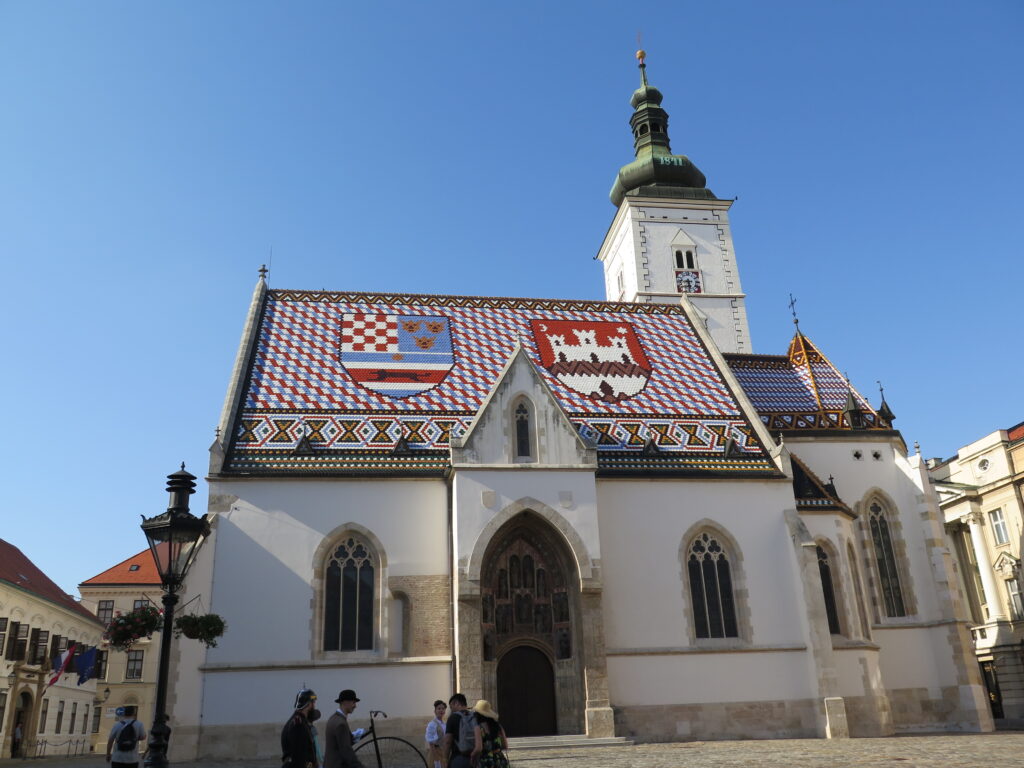
Discover Zagreb Zagreb, the capital of Croatia, is a city that uniquely blends history, culture, and outstanding food. The historic area’s old-world charm meets the energy of a modern city, creating a forward-looking appeal that is sure to pique your interest and excitement. Immerse yourself in the beauty of Upper Town’s streets, vibrant frontages, and cobblestone walkways. Admire the unique tiled top of St. Mark’s Church and take a stroll along the serene Strossmayer Promenade for breathtaking city views. This pedestrian-only zone is a picturesque place that will surely inspire you. As you meander about the old town, it is clear that Zagreb has the highest per capita museum count among all the cities worldwide. For those who enjoy museums, Zagreb is an ideal destination. Comprising around 30 museums with more than 3.6 million exhibits, the city satisfies any interest. From more sophisticated, interactive scientific facilities teaching guests about the newest discoveries to more traditional art galleries with pieces by local artists, there is something for everyone. One of the numerous odd museums offering a graphic view of a person’s broken love connections is the Museum of Broken Relationships. The museum displayed personal artifacts with a poignant narrative: stiletto heels, bridal dresses, furious dolls, an ax, and espresso machines. Most people have experienced the agony of love and loss at least once. It is an intriguing place to visit, especially on a Sunday afternoon when most museums remain closed. Take a break in the afternoon and treat yourself to a cup of Croatian coffee and a slice of kremsnita, a delicious custard cream cake, from one of the charming cafés that line the streets. As twilight falls, head to the bustling Tkalciceva Street, known for its numerous bars and restaurants. Here, you can enjoy a classic dinner of pasta, shellfish, or roasted meats, accompanied by a sip of local wine or craft beer. The city’s cuisine is a delightful fusion of modern dishes and classic Croatian food that will leave you eager to explore more of Zagreb’s culinary scene. Check out Dolac Market and Food Guide for more information on Croatian food.  The next day, our morning began with a trip to Dolac Market. When we arrived at 7:00 am, the market showcased a variety of unique goods. Rather than buying, we used this chance to experience the local lifestyle. Early in the morning, neighbors gathered here to buy fish, pork, and fresh produce. Shoppers haggled for reductions while stores yelled rates, creating a humming market. We picked up the rental vehicle in the afternoon to prepare for our road trip. Conveniently situated in the new town, the pickup location was easily accessible. It is important to note that if you decide to drive cross-border, you must purchase a green card from the rental company. An accident or other incident could be problematic without a green card. In Slovenia, buy the vignette online when you pick up the rental; you need the license plate number, so you cannot purchase beforehand. As of 2023, the vignettes were all electronic. Make sure the rental company allows car entry into your destination countries. Zagreb is the ideal mix of cultural discovery and gastronomic delight because a day there reflects Croatian warmth and charm. We are ready to embark on our journey to Croatia. Rovinj will be the next stop! Author: CristyPhoto Credit: Nathan Latest Post All Posts Blog The Maha Kumbh Mela: A Journey of Faith and Endurance   A Gathering Like No Other The Maha Kumbh Mela is one of the most significant cultural festivals in the… The Maha Kumbh Mela Day 1: Immersed in the Sea of Humanity   First Day of the Maha Kumbh Mela The official first day of the Maha Kumbh Mela began long before… The Maha Kumbh Mela Day 2: Our Journey Beyond the Sangam   The Nearest Sangam Following our strenuous walk of over 25 kilometers the previous day, every muscle in our legs… The Maha Kumbh Mela Day 2: A Sacred Dip and A Holy Parade   An Unforgettable Experience at the Maha Kumbh Mela   Reaching the Sangam The Sangam is the revered junction of… Serendipity in Jaipur: A Journey Back in Time   My Journey Back in Time I took the night bus from Udaipur to Jaipur, leaving behind the city’s shimmering… Jaipur: A City of Temples, Thalis, and Timeless Chaos   Temples, Thalis, and Timeless Chaos When we arrived in Jaipur, the Pink City, it felt like stepping into a… Savoring Jaipur: The Ultimate Rajasthani Thali Experience Exploring Jaipur’s Best Thali Experiences Amid Jaipur’s bustling streets and majestic palaces, the thali custom unites the essence of Rajasthan’s… Daily Turmoil: The Unchanging, Timeless Chaos of Jaipur Despite Jaipur’s advancements, luxury malls, and modern conveniences, Jaipur still clung to its age-old chaos. Crossing the Street Crossing the… When Plans Fall Apart: Embracing the Unknown in India My Unplanned Trip to India I had planned an ambitious trip to five countries with a coworker I barely knew….

Zagreb’s Historic Charm: A Stroll Through Time in Croatia’s Capital Read More »

Unforgettable Moments in Rovinj and Pula on the Road

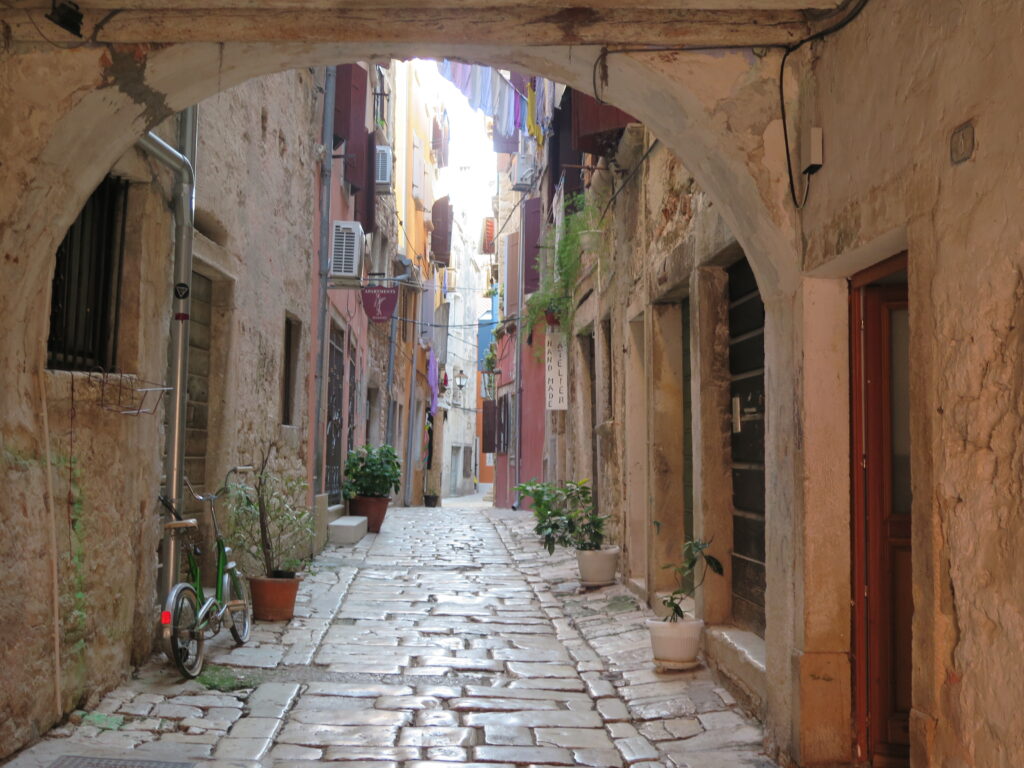
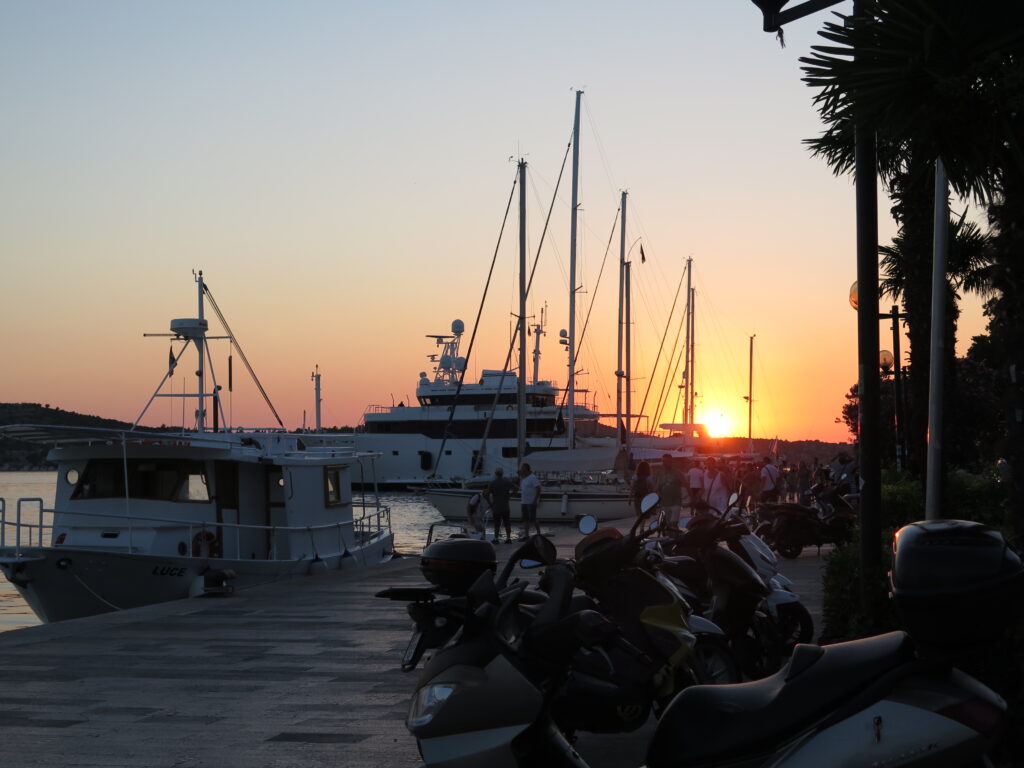
Rovinj: The Picture-Perfect Harbor Town The allure of Rovinj remained irresistible, even amid the influx of tourists. Its unique architecture in the Italian style truly sets it apart from other Croatian locations. It feels like you’re in Italy! As we drove along the winding roads to Rovinj, we encountered hill towns adorned with campaniles and vineyards backed by stone walls. This verdant region, which evokes memories of Tuscany, is a national treasure known for its flavorful truffles, verdant olive oils, and rustic lodgings. It’s difficult to believe that these hills could conceal a sandy beach. Rovinj is a pedestrian paradise because of its small size, simple layout, and car-free peninsula. For many people, the nicest city in Istria, if not all of Croatia, is Rovinj. I made reservations at La Puntulina for a 19:00 table overlooking the sea. The restaurant is in an ideal location to take in the dusk. We arrived around 20:30, missing the sunset and our reserved table as a result of many diversions on the way. When we arrived, everyone was quite hungry, and the owner was kind enough to offer us another table, which was not in view since ours had already been taken. Following our meal, the proprietor showed us around the patio and gave us free drinks to enjoy while admiring the view. The food and the customer service are excellent! Check out our Food Guide for La Puntulina. The historic town of Rovinj comes alive with flickering lights that create a cozy and welcoming atmosphere. We wandered through the streets of Rovinj at about midnight on a wonderful summer night with a pleasant wind. We gave in to the temptation of sampling different gelato flavors at a few gelaterias for a midnight snack before heading back to our apartment! We enjoyed the thick and creamy gelato while indulging in a variety of well-known and unusual flavors! The next day, Nathan and I went on an early-morning tour of the city. There’s something remarkable about waking up early and venturing out into the empty cobblestone streets when everyone else is fast asleep. The vibrant houses in Rovinj’s overlooking the river enthralled us as we strolled through the ancient town. Shuttered restaurants, pubs, and art galleries lined the steep pedestrian streets. We took in the waterfront promenade as we strolled down the beach. The harbor is full of smaller leisure boats and fishing vessels. We saw the fishing vessels arriving with their morning haul. The tower of St. Euphemia Church dominates the old town, perched on a hilly peninsula with a lovely coastal background. We found a place to see the dawn while unwinding, taking in the peaceful surroundings, and listening to the waves before the city woke up. It was a serene moment in our wonderful world! Rovinj has a rightful reputation as one of the most beautiful places in Croatia because of its breathtaking beauty. We made a quick trip to Pula and had lunch in Rijeka. It turned out to be quite the adventure driving to Pula! As we explored Pula, what we had thought would be an effortless route turned into quite the battle! Pula: A Step Back in Time Istria is the largest Croatian peninsula and also the largest peninsula in the Adriatic Sea. Pula is Istria’s main city and one of the oldest Croatian cities on the coast. The Istrian peninsula forms its base. It is known as Little Italy because it was under Italian rule for many years. With its bustling atmosphere and welcoming residents, the town provides a distinct combination of history and contemporary. The well-preserved Roman theater is one of Croatia’s most renowned landmarks. It is a major tourist site and best exemplifies Pula’s distinct character. This arena is the world’s sixth-biggest amphitheater. Emperor Flavius completed its construction in the first century AD. It is more than simply a remnant from the past; it is a living witness to Pula’s rich history. The Pula Film Festival, which had a capacity of 23,000 at its peak, was only one of several events held there. Pula’s film festival is one of Europe’s most legendary, welcoming famous luminaries like Elizabeth Taylor, Richard Burton, and Orson Welles. The amphitheater’s grandeur and nostalgia take visitors to another time, leaving an unforgettable impression on their recollections. After exploring the city and the Roman amphitheater, our eagerness to discover every hidden corner led us to wander a bit too far. We somehow lost our way and ended up on the roof of a nearby building. It was a humorous and unexpected situation, but with no other way down, we had to make a daring leap from the roof to get back to the street. It added a thrilling twist to our day and left us with a memorable narrative! Fun Facts: Pula Trivia Beginning in October 1904, author James Joyce lived in Pula for five months, serving as an English teacher at the Berlitz language school for Austrian officers. Despite referring to Pula as a “naval Siberia,” it is believed that he wrote part of his debut novel, Stephen Hero, there and worked on his seminal work, A Portrait of the Artist as a Young Man. A bronze statue of James Joyce now stands at Uliks (Ulysses) cafe in Pula. The Italian poet Dante Alighieri referenced Pula in his Divine Comedy. Rijeka: Lunch at Konoba Nebuloza We had lunch at cozy little Konoba, a traditional Croatian tavern in Rijeka. It is one of those rustic spots where locals gather and hang out. The promise of fresh seafood drew us in. The aroma of garlic and olive oil filled the air, blending with the briny freshness of the day’s catch on display. We ordered a mix of grilled octopus, tender calamari, and shrimp risotto, each dish more flavorful than the last. The simplicity and freshness of the ingredients excelled in every bite. The konoba is next to the Rječina Canal, and the side room has big windows with a wonderful view of

Unforgettable Moments in Rovinj and Pula on the Road Read More »

The Magic of Plitvice: Visiting Croatia’s Most Stunning National Park

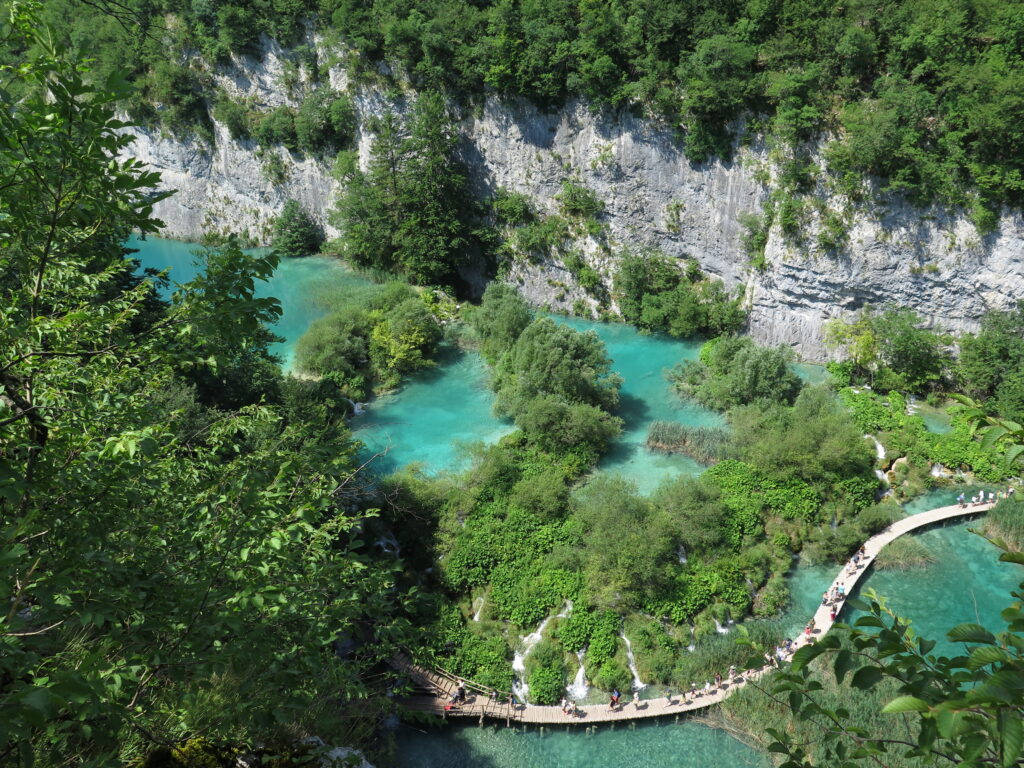
A Day at Plitvice National Park Plitvice Lakes National Park, Croatia’s oldest and largest national park, is a sprawling 114.6-kilometer area of pristine, untouched beauty. Its unique allure, often hailed as one of nature’s most remarkable masterpieces, is a must-see for any nature enthusiast. The park shares its borders with Bosnia and Herzegovina. The Plitvice Lakes include sixteen emerald-blue crystalline lakes interconnected by over ninety cascades and waterfalls. Two lakes, Upper Lakes and Lower Lakes, physically divide the park into two halves. The dolomite formations constitute the twelve Upper Lakes. There are wooden walkways and bridges that provide stunning views as they traverse the lakes and their banks. There are supplementary transit alternatives inside the park, such as electric boats and a shuttle bus. We arrived just before the park’s opening at 6:45 a.m. and found Plitvice Lakes National Park to be serene. The absence of the usual crowds allowed us to fully immerse ourselves in the park’s natural beauty, a rare and peaceful experience.  The Lower Lakes were our first destination, with their stunning azure waters and cascading waterfalls. Each step unveiled fresh insights. As we walked down the paths, the harmonious convergence of the lush grass and the clear water struck us. The calming sound of water cascading over rocks joined us throughout our morning stroll.  The paths were simple to navigate, and excellent signage guided us to stunning viewpoints. Each walk provides breathtaking views of the park’s landscapes. The tranquil beauty and pristine purity of the landscape, which are awe-inspiring, clearly demonstrate Plitvice Lakes’ designation as a UNESCO World Heritage Site. The confluence of the lakes’ blue, green, and gray tones produces a striking visual impression. Waterfalls create lakes with naturally occurring limestone walls of grass, algae, and bacteria. The travertine walls ascend about 0.4 inches a year due to algae and bacteria deposition on the pre-existing sections. Most lakes are located in the upper group. Situated between two mountain ranges, the park exhibits a unique temperature zone allowing for this beautiful space to exist. There are several scenic viewpoints along the trails, each providing a distinct perspective on the park’s natural beauty. We often stopped to appreciate the stunning landscape, capture pictures, and unwind in the tranquil surroundings. The Upper Lakes were equally magnificent, with a network of interlinked ponds and smaller waterfalls. We traversed one of the vast lakes by boat at about midday. The forest seemed more idyllic on the lake’s reflected, smooth surface.  As we continued our hike, we discovered more hidden gems across the park. Uncovering trails leading to less-visited viewpoints gave us a sense of exclusivity in the park. We were fortunate to witness numerous small species during our journey, and the diversity of flora and wildlife was truly remarkable. The park is home to around 1,265 plant species, of which 75 are indigenous. It has renowned fauna, including brown bears, wolves, lynxes, and the European wildcat, while its 55 species of orchids enhance its perennial allure. At least 321 kinds of butterflies fill the park with vibrancy and vitality. The lakes exhibit beauty all year! Even though we were tired, we always appreciated Plitvice National Park’s magnificent surroundings. Time seemed to stop, enabling us to rediscover the glories of our fantastic planet and reconnect with nature in its most unadulterated state!  Which route to pursue?  There are seven distinct rails in the Upper and Lower Lakes. The duration and distance required vary. The quickest trail is around two hours and covers many attractions inside the park. The extended excursion, possibly lasting up to eight hours, navigates the upper and lower lakes. The park has two entrances. Entrance 1 is ideal for anyone seeking a magnificent view of the Great Waterfall and access to the lower lakes. Entrance 2 caters to those seeking a more circular path around the lower and upper lakes, potentially resulting in less early traffic. For a one-day park visit, Program B is best. The Lower Lakes serve as the starting point for the excursion, commencing at Entrance 1. This trip encompasses several iconic monuments in Plitvice and offers a comprehensive overview of the park’s other attractions. This is the option we took. Tips on visiting Plitvice Lakes: If you don’t have a ticket, go to gate 2 and buy tickets from the little booth across the wooden bridge. Avoid buying them in the parking lot because the lines are long. To save time, purchase tickets online in advance. Take plenty of water and enjoy at your own pace. Check the boards to determine your route, but anticipate that it may take slightly longer than indicated. The lakes are off-limits to swimming, but visitors can rent a small rowboat. You must always carry your entry ticket. You can use the tickets on both the ferry and the rail. The websites have timetables that may vary with the seasons. The best time to visit Plitvice Lakes is early morning or afternoon, with fewer tourists. Arrive early during the summer months (June–August) to avoid the crowds. The park opens at 7:00 a.m., and the tour buses arrive at 9:00 a.m.  Dogs are welcome in the park, but they must always be on leash. Wear comfortable walking shoes and bring waterproof gear if visiting during the rainy season. Explore the Park Hiking Trails: Select from several well-marked trails that range from 2 to 8 hours in length. Boat Ride: For breathtaking views, take a boat across Lake Kozjak. Waterfalls: Take advantage of the Great Waterfall (Veliki Slap), the highest in Croatia. Visit the Plitvice National Park website for more information. Author: CristyPhoto Credit: Nathan Latest Post All Posts Blog The Maha Kumbh Mela: A Journey of Faith and Endurance   A Gathering Like No Other The Maha Kumbh Mela is one of the most significant cultural festivals in the… The Maha Kumbh Mela Day 1: Immersed in the Sea of Humanity   First Day of the Maha Kumbh Mela The official first day of the Maha Kumbh Mela began

The Magic of Plitvice: Visiting Croatia’s Most Stunning National Park Read More »

One Day in Šibenik: The Best Way to Experience the City

Sunsets and Strolls in Šibenik Located on a rugged coastline and shielded by stone fortifications, the Šibenik’s infrastructure reflects the enduring stone architecture. Šibenik emanates a serene ambiance, markedly different from the throngs of visitors in other Croatian locales. Tourists do not inundate the city’s most renowned sites, and the tempo of life is leisurely here. This tranquil environment will evoke a sense of comfort and hospitality. A church operated by and for the community in the liberated town of Šibenik! The town’s center is home to St. James Church. From 1431 until 1536, builders erected it completely in stone without the use of mortar. Being the only cathedral in Europe constructed this way, it has attained a position on the UNESCO World Heritage List. The church’s flanks include unique human effigies and lion heads, representing the inhabitants of the town at the time of its construction. In Šibenik, this groundbreaking artwork originally recognized “ordinary” folks. Significant historic edifices flank the town center, the Square of the Republic of Croatia, making it an excellent location for a promenade. The deepest areas of Šibenik include a wealth of distinctive architecture and a profound history that will capture you. The city, first seeming mundane, unveils its remarkable allure upon closer examination. Following a promenade around the cathedral, we had a delicious Croatian meal at Stari Grad, Obala Dr. Franje Tumana 7, 22000, Šibenik, Croatia. The exquisite amalgamation of tastes in Croatian cuisine only surpassed the breathtaking vista of the Adriatic Sea, glistening beneath the golden tones of sunset. Check out our Food Guide on Croatian cuisine. After dinner, we strolled along the coast, appreciating the serene landscape undisturbed by crowds of tourists. We also uncovered the town’s premier ice cream. Visiting Šibenik offers a refreshing alternative to the congested tourist destinations in other prominent Croatian towns. Our quick pause on our Balkan journey rendered Šibenik one of my favorite hidden treasures in Croatia. Šibenik captured my attention as a devoted Game of Thrones enthusiast. Check out ‘Set-Jetting in Croatia.’ Author: CristyPhoto Credit: Nathan Latest Post All Posts Blog The Maha Kumbh Mela: A Journey of Faith and Endurance   A Gathering Like No Other The Maha Kumbh Mela is one of the most significant cultural festivals in the… The Maha Kumbh Mela Day 1: Immersed in the Sea of Humanity   First Day of the Maha Kumbh Mela The official first day of the Maha Kumbh Mela began long before… The Maha Kumbh Mela Day 2: Our Journey Beyond the Sangam   The Nearest Sangam Following our strenuous walk of over 25 kilometers the previous day, every muscle in our legs… The Maha Kumbh Mela Day 2: A Sacred Dip and A Holy Parade   An Unforgettable Experience at the Maha Kumbh Mela   Reaching the Sangam The Sangam is the revered junction of… Serendipity in Jaipur: A Journey Back in Time   My Journey Back in Time I took the night bus from Udaipur to Jaipur, leaving behind the city’s shimmering… Jaipur: A City of Temples, Thalis, and Timeless Chaos   Temples, Thalis, and Timeless Chaos When we arrived in Jaipur, the Pink City, it felt like stepping into a… Savoring Jaipur: The Ultimate Rajasthani Thali Experience Exploring Jaipur’s Best Thali Experiences Amid Jaipur’s bustling streets and majestic palaces, the thali custom unites the essence of Rajasthan’s… Daily Turmoil: The Unchanging, Timeless Chaos of Jaipur Despite Jaipur’s advancements, luxury malls, and modern conveniences, Jaipur still clung to its age-old chaos. Crossing the Street Crossing the… When Plans Fall Apart: Embracing the Unknown in India My Unplanned Trip to India I had planned an ambitious trip to five countries with a coworker I barely knew….

One Day in Šibenik: The Best Way to Experience the City Read More »

The Ultimate Guide to Croatia’s Scenic Oasis

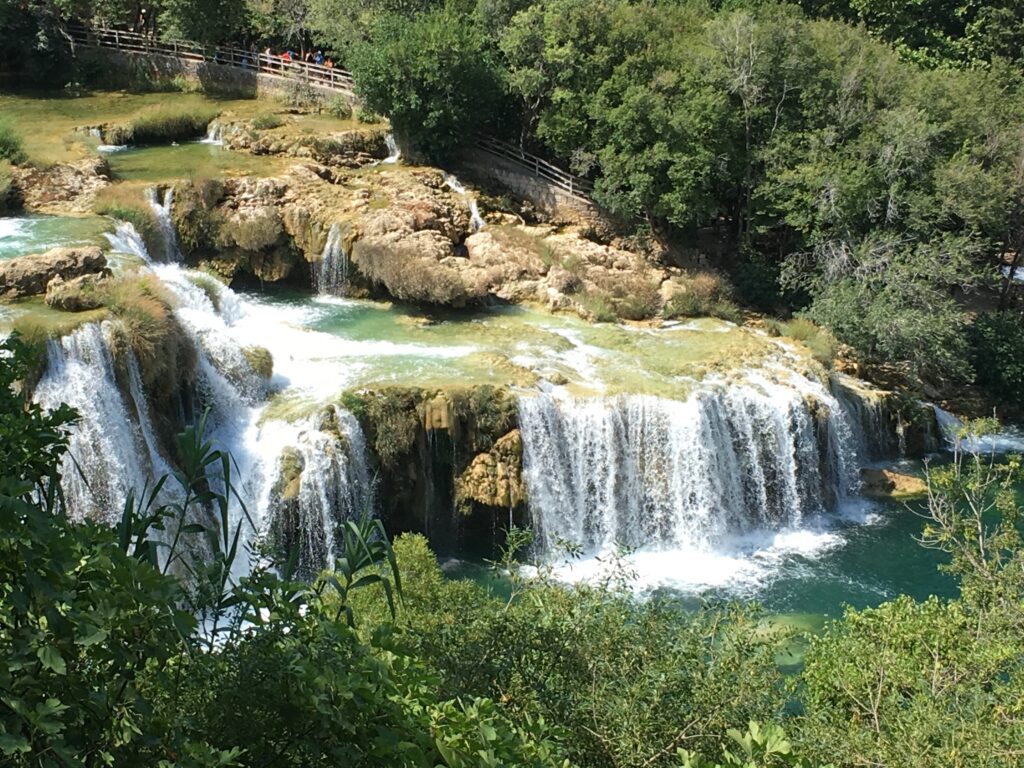
Krka National Park With Croatia boasting seven national parks, each a stunning place to explore, Krka’s waterfalls, though less popular, are a match for the beauty of the Plitvice Lakes. Croatia’s Krka National Park is an undiscovered treasure for visitors! The park is renowned for its magnificent waterfalls and verdant foliage, and it has paths that culminate in spectacular vistas. Lush landscapes, unspoiled rivers, and the renowned waterfalls of Krka await your arrival. Three of the most popular tourist destinations are the Roski Slap waterfall, which stands at a height of 72 feet (22 meters); Skradinski buk, which is the most extended travertine barrier on the Krka River; and Visovac, a small island that is home to a Franciscan monastery and the Church of Our Lady of Visovac, which dates back to the 15th century. Our first stop was Skradinski Buk, often considered the most famous waterfall in the park. Along the wooden walks and trails surrounding the waterfalls, you can enjoy beautiful views from a variety of vantage points. Water gently cascades into a pool on the limestone terraces, creating a stunning scene. Unlike the Plitvice Lakes, Krka National Park offers a unique opportunity for visitors to swim in its lush lakes. With designated swimming areas, it’s the perfect escape from the summer heat, adding an exciting and relaxing element to your visit. Guidelines before visiting Krka National Park. Visitors can visit Krka National Park throughout the year. Every season has its own distinct characteristics. Spring and autumn are delightful due to their favorable weather, vibrant flora and wildlife, and educational walking and cycling routes. The winter season is when vegetation is dormant but is still visitable, which highlights the abundant water and reveals the geomorphological characteristics of the rocks and tufa. Summer, when the foliage is lushest, is the best time for swimming and enjoying fresh vegetables. However, it also coincides with a significant number of tourists visiting the area. To ensure you see all the main attractions, it’s best to arrive early in the morning to beat crowds and spend the day exploring the park. When purchasing tickets, you may pay with either cash (in euros) or any credit card. Credit cards are not accepted at the following sales locations: Remetić (Visovac), Oziđana Pećina Cave, Burnum, and Manojlovac Waterfall. You can easily reach the park from Split by car or by renting a day pass. Those without a car can take one of Split’s many tours. Bring your swimsuit and go swimming in the lake underneath Skradinski Buk! Please be aware that the bus and boat services are unavailable between November and March. However, there are alternative transportation options available during this period, such as private tours or car rentals. Author: Cristy Photo credit: Nathan Latest Post All Posts Blog The Maha Kumbh Mela: A Journey of Faith and Endurance   A Gathering Like No Other The Maha Kumbh Mela is one of the most significant cultural festivals in the… The Maha Kumbh Mela Day 1: Immersed in the Sea of Humanity   First Day of the Maha Kumbh Mela The official first day of the Maha Kumbh Mela began long before… The Maha Kumbh Mela Day 2: Our Journey Beyond the Sangam   The Nearest Sangam Following our strenuous walk of over 25 kilometers the previous day, every muscle in our legs… The Maha Kumbh Mela Day 2: A Sacred Dip and A Holy Parade   An Unforgettable Experience at the Maha Kumbh Mela   Reaching the Sangam The Sangam is the revered junction of… Serendipity in Jaipur: A Journey Back in Time   My Journey Back in Time I took the night bus from Udaipur to Jaipur, leaving behind the city’s shimmering… Jaipur: A City of Temples, Thalis, and Timeless Chaos   Temples, Thalis, and Timeless Chaos When we arrived in Jaipur, the Pink City, it felt like stepping into a… Savoring Jaipur: The Ultimate Rajasthani Thali Experience Exploring Jaipur’s Best Thali Experiences Amid Jaipur’s bustling streets and majestic palaces, the thali custom unites the essence of Rajasthan’s… Daily Turmoil: The Unchanging, Timeless Chaos of Jaipur Despite Jaipur’s advancements, luxury malls, and modern conveniences, Jaipur still clung to its age-old chaos. Crossing the Street Crossing the… When Plans Fall Apart: Embracing the Unknown in India My Unplanned Trip to India I had planned an ambitious trip to five countries with a coworker I barely knew….

The Ultimate Guide to Croatia’s Scenic Oasis Read More »

Exploring Smiljan’s Tribute to the Visionary Inventor, Nikola Tesla

Nikola Tesla’s Hometown- Smiljan Finding the Tesla Memorial Center in Smiljan was a surprise! Everyone was delighted by the great Nikola Tesla and his ground-breaking contributions to modern science and technology, so our last-minute trip was a happy discovery. Road journeys by themselves allow for natural itinerary adjustments and diversions. This freedom brought us to the Tesla Museum, where we fully engaged in the life of this remarkable creator. Born in a small Croatian town in 1856, visionary Nikola Tesla went on to transform the planet with his work on alternating current (AC) energy, which is still fundamental to our electrical systems today. Standing at the home that molded one of the greatest minds in history felt like a significant experience. Among other historical sites, the memorial center has been maintained as an homage to his legacy, Tesla’s childhood home, and the Serbian Orthodox St. Peter and Paul’s Church. This is a fantastic spot to explore Tesla’s early life and see how his passion for science and invention started. Imagine young Tesla here, contemplating the secrets of nature that would subsequently become his creative inspiration. The interactive exhibits captured our interest as they provided a practical chance to explore Tesla’s scientific discoveries. The museum displays his creations and brings Tesla’s creative ideas to life, fostering an immersive experience that ignites appreciation of his genius and inquiry. His constant search for knowledge and significant influence on our contemporary society inspired the whole family. This exhibit is a must-see regardless of your interests, whether they be in engineering, physics, or simply marveling at one of history’s greatest minds. For those heading through Zagreb or down the Dalmatian coast, this quick and straightforward detour is well worth stopping for! We were enthralled with the museum’s outstanding exhibits and outside spaces, which proved appealing to people of all ages—including adults. Regardless of their background or hobbies, Tesla’s narrative sparks wonder, curiosity, and invention that stays with every visitor. Make sure to visit Smiljan if you’re passing through! Here’s the link to the Nicola Tesla Museum. Author: CristyPhoto Credit: Nathan Latest Post All Posts Blog The Maha Kumbh Mela: A Journey of Faith and Endurance   A Gathering Like No Other The Maha Kumbh Mela is one of the most significant cultural festivals in the… The Maha Kumbh Mela Day 1: Immersed in the Sea of Humanity   First Day of the Maha Kumbh Mela The official first day of the Maha Kumbh Mela began long before… The Maha Kumbh Mela Day 2: Our Journey Beyond the Sangam   The Nearest Sangam Following our strenuous walk of over 25 kilometers the previous day, every muscle in our legs… The Maha Kumbh Mela Day 2: A Sacred Dip and A Holy Parade   An Unforgettable Experience at the Maha Kumbh Mela   Reaching the Sangam The Sangam is the revered junction of… Serendipity in Jaipur: A Journey Back in Time   My Journey Back in Time I took the night bus from Udaipur to Jaipur, leaving behind the city’s shimmering… Jaipur: A City of Temples, Thalis, and Timeless Chaos   Temples, Thalis, and Timeless Chaos When we arrived in Jaipur, the Pink City, it felt like stepping into a… Savoring Jaipur: The Ultimate Rajasthani Thali Experience Exploring Jaipur’s Best Thali Experiences Amid Jaipur’s bustling streets and majestic palaces, the thali custom unites the essence of Rajasthan’s… Daily Turmoil: The Unchanging, Timeless Chaos of Jaipur Despite Jaipur’s advancements, luxury malls, and modern conveniences, Jaipur still clung to its age-old chaos. Crossing the Street Crossing the… When Plans Fall Apart: Embracing the Unknown in India My Unplanned Trip to India I had planned an ambitious trip to five countries with a coworker I barely knew….

Exploring Smiljan’s Tribute to the Visionary Inventor, Nikola Tesla Read More »

Sun, Sand, and City Wandering in Beautiful Split

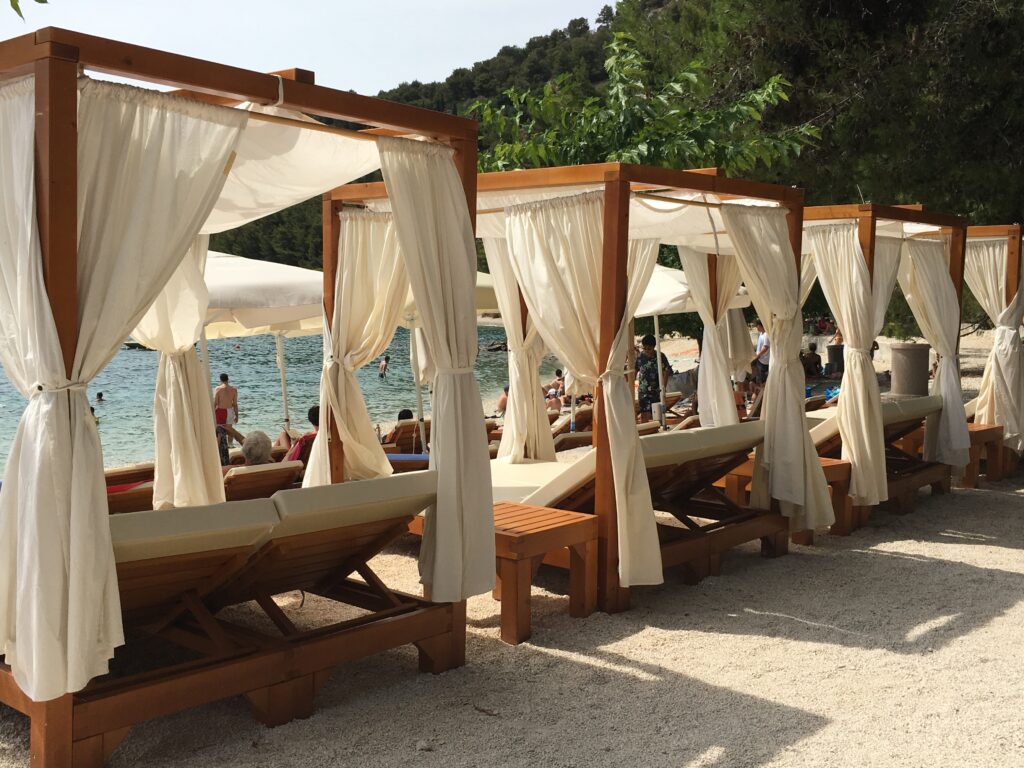
Following a pleasant journey from Trogir, we arrived in Split, brimming with gusto. The journey included a stunning combination of coastline views and idyllic landscapes. It prepared us for what was to follow. Split welcomed us with its pulsating enthusiasm. The ancient walls of Diocletian’s Palace towered, resonating with centuries of history. Situated in the heart of the city, Diocletian’s Palace is an extraordinary structure, its formidable walls and intricate tunnels exemplifying Roman architecture and history. Roman Emperor Diocletian erected Diocletian’s Palace in the fourth century AD as his retirement home. He vacated the imperial throne and lived until his demise. The Palace is extensive and covers fifty percent of the historic district. It is a UNESCO World Heritage Site. PalaceTown is inside Diocletian’s Palace, making it a unique historical locale. This is the optimal place! Split’s Old Town is distinctive for its amalgamation of Roman and medieval buildings, vibrant ambiance, and picturesque, tiny lanes. Like other European locales, the streets have cobblestones, dining establishments, and tiny alleys, making it an exceptional site for exploring. The Promenade Riva, a true reflection of Split’s seaside charm, offers a serene escape from the city’s hustle and bustle. Lined with palm trees, it provides stunning views and a peaceful ambiance. The constant movement of vessels in the port creates a soothing backdrop for dining, people-watching, and unwinding along the Adriatic shore. The Bell Tower of the Cathedral of Saint Domnius offers the most breathtaking view of Split. Ascending to the top is challenging due to its physically demanding ascent and unstable railings. But the reward is worth it, as the tower provides an unparalleled view of the port, city, and historic area, making it the most exquisite vista in Split. After days packed with sightseeing and being on the road, we decided to pause the whirlwind of history, architecture, and new places by spending a day at Kašjuni Beach. Everyone was ready to let go of the schedule to trade castles and cobblestone streets for the simplicity of sand, sun, and sea. The rugged beauty of the pebbly shore and the clear, turquoise water stretching endlessly into the horizon instantly captivated us as we pulled up to Kajuni Beach, nestled beneath the rocky slopes of Marjan Hill. We found Joe’s Beach Lounge and Bar, the perfect spot at the edge of the beach. It gave us quick access and a cozy retreat to call our own for the day. Jack’s had everything we needed—comfortable spots to unwind, a shaded area where we could break from the sun, and the best beach view we could have asked for. We spent the day alternating between dips in the cool, clear water and relaxing and sleeping on the sunbeds, soaking up the beauty of Split’s coastline. Time slowed as we all relaxed. When the sun began to dip lower, casting the beach in a warm, golden glow, we reluctantly started to pack up. With salty skin, sun-kissed smiles, and memories of this perfect pause by the sea, we returned to the car, ready to hit the road again, carrying a piece of Croatia’s coastal magic with us.  Detour to Klis Fortress Klis The next day, we left the Croatian coast and ventured inland, with a planned stop at Klis Fortress before crossing into Bosnia. The drive from Split to Klis was short, winding through narrow mountain roads that offered spectacular views of the Dalmatian coastline and the sparkling Adriatic below. Soon, the massive stone walls of Klis Fortress came into view, perched high on a rugged hill. The fortress seemed to rise from the very rock beneath it, a place that has withstood centuries of history, battles, and shifting empires. Standing there among the ancient stone and the tales it contained was like entering another time entirely. After a final look back at Split from Klis’s highest point, we returned to the car, eager to continue our journey. As we left Croatia, the landscape changed gradually from coastal blues and greens to the rugged, mountainous terrain of Bosnia. The drive was serene as the mountains spread out before us, dotted with tiny villages and winding rivers that added a special beauty to the landscape. Crossing the border felt like entering a new chapter of our trip. We stopped for a quick roadside lunch, savoring the simple meal as we looked out over Bosnia’s vast landscapes. The anticipation grew as we discussed our plans and the adventures awaiting us in this next Balkan country. Our day had been a beautiful blend of history, natural beauty, and the excitement of moving forward, and as the road opened up ahead of us, we felt ready for whatever Bosnia had in store. Author: CristyPhoto Credit: Nathan Latest Post All Posts Blog The Maha Kumbh Mela: A Journey of Faith and Endurance   A Gathering Like No Other The Maha Kumbh Mela is one of the most significant cultural festivals in the… The Maha Kumbh Mela Day 1: Immersed in the Sea of Humanity   First Day of the Maha Kumbh Mela The official first day of the Maha Kumbh Mela began long before… The Maha Kumbh Mela Day 2: Our Journey Beyond the Sangam   The Nearest Sangam Following our strenuous walk of over 25 kilometers the previous day, every muscle in our legs… The Maha Kumbh Mela Day 2: A Sacred Dip and A Holy Parade   An Unforgettable Experience at the Maha Kumbh Mela   Reaching the Sangam The Sangam is the revered junction of… Serendipity in Jaipur: A Journey Back in Time   My Journey Back in Time I took the night bus from Udaipur to Jaipur, leaving behind the city’s shimmering… Jaipur: A City of Temples, Thalis, and Timeless Chaos   Temples, Thalis, and Timeless Chaos When we arrived in Jaipur, the Pink City, it felt like stepping into a… Savoring Jaipur: The Ultimate Rajasthani Thali Experience Exploring Jaipur’s Best Thali Experiences Amid Jaipur’s bustling streets and majestic palaces, the thali custom unites the essence

Sun, Sand, and City Wandering in Beautiful Split Read More »

Scroll to Top