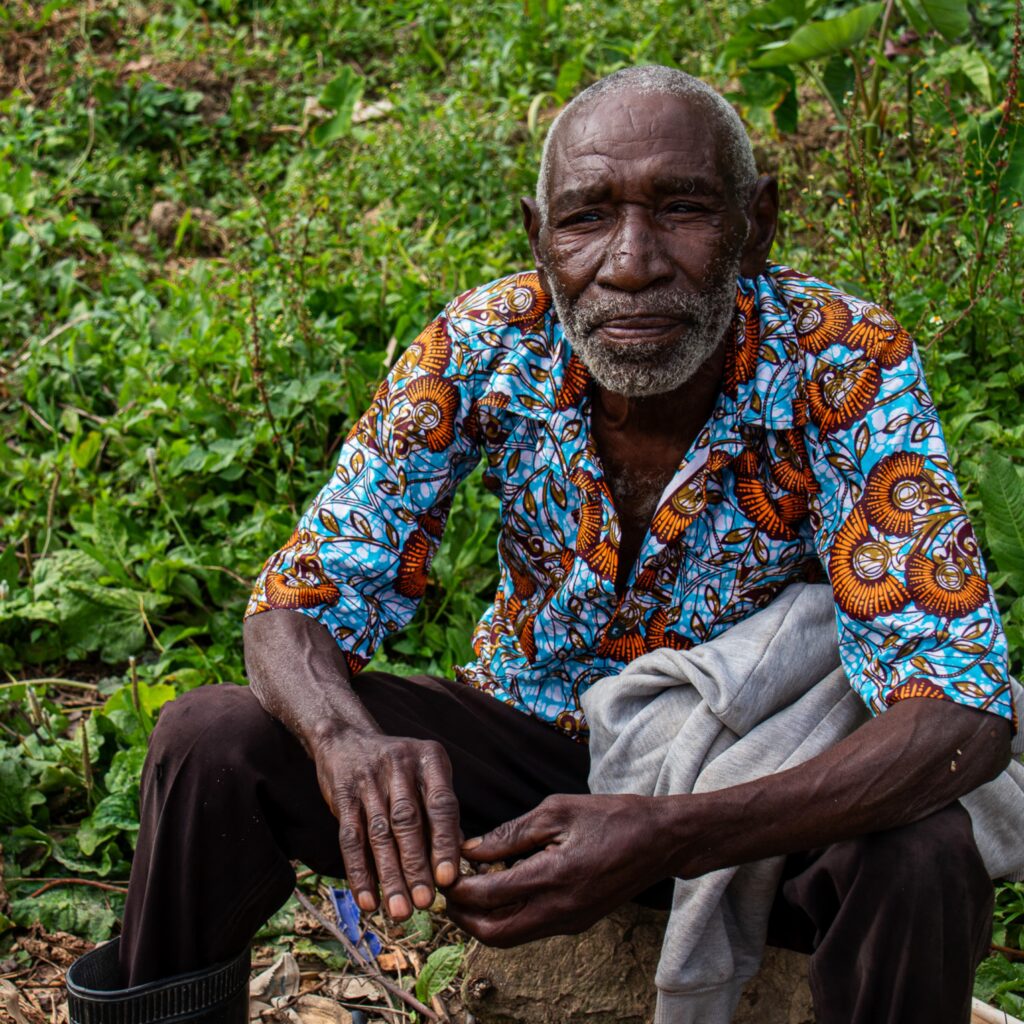
He was born in the forest, inside the forest. Before 1991, before the park boundary lines, before “conservation” became the word that would eventually push his family out of the only home they’d known, this stretch of Bwindi was where he was from.
He didn’t lead with that story. He led with the fire.
Crouched on the ground with two pieces of dry wood, he set into a rhythm that looked almost too casual for what it was. One stick spinning fast against a notch in the other, his palms rolling it back and forth like he was warming his hands. It took less time than I expected. A thread of smoke, a small ember caught in a nest of dry tinder, and then a flame. No lighter, no matches, nothing but wood, friction, and a set of hands that clearly weren’t doing this for the first time.
He let it burn for a second before he looked up, grinning, and reached into his pocket for a box of matches.
“Now it’s easy,” he said, striking one for comparison.
What struck me most was the ease with which he held two completely different lives in the same afternoon: the boy who once needed that skill to survive, and the man who will never need it at all. He didn’t seem bitter about the gap. He is determined to make sure the culture and tradition don’t get lost, and despite everything that has changed, there will still be something real enough left to pass down to future generations.
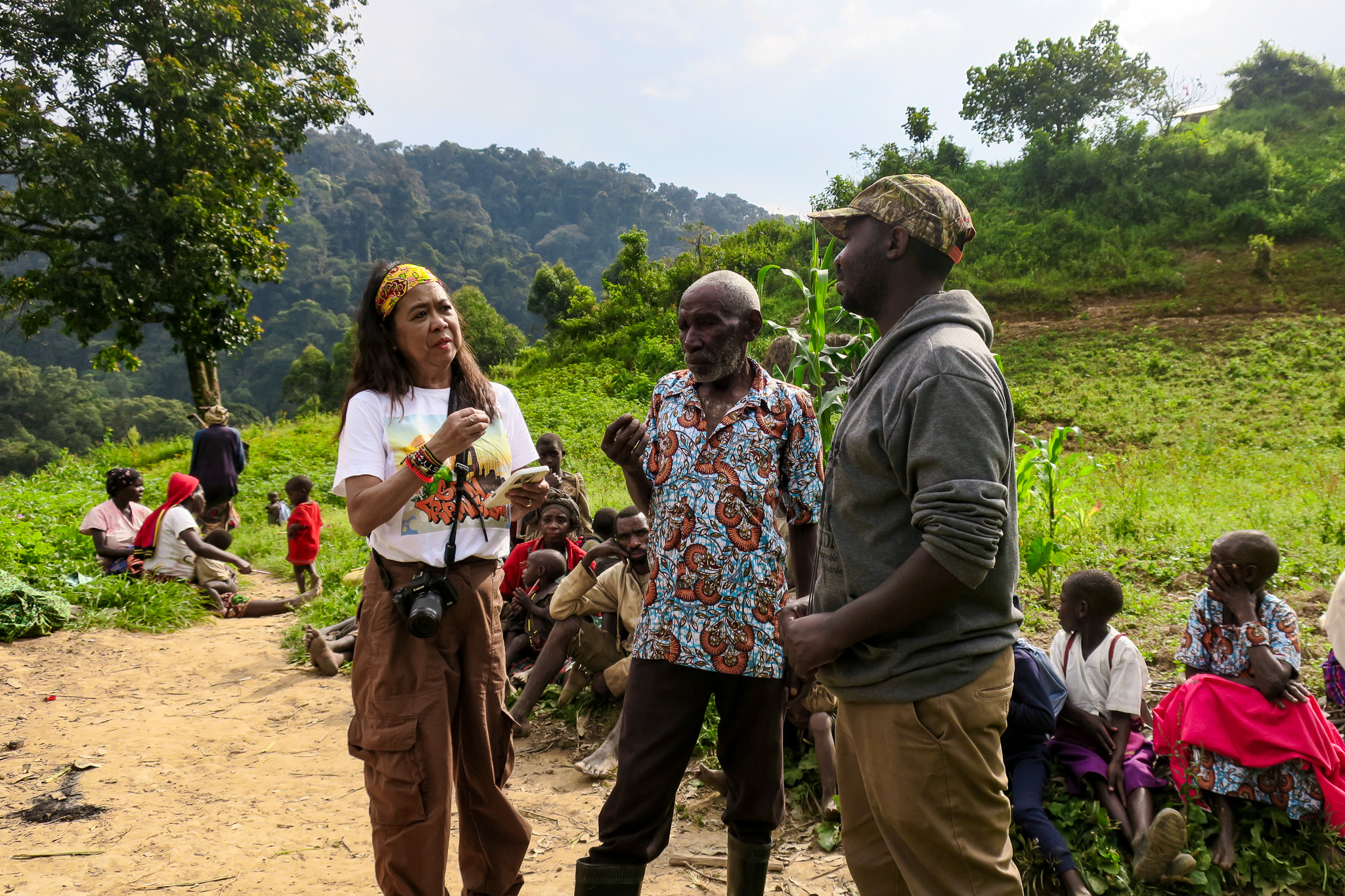
Later, I sat with the Batwa leader. He shared stories I will never forget.
He described life in the forest before 1991, how they moved freely, how they knew every trail and tree, and how the forest provided everything they needed. And then he told me about the day they were forced to leave.
There was no warning. Government officials arrived and told them that the forest was now protected and that they had to leave. As they walked out, they were ordered to surrender their traditional clothing and personal belongings. Everything made from the forest and everything that connected them to their identity was left behind. Those items were burned right in front of them as they left their home for the last time. In exchange, they received regular clothes and were told to start over.
“We didn’t understand,” he said softly. “The forest was ours. We protected it. We lived with it, not against it. And then, suddenly, we were outsiders.”
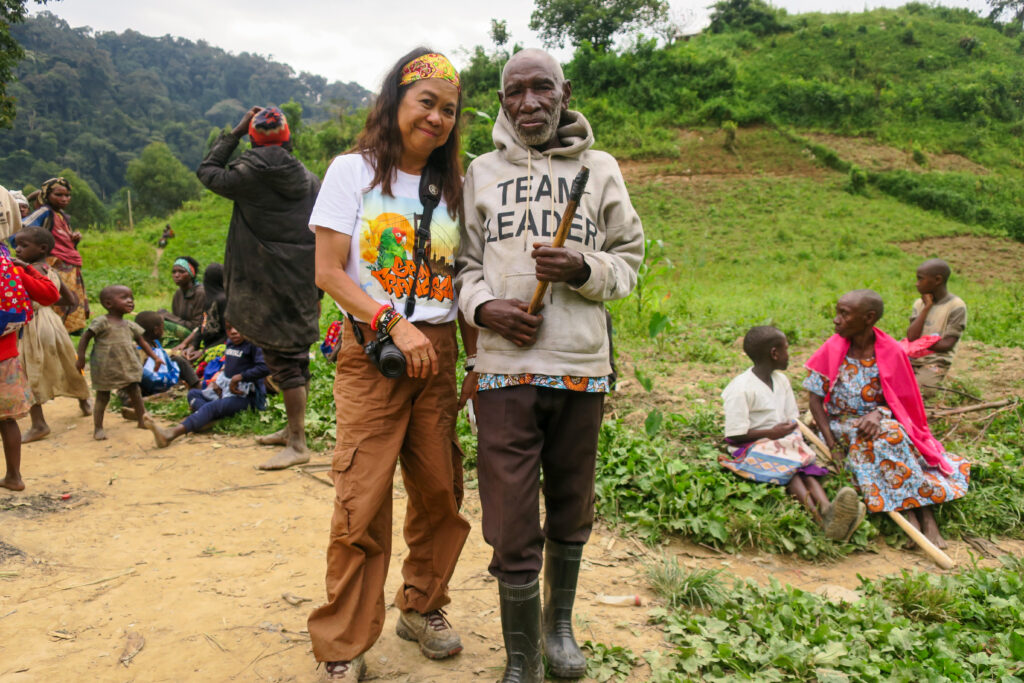
In his hands (see photo below) are the traditional fire-starting tools that sustained his ancestors for millennia. He demonstrated the technique with muscle memory still intact, sticks rubbing, friction building, and sparks emerging. Then came the matchbox and a bittersweet smile. “Now it’s easy.” Easy, yes. But something was lost in that convenience.
He holds the fire-starting stick his ancestors used for generations, then smiles and pulls out a matchbox. "Now it's easy."
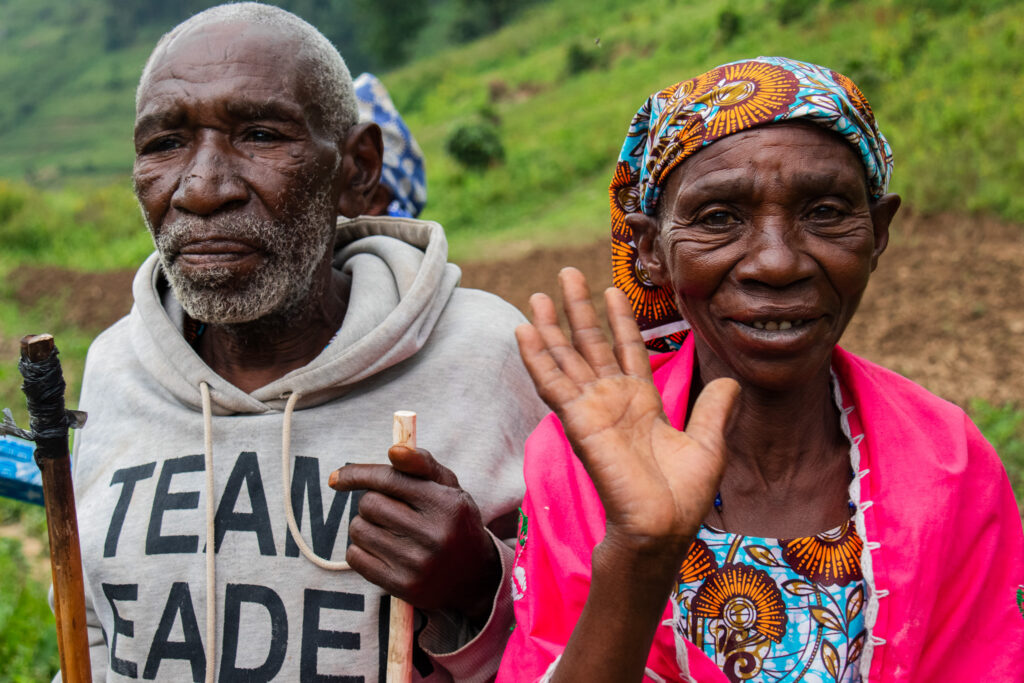
This Batwa couple graciously shared their story with me, recounting their displacement from the forest and the rich life they once knew among the trees.
Stories from the Road
Every journey has another story waiting to be discovered. Explore more experiences, cultures, wildlife, and people from around the world.