
Have you ever wondered why these animals are called “The Big Five”?
The phrase ‘The Big Five’ originally referred to the difficulty of hunting the lion, leopard, rhino, elephant, and buffalo on foot in Africa. These five large African mammals were known to be dangerous, and trophy hunters considered it a feat to bring them home.
Our Kenyan safari promises the thrill of encountering some of the planet’s most magnificent wildlife. Many people’s ultimate safari goal is to spot the Big Five!
Kenya’s untamed landscapes and the Masai Mara’s rolling savannahs provide the perfect backdrop for these beautiful creatures. Each game drive hopes to witness these majestic creatures in their natural habitats, showcasing the raw beauty and power of the African wilderness.
Africa has a treasure found nowhere else in the world. The Big Five can only be found in these African countries: Angola, Botswana, the Democratic Republic of Congo, Ethiopia, Kenya, Malawi, Namibia, Rwanda, South Africa, Tanzania, Uganda, Zambia, and Zimbabwe.
“Everything in Africa bites, but the safari bug is the worst of all.” Brian Jackman
With eager hearts and adventurous spirits, here’s our story of encounters with the Big Five.
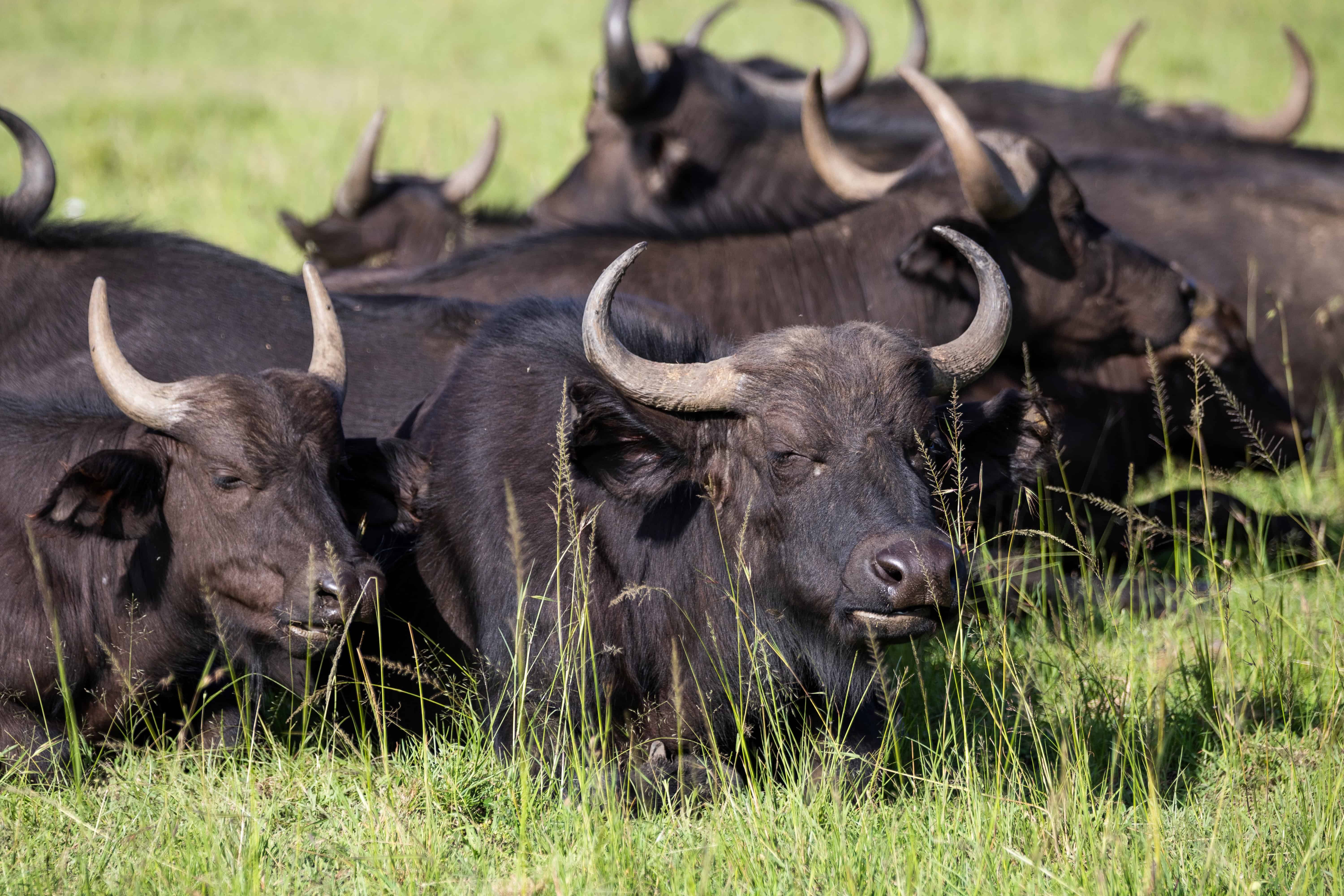
Don’t Mess with Me—Cape Buffalo

The Cape buffalo is sometimes called the “mafia of the bush.” Known for their tendency to take revenge when provoked, they have been known to circle back, stalk, and even attack or kill hunters. Talk about the hunter becoming the hunted!
Observing the Cape Buffalo from afar, they appear to be tame and calm. But do not let the look fool you! Our guide, Steve, shared some crucial survival advice in case of a cape buffalo attack. He told us that if we ever find ourselves in such a dangerous situation, we have two options: run to a tree and climb it, or lie on the ground and pretend to be dead.

Steve recounted a harrowing story to illustrate his point. He mentioned that a buffalo once attacked one of his friends. Quickly, his friend decided to lie down and pretend to be dead, hoping the buffalo would lose interest. The buffalo approached with its notoriously rough tongue and began licking his friend’s head. The licking was so intense that it removed hair from his head. It was an excruciating and nerve-wracking experience for his friend, but it ultimately saved his life, as the buffalo eventually lost interest and wandered away.
Steve emphasized that buffalo might look calm and unthreatening from a distance, but they are among the most dangerous animals in the African savannah. They are highly unpredictable and can become aggressive without warning. Their sheer size, strength, and tendency to hold grudges make them formidable opponents.
Steve’s story served as a forceful reminder of the risks involved in encountering these powerful creatures and the importance of being prepared for any situation while on safari.

Fun Facts:
Why do Cape buffaloes often have birds on their backs? African buffaloes have a symbiotic relationship that benefits both the buffalo and the birds. The birds feed on the ticks and parasites in the buffalo. This arrangement is good for the buffalo because these parasites suck a lot of blood and can weaken the animal. That is why buffaloes are delighted to keep the company of birds, and the birds are equally pleased to help!
“To truly understand Africa, you must go beyond the tourist trails and venture into the heart of the wilderness. It’s in the quiet moments, observing the animals in their natural habitats, that the continent reveals its secrets.” – Unknown.
Author: Cristy
Photo Credit: Nathan