
Have you ever wondered why these animals are called “The Big Five”?
The phrase ‘The Big Five’ originally referred to the difficulty of hunting the lion, leopard, rhino, elephant, and buffalo on foot in Africa. These five large African mammals were known to be dangerous, and trophy hunters considered it a feat to bring them home.
Our Kenyan safari promises the thrill of encountering some of the planet’s most magnificent wildlife. Many people’s ultimate safari goal is to spot the Big Five!
Kenya’s untamed landscapes and the Masai Mara’s rolling savannahs provide the perfect backdrop for these beautiful creatures. Each game drive hopes to witness these majestic creatures in their natural habitats, showcasing the raw beauty and power of the African wilderness.
Africa has a treasure found nowhere else in the world. The Big Five can only be found in these African countries: Angola, Botswana, the Democratic Republic of Congo, Ethiopia, Kenya, Malawi, Namibia, Rwanda, South Africa, Tanzania, Uganda, Zambia, and Zimbabwe.
“Everything in Africa bites, but the safari bug is the worst of all.” Brian Jackman
With eager hearts and adventurous spirits, here’s our story of encounters with the Big Five.
So Many Lions, So Little Time
“You know you are alive when you live among lions.” – Karen Blixen
Lions are often called the king of the jungle or the king of the beasts. They are one of Africa’s most well-known wild animals and most respected predators.

“Until the lion tells his side of the story, the tale of the hunt will always glorify the hunter.” Zimbabwean proverb
During our trip to Africa, we saw at least 25 lions at Masai Mara and Mara Naboisho Conservancy, and we came close to spotting 40 lions, lionesses, and cubs between different parks!
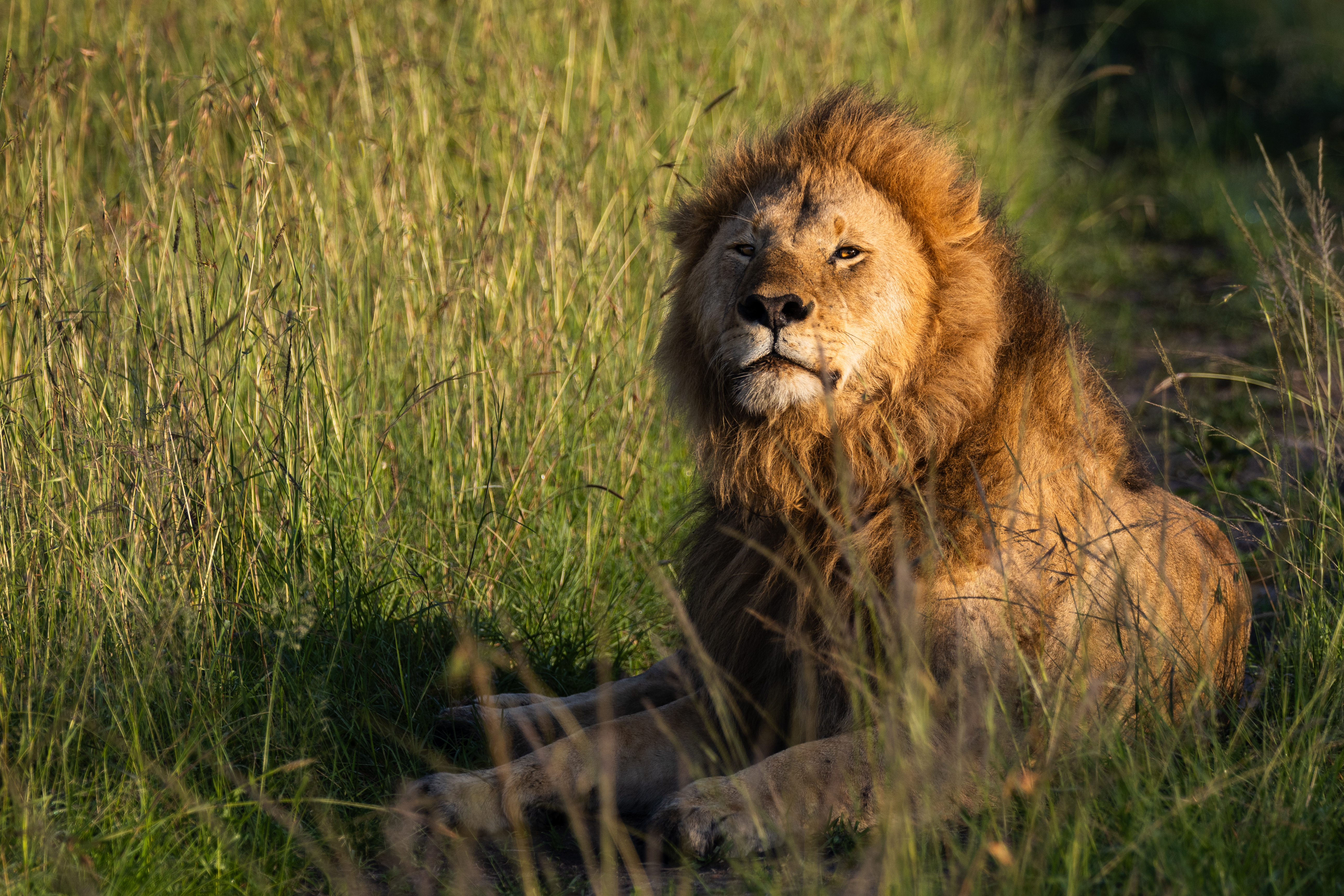
Our first lion sighting was on an early game drive in the heart of the Mara savannah, where a magnificent lion lounged in the golden morning sun. The vast grasslands stretched out around him, a sea of green and gold rippling gently in the breeze. As he reclined on a slight rise, he sunbathed his coat in warm light, highlighting the rich hues of his mane.
Occasionally, he lifted his head to feel the full embrace of the breeze on his face, his eyes closing for what must have been sheer enjoyment. The sun warmed his body; the wind cooled his face, creating a perfect harmony of nature’s elements.
Another sighting of a lion was on a game drive in Naboisho. A lone lion moved purposefully through the tall grasses, his golden mane catching the morning sun’s light. His amber eyes were sharp and focused, scanning the horizon for any sign of his lioness and cub, searching for a specific, familiar scent that would lead him to his family.
The lion would occasionally pause, his powerful silhouette outlined against the vibrant colors of the African sunrise. He lifted his head and let out a deep, resonant roar that echoed across the plains—a call that felt both like a declaration of his presence and a signal to his family. The savannah, momentarily quiet in response, appeared to pause its breathing.

As he listened intently, his ears perked up, catching the faintest swoosh of movement in the distance. He was determined as he journeyed to find his lions and cubs. He knew they could not have wandered far, and his instincts guided him toward a familiar grove where they often rest. He let out another softer call, this time filled with reassurance. As he continued to push through, he finally spotted his lioness and her cubs beside her. Our guide, Steve, suggested that the lion chase the lioness and cub (since the cub was older) as a game. We drove around this stretch of land to see if we could catch them running. They didn’t, so we returned to the other side and watched them meet peacefully. After some time, they all disappeared into the bush together.

Another morning, a pride of lionesses and cubs comes to life with playful energy. The sun, beginning to rise, casts a soft golden glow over the landscape, creating a vibrant backdrop for the cubs’ morning activities. The pride, a mix of lionesses and exuberant cubs, gathers in a clearing where the grass is dewy and cool. Full of boundless energy, the cubs are the first to engage in play. They pounce, stretch, and tumble over each other, their tiny roars of excitement filling the air. Their playful antics are a practice for future skills and a joyous expression of their youth.

We saw another pride: two lions with their lionesses and cubs. Our guide told us these two lions are brothers, and they like to fight. They were both very old. One of the lions exited the bush and started walking slowly towards our truck. He stopped next to me. If I stuck my arm out, I could have touched the lion; that’s how close he was to me!
As the lion remained within reach, his brother unexpectedly rushed towards him. Then they started attacking each other; I screamed, and everyone lost a chance to capture the Nat Geo photo of the year—a lion fight! Fear gripped me as they roared and growled, engaging in combat just a few inches away from me. They were still close enough that I could reach out and touch their faces. The brothers continued to fight side by side, their eyes filled with mixed anger and determination. The fight was a display of raw, primal power. As the adrenaline faded, the brothers separated, each limping slightly.

“In the eyes of a lion, there lies the wisdom of the ages, a gaze that pierces the soul and reminds us of the untamed essence that resides within us all.” – Unknown
The younger lion moved away from our truck. His face had a few scratches and blood near his eyes. The fight has ended, but it was so close and intense that it left us with profound respect for these magnificent creatures’ raw power!

Fun Facts:
A group of male lions is called a coalition. They are not members of the pride, as most would believe. The coalition can dominate and most often does dominate more than one pride. They will move from pride to pride. When a male lion reaches about three years of age, his pride will force him out. Lionesses will often synchronize their breeding so they will have cubs around the same time. She will also suckle other cubs within the pride. If a coalition of lions takes over a new pride and they have cubs and sub-adult cubs not yet old enough to breed, the male lions will often kill the cubs to bring lionesses into estrus so they can breed and pass on their genes.
“To truly understand Africa, you must go beyond the tourist trails and venture into the heart of the wilderness. It’s in the quiet moments, observing the animals in their natural habitats, that the continent reveals its secrets.” – Unknown.
Author: Cristy
Photo Credit: Nathan