People

My Interview with Happy

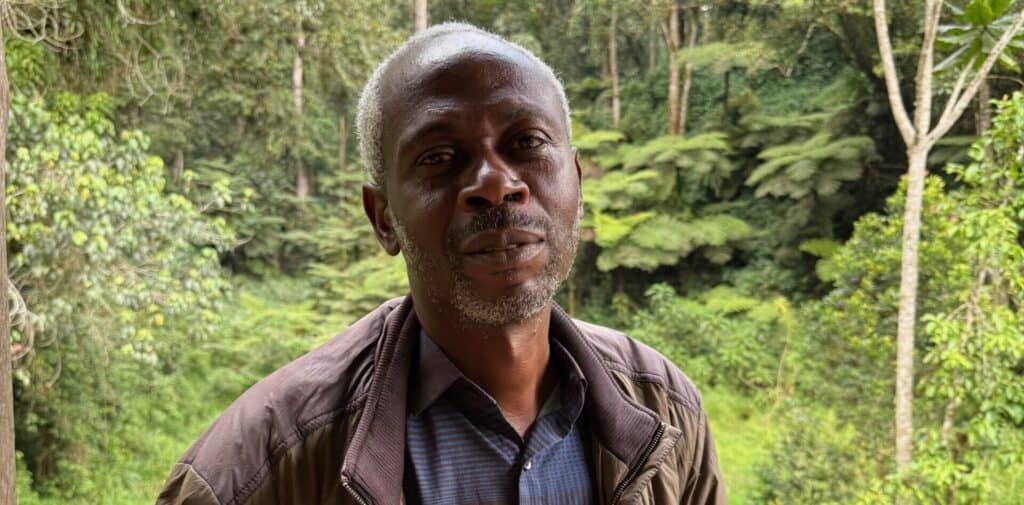
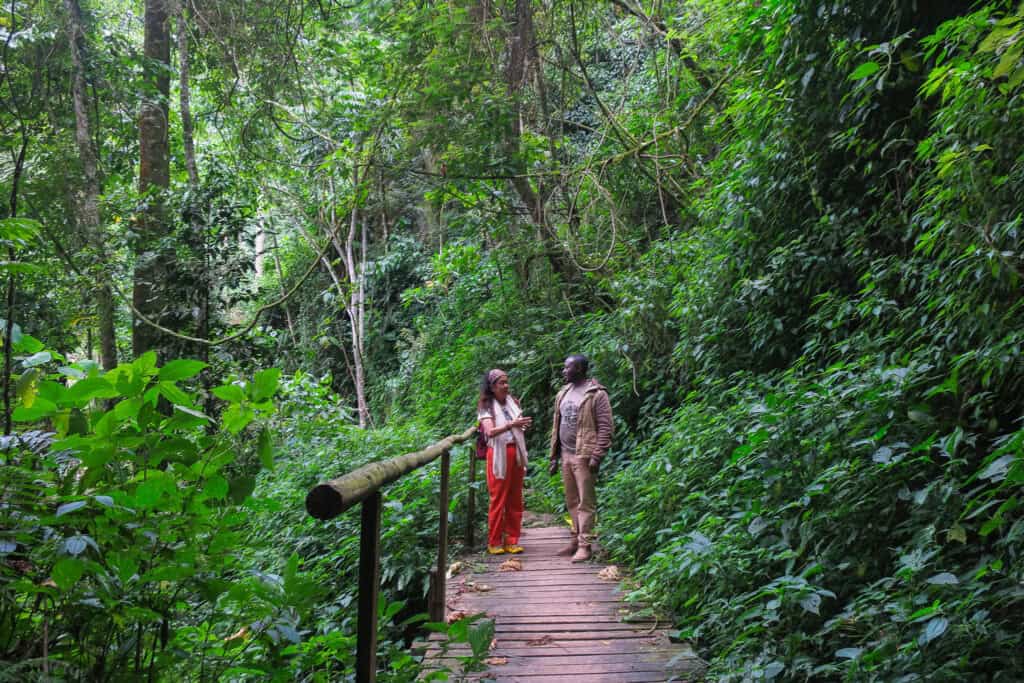
My Interview with Happy: Building Hope, Protecting Nature The Story and Vision of Bwindi Conservation for Generations Foundation Introduction Deep in southwestern Uganda lies Bwindi Impenetrable Forest, a UNESCO World Heritage Site and one of the last refuges for the endangered mountain gorillas. Surrounding its borders are lively communities with rich cultures, but also serious socio-economic challenges. It was here that Happy Bruno saw both the urgent needs of his people and the delicate state of the environment. His journey led to the creation of the Bwindi Conservation for Generations Foundation, an organization that uniquely combines ecological protection with community empowerment. This interview examines the foundation’s history, mission, impact, and the changing relationship between conservation, tourism, and sustainable development in the Bwindi region. How was the foundation started, and what motivated you? A: After earning my Bachelor’s degree in Commerce from Makerere University, I went back home and struggled to find a job. Instead of waiting for an opportunity that never arrived, I asked myself, “How can I use what I’ve learned to make a difference here?” I saw firsthand how poverty and limited opportunities affected families, especially the Batwa, an Indigenous group historically marginalized on the edges of the forest. I also saw the pressure on Bwindi from unsustainable farming, human-wildlife conflicts, and the lack of long-term livelihood options for young people. That combination, social hardship coupled with ecological vulnerability, motivated me to create a foundation that operates at the intersection of conservation and community prosperity. We didn’t want to protect nature alone; we aimed to strengthen livelihoods, expand knowledge, and support local social enterprises so communities can live sustainably alongside the forest. Bwindi Conservation For Generations Foundation Meaning Behind the Name “Future Generations”: What does the name “Future Generations” mean to you? A: To me, it’s a vow and a guiding principle: every action we take must benefit both people and nature long into the future. That means safeguarding Bwindi’s biodiversity, including its mountain gorillas, while ensuring that children in our communities grow up with education, opportunity, and dignity. This vision shapes every initiative we lead, from youth training to social enterprises that improve livelihoods. It’s about creating a legacy that future generations can inherit with pride. Serving a Unique and Resilient Community: Can you describe the community you serve in the Bwindi region? A: The communities around Bwindi are culturally rich and diverse. They include the Batwa Indigenous people, who were once hunter-gatherers with a deep forest heritage, as well as other groups such as the Bakiga. These communities have lived for generations close to one of the most biodiverse forests on Earth. Life here is tough: many families rely on subsistence farming with limited access to quality education, healthcare, or stable jobs. Farming on steep, rugged land often conflicts with wildlife, such as gorillas foraging on crops, thereby reducing food security. Despite these hardships, the people remain resilient, proud, and profoundly connected to the land. Their cultural wisdom and dedication to community serve as the foundation of our work.   Mission and Work, Blending Conservation with Local Empowerment:   What are the foundation’s primary missions, and what programs are you implementing? A: Our mission is to combine conservation efforts with social impact by strengthening education, improving livelihoods, and encouraging environmental stewardship among communities near Bwindi Forest. We recognize that protecting the forest must go hand in hand with empowering the people living closest to it. Core Programs We Run Social Innovation AcademyA training space where youth and women learn skills such as entrepreneurship, digital literacy, and sustainable business practices. These programs help people develop alternative economic pathways that don’t depend on degrading natural resources.  Community Sustainable Responsibility ProjectsWe support eco-friendly initiatives, such as demonstration gardens for organic farming that teach about food security and sustainable agricultural techniques. This not only boosts local food production but also eases pressure on protected forests. Eco-Tourism and Local ProductsWe work to integrate ecotourism opportunities into Bwindi’s scenery, alongside local products and experiences, helping extend tourists’ stays and deepen the positive economic impact on host communities. Women’s and Youth GroupsAcross different villages, we have formed community groups where women generate income through crafts, agriculture, and conservation-related businesses.  Human-Wildlife Conflict Management & AwarenessSince many villages border the forest, interactions between people and wildlife, especially when crops are damaged, can lead to tension. We focus on community strategies to reduce conflicts and support residents in living harmoniously with wildlife.  These programs are interconnected: teaching skills, promoting sustainable practices, and cultivating guardians of both community wellbeing and wildlife. Our goal is that conservation benefits local families, not just visitors or outside stakeholders.   Impact and Transformations:   What are your most significant achievements or impacts so far? A: Our most significant achievement is witnessing tangible changes in people’s lives: children attending school who otherwise couldn’t, women earning a steady income through community enterprises, and families beginning to see sustainable livelihoods as a reality rather than just a dream. One powerful story is of Gloria A and Chef Benny, who graduated from the Rushaga community. Before our support, they struggled to stay in school due to financial hardship. Through educational sponsorships, they were able to continue their education at Rushaga Community School. Today, Gloria participates in conservation clubs, teaching other children about protecting Bwindi’s biodiversity, while Benny has grown in confidence into an excellent chef, despite the odds. Their transformation isn’t just personal; it echoes through their entire community. Challenges and Solutions: What are the main challenges your community faces, and how are you addressing them? Poverty & Limited Economic Opportunity: Many families face unstable incomes, resulting in food insecurity and school dropouts. Solution: Our Social Innovation Academy and local businesses support income diversification, especially for women and youth. Education Barriers: Fees, uniforms, and materials prevent children from attending school. Solution: We offer school and mentorship programs. Human-Wildlife Conflict: Crop loss from wildlife foraging is a challenge for families. Solution: We collaborate with neighbors to develop planting strategies, awareness initiatives, and conflict-mitigation practices. Lack of Resources and Awareness: Limited access to farming knowledge and sustainable techniques keeps communities in vulnerable

My Interview with Happy Read More »
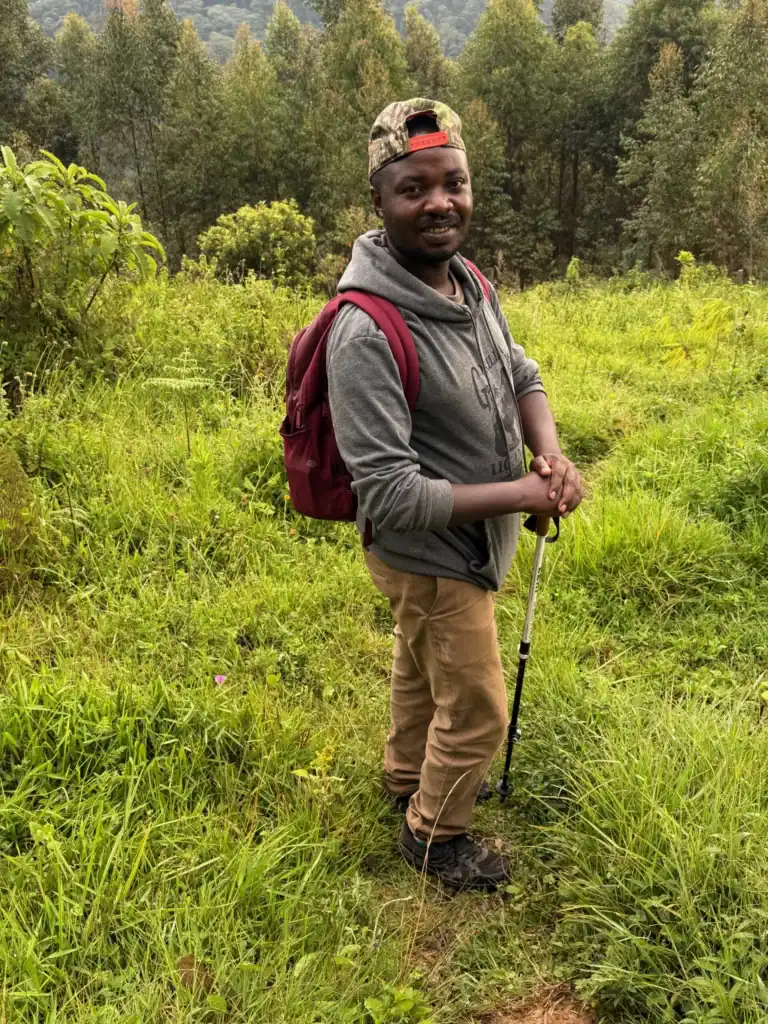
Meet Happy: Co-founder of Bwindi Conservation for Future Foundation

Meet Happy: The Visionary Who Returned Home to Build a Better Future I first learned about Happy Bruno while exploring the work of the Bwindi Conservation for Future Generations and the possibility of a partnership focused on sustainable tourism. After several WhatsApp conversations, it became clear that I needed to meet him and experience his work firsthand. That curiosity ultimately led me to Uganda. I met many remarkable people during my time in Uganda, but some left a stronger impression. Happy Bruno is one of those, and yes, that is his real name! Happy was named after his mother, ‘Happiness,’ carrying forward a legacy of optimism and purpose. Although his college studies in Kampala could have led him far from home, Happy and his wife, Gloria, intentionally chose to return to Rubuguri. There, in the community where he was born, he committed himself to giving back everything he had learned. He is the co-founder of the Bwindi Foundation for Future Generations. Currently, he serves as Mayor of Rubuguri Town Council, a role that symbolizes trust, responsibility, and genuine commitment rather than ambition. But titles only show part of the story. Happy works tirelessly to ensure his community not only survives but genuinely thrives. Through the foundation, he supports conservation efforts while empowering women and children across 16 villages near Bwindi Impenetrable National Park. His work connects environmental protection with human well-being, recognizing that the future of the forest and the future of the people are intertwined. He is also a deeply dedicated father. Happy has two biological sons, with another child on the way. He has opened his home and heart to many adopted children, ensuring they have access to education and opportunities. He often steps in when circumstances fall short. What stayed with me most wasn’t just how much he does, but how grounded he remains. Whether discussing village development, education, conservation, or the future of his children or the women in the villages, Happy leads with humility, consistency, and purpose. Some people grow into their names. Happy Bruno lives up to his name by choosing to return, serve, and stay!   Read “My Interview with Happy.” The children of Rubuguri, whose school is in desperate need of rebuilding. Happy ensures they’re supported, but he knows it’s not enough. He asked me, pleaded with me: to help them get what they deserve: a real school. Not because he’s their mayor, but because he refuses to accept that poverty should determine a child’s future. Truly an honor to trek with this group; true conservationists who dedicate their lives to making the world better. They don’t separate wildlife protection from community empowerment. They understand it’s all connected. Walking alongside them was a reminder that real change happens when people show up and do the work. Stories from the Road Every journey has another story waiting to be discovered. Explore more experiences, cultures, wildlife, and people from around the world. EXPLORE ALL STORIES

Meet Happy: Co-founder of Bwindi Conservation for Future Foundation Read More »

Meet Silver: Founding Director of Rushaga Community School

A Life Dedicated to Children and Community Meet Mr. Silver: Founding Director of Rushaga  Community School, Co-Founder of Bwindi Conservation for Generations Foundation, owner of Nshongi Camp and Wild Tusker Safari. Some people make noise openly. Others change the world quietly, so quietly that you only notice their impact when you start listening to the stories. Silver is one of those people. Before becoming a co-founder of the Bwindi Conservation for Generations Foundation, Silver was a schoolteacher, and at heart, he still is. His passion has always been education, especially for children who are often left behind solely because of where they were born. In this part of Uganda, many children live far from schools. Even government schools require fees that families cannot afford. For some, the cost of a uniform or books is already impossible. Instead of accepting this reality, Silver chose to challenge it. Using his personal resources, he established and funded the Rushaga Community School. It was built for children who otherwise would not have access to education. The school operates on a sliding fee scale, determined solely by what families can afford, which, in many cases, is almost nothing. There is minimal external funding or donations, and time after time, Silver steps in, using his own money to cover the shortfall, support the children, and pay the teachers. But his work goes far beyond the classroom. I’ve spoken to several people who speak highly of Silver, and what stands out most is how he doesn’t take credit for everything he’s done. He gives seeds to women so they can plant crops to feed their families or sell at the market. He provides money for basket-weaving materials, empowering women to create items they can sell for income. He buys food for children who would otherwise go hungry. He pays school fees when families cannot afford them. During my stay, I heard story after story. There were plenty of quiet testimonials from people whose lives were altered by him; Silver paid for their schooling when there was no hope. A family was supported when there were no options left. A child who learned to read because Silver believed they deserved that chance. When I sat with Silver, I expected him to tell me about what he had built. Instead, he talked only about what still needed to be done. He never mentioned the school fees he had personally covered, the seeds he gave to women, or the children he had fed when there was nothing at home. When I shared that I had brought a suitcase filled with baseball equipment, his face lit up. He spoke excitedly about how meaningful it would be for the children and how wonderful it would be to bring someone to teach them how to play. Even in joy, his focus remained entirely on what might be possible next for the Children of Rushaga. Other people told his stories. Silver never would. That is the kind of man who made me want to be better. Silver also owns Nshongi Camp, a lodge just 500 meters from the forest edge. It’s one of those rare places where nature constantly reminds you who truly lives there, with occasional sightings of mountain gorillas, elephants, monkeys, and antelopes as part of everyday life. The camp reflects him perfectly: grounded, purposeful, and deeply connected to the land and community. To meet Silver is to understand that authentic leadership doesn’t stem from position or authority; it arises from service, sacrifice, and consistency. It was truly an honor to have crossed paths with a man who has quietly shaped the future of so many children and will continue to do so for generations to come.   This is Silver, Happy, and me at the Nshongi Camp restaurant with the Bwindi Impenetrable National Forest literally at our backs. The forest is close enough to walk into, and gorillas, elephants, monkeys, and antelopes are regularly seen. Silver co-founded the Bwindi Conservation of Generations Foundation with Happy, but what struck me most were the stories people shared. He helped many children and families without ever making a noise about it.   If you’re visiting this part of Uganda, stay at Nshongi Camp. And don’t rush through. This place, these people, this forest, they’re worth more than a quick stop. Stories from the Road Every journey has another story waiting to be discovered. Explore more experiences, cultures, wildlife, and people from around the world. EXPLORE ALL STORIES

Meet Silver: Founding Director of Rushaga Community School Read More »

Scroll to Top