
INTRODUCTION
Africa's Best Kept Secret
Uganda sits at the crossroads of East and Central Africa, where the vast savannahs of the east meet the ancient rainforests of the west. It is one of the most biodiverse countries on earth, covering just 1% of the planet’s land mass, yet home to around 10% of the world’s biodiversity. It has more primate species than anywhere else on earth, over 1,073 recorded bird species (50% of all Africa’s birds), and is one of only three countries where you can trek to see wild mountain gorillas.
Winston Churchill called it ‘the Pearl of Africa‘ in 1908. Travelers who visit today understand why. Uganda is not just a destination; it is an experience that quietly changes the way you see the world. The landscapes are extraordinary, the wildlife is legendary, and the people are among the warmest you will ever meet.
Uganda is also an underdog. Overlooked by many in favor of Kenya or Tanzania, it offers the same, and often more, with far fewer crowds, greater intimacy, and a sense of discovery that is becoming harder to find in Africa.
AT A GLANCE
Capital: Kampala, the City of Seven Hills
Population: 50M. One of Africa’s youngest populations, with a median age of 16.
Official Languages: English & Luganda. Swahili is widely spoken, with 40+ local languages across 56 tribes.
Currency: Uganda Shilling (UGX). USD is widely accepted.
Religion: 80% Christian (Protestant & Catholic). 14% Muslim. All faiths coexist peacefully.
Time Zone: EAT, UTC+3. No daylight saving time.
Climate: Tropical. 65–85°F in lowlands year-round. Bwindi is cooler and misty. Two rainy seasons: Mar–May and Oct–Nov.
Best Time to Visit: June–September & December–February. Sep–Oct is ideal for wildlife and gorilla trekking.
International Airport: Entebbe International Airport (EBB) — on the shores of Lake Victoria, 40km from Kampala.
Country Code: +256
Highest Peak: Margherita Peak, Mount Stanley, 5,109m (16,762ft). The third highest in Africa.
National Parks: 10 national parks managed by Uganda Wildlife Authority (UWA)
REGIONS OF UGANDA
A country of remarkable diversity
Uganda is divided into four main regions, each with its own landscape, culture, and character.
Central Uganda
Western Uganda
Home to Kampala, Lake Victoria, and Entebbe. The political and cultural heart of the country. Rich in history, art, markets, and the Buganda Kingdom, Uganda’s most powerful traditional kingdom. The Kasubi Tombs, a UNESCO World Heritage Site, are here.
The most visited region for tourism. Home to Queen Elizabeth NP, Kibale NP, Bwindi Impenetrable Forest, Rwenzori Mountains, and Lake Bunyonyi. Lush, green, and spectacular, this is where gorilla trekking, chimp tracking, and the iconic Kazinga Channel are found.
Northern Uganda
Eastern Uganda
Wild, remote, and extraordinary. Home to Murchison Falls NP, Uganda’s largest park, and the legendary Kidepo Valley NP in the far north. The Nile flows through this region, and the landscapes shift dramatically from savannah to wetlands. Less traveled, deeply rewarding.
Home to Mount Elgon, Sipi Falls, and the source of the Nile at Jinja, Uganda’s adventure capital. White water rafting, bungee jumping, and kayaking on the Nile all happen here. Lake Mburo NP, the most accessible park from Kampala, is on the western edge of this region.
NATIONAL PARKS & WILDLIFE
10 national parks. One extraordinary country.
Uganda Wildlife Authority (UWA) manages 10 national parks, protecting everything from mountain gorilla habitat to ancient savannah. Uganda is home to Africa’s Big 7: lion, elephant, leopard, buffalo, rhino (at Ziwa Sanctuary), gorilla, and chimpanzee.
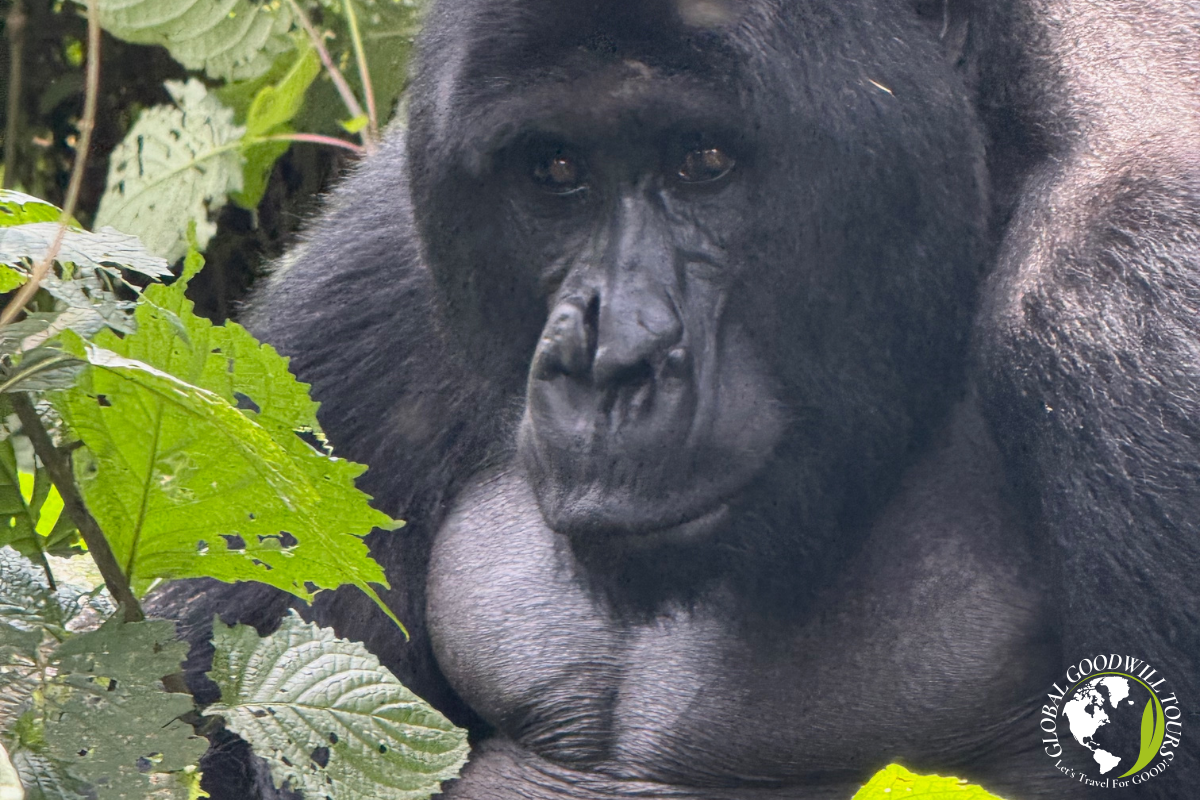
The most famous park in Uganda and one of the most biodiverse forests in Africa. Ancient, mist-covered, and impenetrable, this is the world's premier destination for mountain gorilla trekking. There is simply nowhere else quite like this.
- Key Wildlife: Mountain gorillas (half the world's population), chimpanzees, forest elephants, 11 primate species, 350+ bird species
- What It Offers: Gorilla trekking ($800 permit, book months ahead), gorilla habituation, birding, Batwa cultural experiences, forest walks
- Why Go: There are approximately 1,004 mountain gorillas left on earth. Uganda is home to more than half. Spending one hour with a habituated gorilla family is one of the most profound wildlife encounters on the planet.
Uganda's most popular park for safaris. Spanning the Albertine Rift Valley, it offers one of the most diverse ecosystems in Africa, open savannah, tropical forest, and fertile wetlands. The tree-climbing lions of Ishasha are found in only two places on earth.
- Key Wildlife: Tree-climbing lions (Ishasha sector), elephants, hippos, leopards, chimpanzees, buffaloes, Uganda kobs, and 600+ bird species
- What It Offers: Game drives, Kazinga Channel boat safari, chimpanzee tracking in Kyambura Gorge, Ishasha tree-climbing lion drives
- Why Go: No other park offers this combination: classic safari, boat safari, chimp tracking, and the world-famous tree-climbing lions all in one destination.
Uganda's largest and oldest national park. The centerpiece is Murchison Falls, where the entire Nile surges through a 7-meter gorge and plunges 43 meters below.
- Key Wildlife: Elephants, lions, leopards, buffalo, giraffes, hippos, crocodiles, rare shoebill stork, 450+ bird species
- What It Offers: Game drives, Nile boat cruise to the falls, hike to the top of the falls, hot air balloon safaris, chimp trekking in Budongo Forest
- Why Go: Murchison Falls is arguably the most powerful waterfall in the world by water volume. Add four of the Big Five, the shoebill stork, and a Nile boat safari; this is an essential Uganda experience.
Known as the primate capital of the world. Home to the highest density of primates on earth and the last large tract of pre-montane forest in East Africa. The world's premier destination for chimpanzee trekking.
- Key Wildlife: ~1,500 chimpanzees (highest density in Uganda), 12 other primate species, forest elephants, 350+ bird species
- What It Offers: Chimpanzee trekking ($250 permit), chimp habituation experience, primate walks, birding, Bigodi Wetland Sanctuary community walks
- Why Go: The best place in the world to track chimpanzees, our closest living relatives. With 1,500 chimps in a small area, success rates are very high.
Uganda's most remote and arguably most spectacular park. Isolated near the South Sudan border, rugged, wild, and unlike anything else in Uganda. CNN Travel ranked it among Africa's top 10 parks. The only place in Uganda to see cheetahs. One of Africa's last true wilderness frontiers.
- Key Wildlife: Cheetahs (ONLY in Uganda here), ostriches, lions, leopards, elephants, giraffes, zebras, African wild dogs, 80 mammal species, 28 found nowhere else in Uganda
- What It Offers: Game drives, nature walks, cultural encounters with the Ik people and Karamojong, birding (400+ species)
- Why Go: The cheetah is found nowhere else in Uganda. The landscapes feel untouched. For serious safari travelers, Kidepo is unmissable.
Uganda's smallest national park, but one of its most dramatic. Beneath three dormant Virunga volcanoes, Mgahinga is the second gorilla trekking location in Uganda and the only place to see the rare golden monkey.
- Key Wildlife: Mountain gorillas, golden monkeys (Virunga region only), buffaloes, elephants, 180 bird species
- What It Offers: Gorilla trekking, golden monkey trekking, volcano hiking, Batwa cultural experiences
- Why Go: Gorilla trekking with fewer crowds, set against three towering volcanic peaks. The golden monkey experience is one of Uganda's hidden gems.
The legendary 'Mountains of the Moon,' Africa's third-highest mountain range, with glaciers, alpine meadows, and otherworldly scenery. One of Africa's most extraordinary and least-known mountain ranges.
- Key Wildlife: Forest elephants, chimpanzees, Rwenzori colobus monkeys, leopards, Rwenzori turaco (endemic), 217 bird species
- What It Offers: Multi-day mountain trekking (summit at 5,109m), day hikes, glacier and alpine scenery, birding
- Why Go: The Rwenzoris are one of Africa's great mountain experiences, and almost nobody knows about them. Unlike Kilimanjaro, this is a genuine mountaineering challenge with glaciers and surreal Afro-alpine vegetation found nowhere else on earth.
The most accessible park from Kampala. Compact but full of character, it's the only park in Uganda with zebras and impalas and one of the few with horseback safaris.
- Key Wildlife: Zebras, impalas, hippos, leopards, hyenas, elands, waterbucks, warthogs, 300+ bird species
- What It Offers: Game drives, boat safaris, horseback safaris, nature walks, night game drives, fishing, birding
- Why Go: Perfect as a first or last stop on a Uganda safari. The horseback safari is one of Uganda's most unique wildlife experiences. Uganda's best birding park for acacia-associated species.
Home to an extinct volcano with the largest volcanic caldera in the world. A quieter trekking alternative to Rwenzori, with stunning caves, waterfalls, and the beautiful Sipi Falls nearby.
- Key Wildlife: Forest elephants (explore caves for salt), buffaloes, forest hogs, baboons, blue monkeys, 300+ bird species
- What It Offers: Volcano hiking, cave exploration (Kitum Cave, salt-licking elephants), Sipi Falls hikes, birding, mountain biking, cultural encounters
- Why Go: Kitum Cave is one of Africa's great natural curiosities. The Sipi Falls are among Uganda's most scenic destinations. This region is the heart of Uganda's coffee country.
Uganda's most mysterious park — a lowland tropical rainforest that is the easternmost extension of the vast Congo Basin forest. Feels like a different continent. Pure birdwatching paradise. Contains 35 bird species found nowhere else in East Africa, a birder's once-in-a-lifetime destination.
- Key Wildlife: 60+ mammal species, including pygmy hippos, forest elephants, and chimpanzees. 435 bird species — 35 found nowhere else in East Africa
- What It Offers: Birding (exceptional), hot springs (Sempaya), nature walks, chimpanzee tracking, cultural visits to the Batwa and Bamba communities
- Why Go: For serious birders, Semuliki is unmissable. Contains Congo Basin species found nowhere else in East Africa. The Sempaya hot springs are extraordinary. Uganda's most off-the-beaten-path park.
FUN FACTS
Things that might surprise you
- The Pearl of Africa. Winston Churchill gave Uganda this nickname after visiting in 1907. He wrote that Uganda is ‘a fairy tale’ and called it ‘the most attractive country in the whole of Africa.’
- Home to more than half the world’s mountain gorillas. With approximately 1,004 mountain gorillas remaining on earth, Uganda is home to over 500 of them. Twenty years ago, the species was on the brink of extinction. Conservation tourism helped save them.
- Africa’s bird paradise. Uganda has recorded over 1,073 bird species—50% of all bird species in Africa and 11% of all species in the world. In a country smaller than Oregon.
- The world’s youngest population. Uganda’s median age is just 16.2 years. Over half the population is under 15. The energy and vitality of the country are palpable everywhere you go.
- Kampala is built on seven hills. Like Rome. The city’s name comes from the Buganda phrase ‘K’empala,’ ‘Hill of the Impala,’ named for the impalas that once grazed on Kampala Hill.
- The source of the Nile is here. Lake Victoria in Uganda is widely recognized as the source of the White Nile, the world’s longest river. The exact source at Jinja is a popular tourist site where you can kayak, raft, and bungee jump.
- 56 tribes, one country. Uganda is home to 56 officially recognized tribes, speaking over 40 languages. The diversity of culture, music, dance, and tradition across the country is extraordinary.
- Uganda produces some of the world’s best coffee. Robusta coffee originated in Uganda. The country is Africa’s leading coffee exporter. Good African Coffee, grown, processed, and packaged entirely in Uganda, is worth taking home.
- The equator runs through Uganda. You can stand with one foot in each hemisphere. At the equator crossing on the Kampala–Masaka road, visitors can watch the famous water-draining-in-opposite-directions demonstration.
- Uganda has the Big 7. Most African countries offer the Big 5. Uganda offers the Big 7, adding gorillas and chimpanzees to lions, elephants, leopards, buffalo, and rhinos (at Ziwa Rhino Sanctuary).
- Lake Victoria is the world’s largest tropical lake. Shared by Uganda, Kenya, and Tanzania, it is the second-largest freshwater lake in the world and the largest in Africa.
- Wheelchair-accessible gorilla trekking exists. The Uganda Wildlife Authority offers a wheelchair-accessible gorilla trekking experience; travelers are carried into the forest in specially designed chairs. One of Africa’s most inclusive wildlife experiences.
ENTRY REQUIREMENTS
A yellow fever vaccination certificate is REQUIRED for entry into Uganda. You will be denied boarding and entry at the border without it. Carry the physical certificate at all times.
Passport & Visa
- Valid passport—minimum 6 months’ validity beyond your travel end date
- Uganda tourist visa required—apply online at visas.immigration.go.ug ($50 USD) or obtain on arrival ($50–$100)
- East Africa Tourist Visa ($100 USD) covers Uganda, Kenya & Rwanda for 90 days
- Do not photograph military installations, police, or the airport—visitors have been detained for this
Currency & Money
- Uganda Shilling (UGX) is the local currency
- USD widely accepted—bring clean, unfolded bills (damaged bills are often refused)
- ATMs available in Kampala and major towns only—very limited in national parks
- Credit cards accepted at most lodges and larger establishments
- Tip guides and lodge staff in cash—USD or UGX, both appreciated
- Uganda’s coffee is excellent—Good African Coffee is worth bringing home
Health & Vaccinations (Strongly Recommended)
- Malaria prophylaxis—consult your doctor well before departure. Required for all travelers.
- Hepatitis A & B
- Typhoid
- Tetanus / Diphtheria
- Rabies—particularly relevant for travelers spending time near wildlife
- DEET-based insect repellent at all times, especially in national parks
- Consult a travel health clinic 4–8 weeks before departure
Gorilla Trekking Health Note
- If you have a cold, flu, or respiratory illness, you will NOT be permitted to trek. Gorillas are highly susceptible to human diseases
- The minimum age for gorilla trekking is 15 years old
- Porters are available and strongly recommended for the trek
What to Pack
- Neutral safari colors: khaki, olive, and tan. Avoid bright colors and white on game drives and treks
- Long-sleeve shirts and waterproof hiking pants for gorilla trekking and forest walks
- Sturdy waterproof hiking boots — broken in well before departure. Essential for gorilla trekking.
- Rain jacket or poncho, Bwindi and western Uganda can be wet even in the dry season
- Daypack (20–30L), sun hat, high-quality DEET repellent, sunscreen
- Local SIM cards available at Entebbe Airport; cell coverage is limited in parks and Bwindi
- WiFi available at most lodges and camps; expect intermittent connectivity in remote areas
Getting Around
- Most national parks require 3–6 hours of driving from Kampala on paved and unpaved roads
- Domestic flights available between Entebbe, Murchison Falls, and Kidepo—highly recommended
- All MBM journeys include private ground transportation and a dedicated safari driver throughout
- Self-driving is possible in the dry season; it is not recommended in the wet season on dirt roads
SAFETY
Know Before You Go
Uganda is a rewarding and generally safe destination for international travelers. The national parks are well-managed, the safari infrastructure is strong, and the vast majority of visitors encounter no safety issues. That said, a few realities require clear-eyed awareness before you go.
General Safety
Uganda is rated Level 3: Reconsider Travel by the U.S. State Department, primarily due to crime, terrorism risk in specific border regions, and its laws targeting LGBTQ+ individuals. MBM journeys operate entirely within the national park circuit in the west and north, areas considered safe for tourism and well away from the high-risk border zones near South Sudan and the Democratic Republic of Congo.
In Kampala, exercise standard urban caution: avoid displaying cash or expensive jewelry, do not walk alone at night, and use only pre-arranged transportation after dark. Highway travel at night carries real risk throughout Uganda and should be avoided.
Do not photograph military installations, police, or airport facilities. This is illegal under Ugandan law and has resulted in detentions of foreign visitors. When in doubt, put the camera away.
Avoid large public gatherings and political demonstrations. Security forces have used force to disperse crowds, and protests can develop with little warning.
Road Safety
Uganda has one of the highest road accident rates in Africa. Long drives between parks on paved and unpaved roads are a feature of any Uganda itinerary. All MBM journeys use professional, licensed driver-guides in well-maintained safari vehicles. Avoid any road travel after dark.
U.S. travelers: Register with the Smart Traveler Enrollment Program (STEP) at travel.state.gov before departure.
CULTURAL ETIQUETTE
How to Show Up Well
Uganda is one of the warmest, most welcoming countries in Africa. Its people are generous, curious, and genuinely glad you came. Showing up with cultural awareness is not just good manners; it is how you access a more meaningful experience.
- Greetings come first. In Uganda, jumping straight into a question or transaction without a proper greeting is considered rude. Always say hello first. A firm handshake is the most common form of greeting, and it often lasts longer than you might expect. Let the other person set the pace. Learning even one phrase goes a long way. ‘Oli otya? ‘(How are you?) in Luganda or ‘Habari? ‘ in Swahili, delivered with a genuine smile, will be met with warmth every time.
- Respect elders visibly. Ugandan society places deep value on respect for elders. Greet older people first, use titles (Mr., Mrs., or professional titles where known), and do not interrupt. In some rural areas, younger people avoid direct eye contact with elders as a mark of respect. Do not misread this as disengagement.
- Use your right hand. Giving and receiving items, shaking hands, and eating with your fingers should all be done with the right hand. Using the left hand in these contexts is considered disrespectful, particularly in Muslim communities.
- Dress modestly. Uganda is a conservative country. When visiting communities, markets, religious sites, or cultural landmarks, cover your shoulders and knees. Neutral safari clothing works well for both parks and community visits.
- Ask before you photograph. Always ask permission before photographing individuals, especially in rural areas and villages, and during cultural encounters. A smile and showing the photo afterward typically lands well. Never photograph children without explicit permission from a parent or guardian.
- Public affection is private here. Public displays of affection, kissing, and close embracing are uncommon and can cause discomfort, regardless of who is involved. Keep it private.
- Politics is sensitive. Uganda’s political landscape is complex. Do not engage in political debates with locals or express opinions about the government. It can put people in an uncomfortable or even risky position.
- Time moves differently. Ugandans have a relaxed relationship with time in social settings. Expect flexibility. When engaging with communities, bring patience and presence rather than a clock.
- Bargaining is expected in markets. Approach it as a friendly exchange, not a negotiation battle. Start with a smile, be reasonable, and accept when a price is fair.
How Mi Bella Mondo Travels, and Why It Matters
Mi Bella Mondo is built on a simple belief: travel done well makes places better, not just for visitors, but for the people and ecosystems that make those places worth visiting. In Uganda, that belief carries real weight.
- Support local, always. Every MBM journey is built around local operators, guides, lodges, and community partners. Your spending goes directly into the Ugandan economy, into families, communities, and conservation efforts. When you have the opportunity to buy directly from local artisans, market vendors, or community cooperatives, do it.
- The gorillas need your discipline. Gorilla trekking is one of conservation’s great success stories. Mountain gorilla populations have grown precisely because regulated tourism generated the funding and political will to protect them. That relationship is fragile. Follow every instruction your Uganda Wildlife Authority ranger gives you. Maintain the required distance. Do not trek if you are sick. Gorillas are extremely susceptible to human respiratory illness. This is not optional.
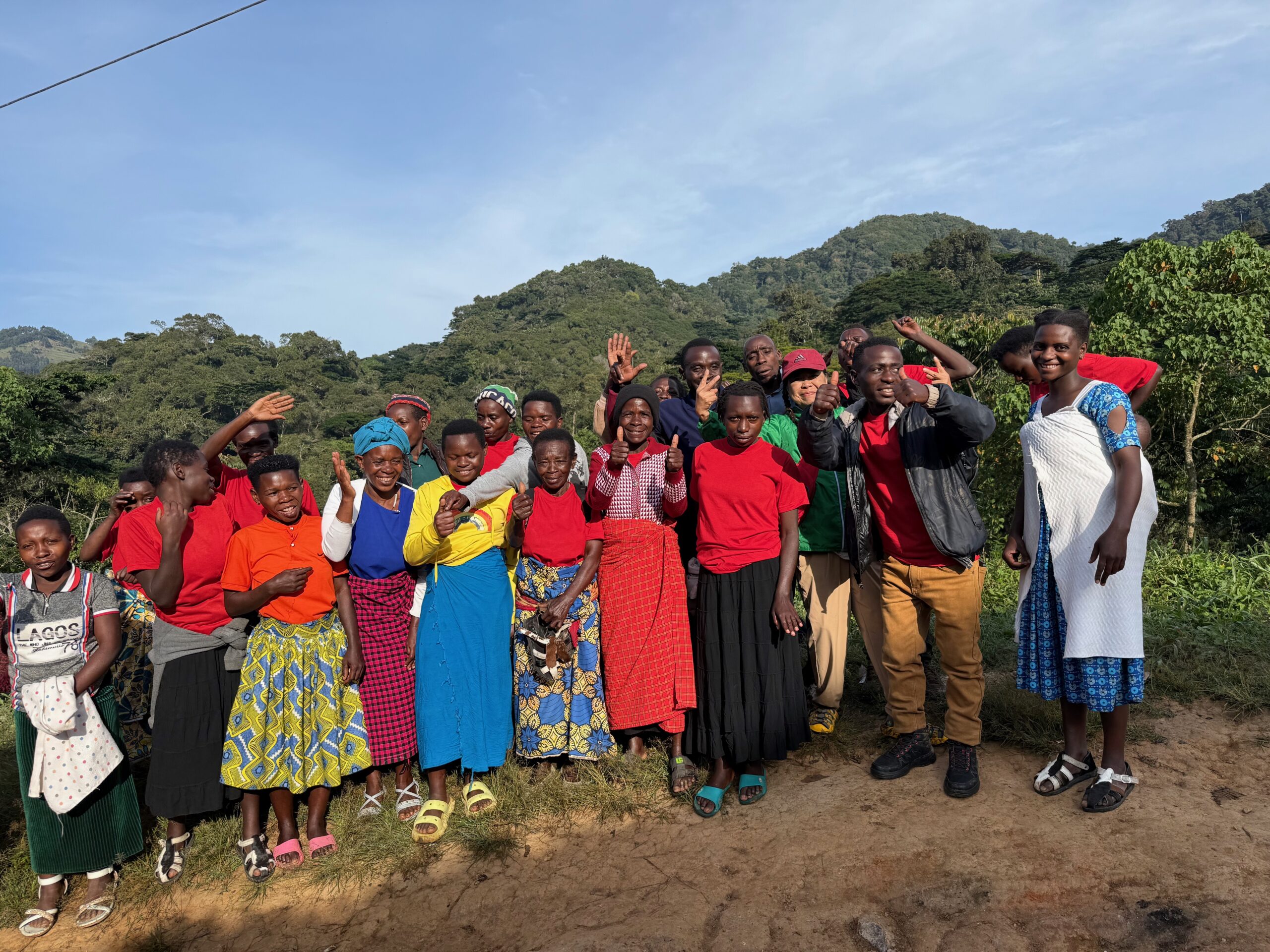
- The Batwa are not a performance. The Batwa are one of Uganda’s most ancient peoples, displaced from Bwindi forest when it was designated a national park. MBM’s visits to Batwa communities are designed as genuine exchanges; you bring food, you sit together, you listen. Approach these encounters with humility. You are a guest in their story, not a spectator of it.
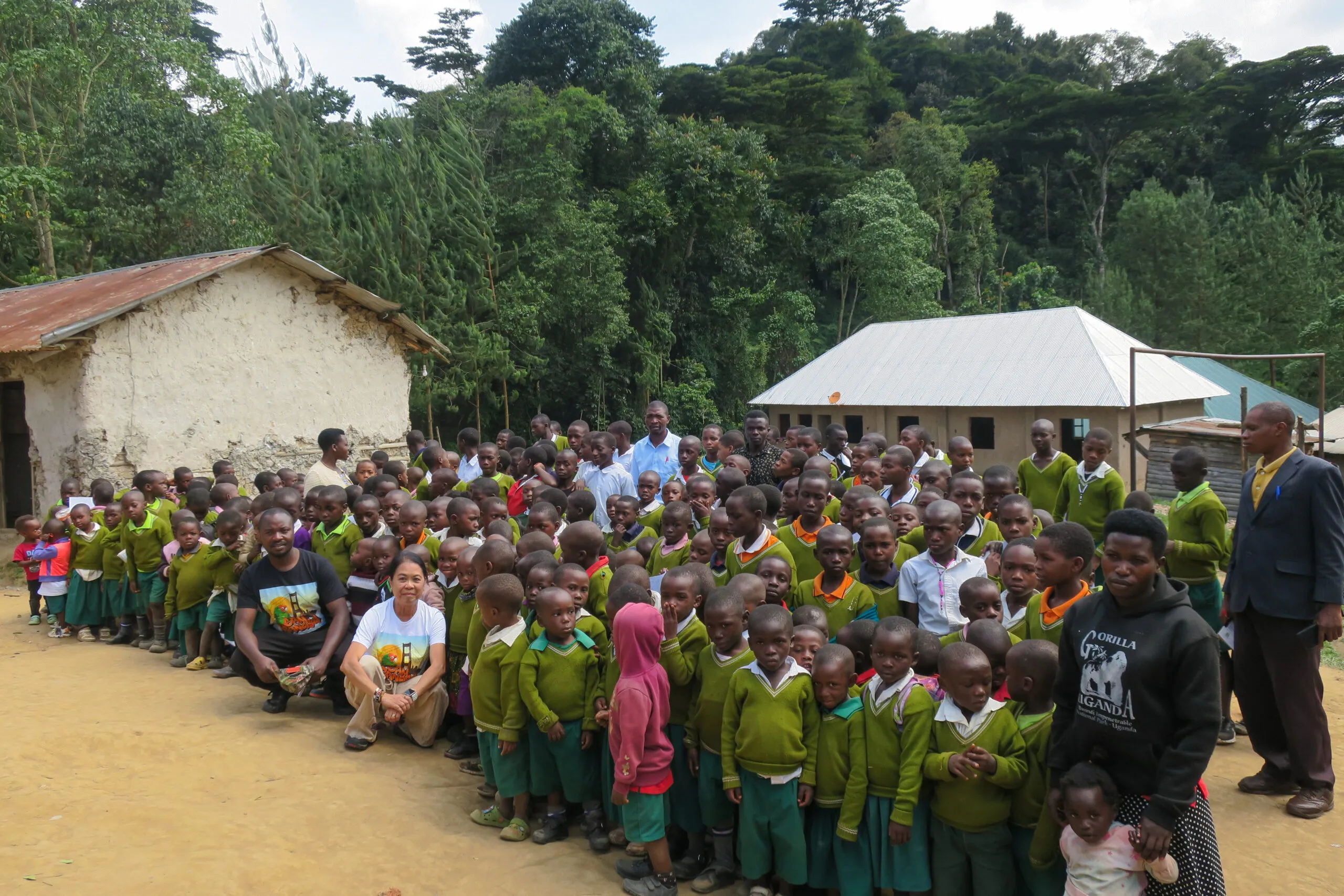
- The Rushaga School Initiative. MBM contributes $500 on behalf of every traveler toward the rebuilding of Rushaga Community School, supporting education for children in the community that lives alongside Bwindi. Conservation works when communities benefit from it. This is our small, direct contribution to that equation.
- Leave it lighter. Many areas of Uganda are actively working to reduce plastic waste. Bring a reusable water bottle, refuse single-use plastics where possible, and carry out what you carry in. Safari lodges increasingly operate with low-impact principles; respect them.
- Photography and community dignity. A photograph of a person is not a souvenir to collect. Ask. Wait for a yes. Show the photo. If someone says no, honor it without negotiation. People in communities you visit are not props for your content. They are the people whose land you are traveling through.
OUR UGANDA STORIES
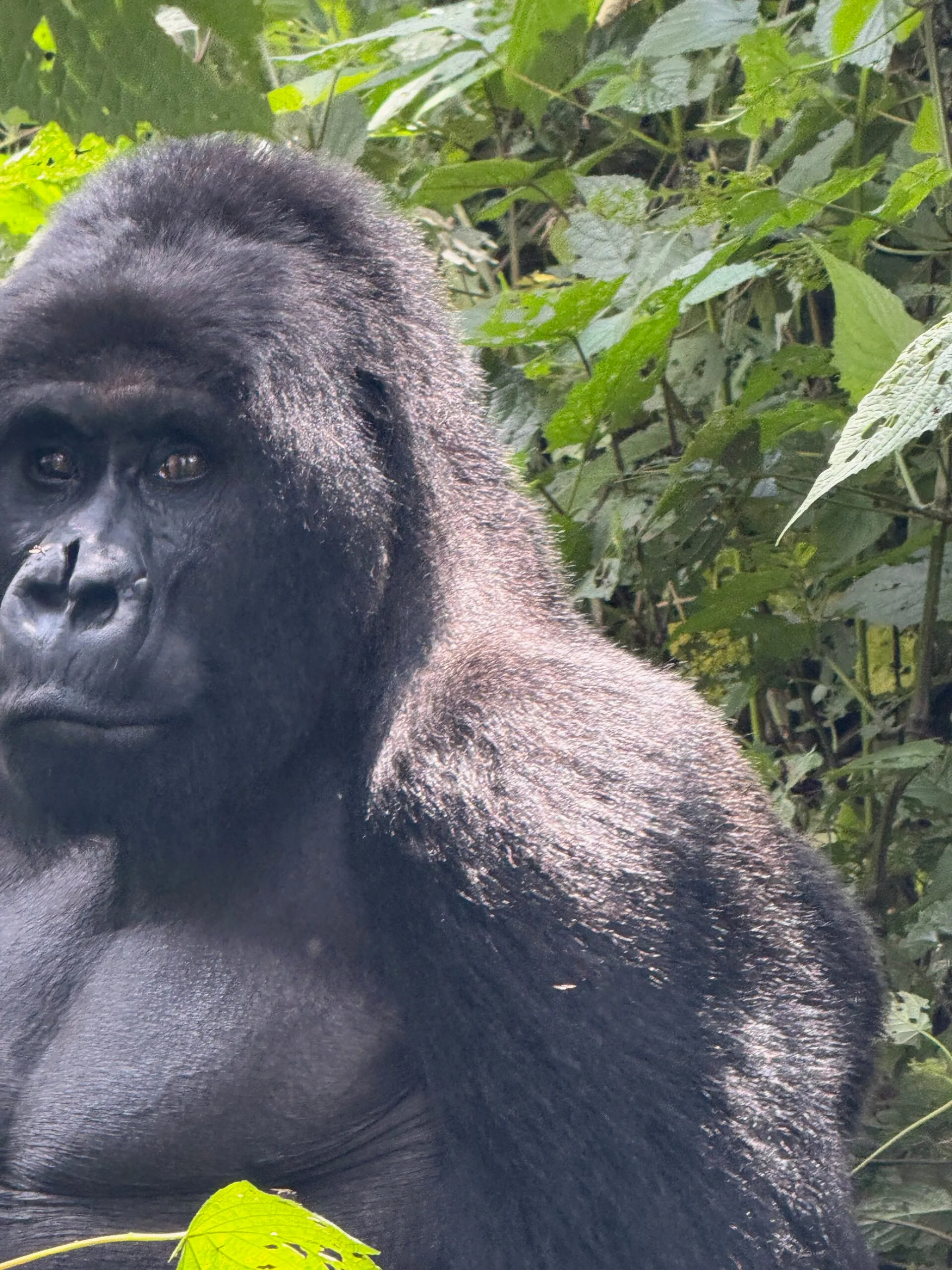
Firsthand stories from our time in Uganda, the gorillas, the Batwa, the children of Rushaga, and the landscapes that stay with you long after you leave.
Ready to travel to Uganda?
We are currently gathering travelers for our 2026 Uganda Collective Journey — 11 days, gorillas, community, and the Pearl of Africa.