
What is Gorilla Habituation
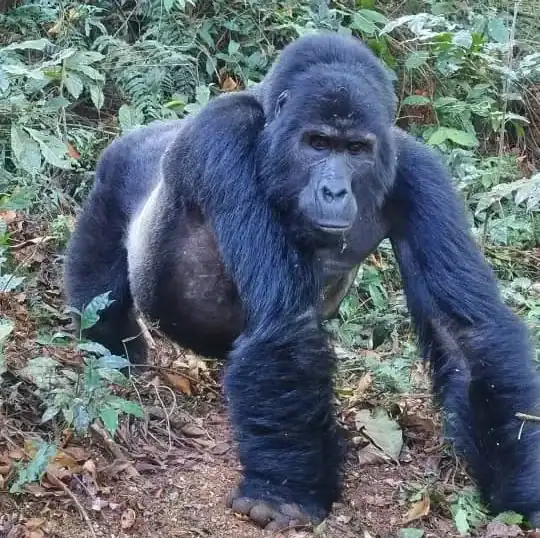
Every gorilla family you can trek to see today started completely wild, untouched by human contact, moving through the forest the way gorillas have for millions of years. Getting from that starting point to a family calm enough to let eight strangers stand seven meters away for an hour is a process called habituation, and it’s one of the least-talked-about parts of the entire gorilla trekking experience.
A Day Job Like No Other
It Takes Years, Not Weeks
Habituation isn't quick or easy. It takes between 2 and 5 years of daily commitment, and Nicholas was there for every step of the Shajare family's journey. Every morning, he would follow the family to their nesting spot from the night before. He began by observing from 15-20 meters away, watching how they fed, played, groomed, and interacted. Gradually, over months, he moved closer—but only when the gorillas showed no signs of stress or fear. He made soft sounds so they learned to recognize his voice. He moved predictably so they understood his intentions. He showed calm, non-threatening body language. Essentially, he taught the gorillas a simple lesson: "We're not a threat." Over time, the gorillas ceased running when he approached. They stopped watching him nervously. They went about their daily routines—eating, playing, resting—as if he were just another part of the forest. And that's when a family is considered habituated
The Bashate Family: Years of Dedication
Nicholas didn't just habituate the Shajare family. Years earlier, he had done the same work with the Bashasha family, another gorilla group in Bwindi. As we talked, his eyes lit up. He pulled out his phone and began scrolling through photos—images of gorillas he'd spent years getting to know. Each photo came with a story. This one is the playful youngster who always got into trouble. That one is the gentle mother who fiercely protected her baby. This silverback had the calmest temperament Nicholas had ever seen. You could see the pride in his face. These weren't just animals he'd observed for work. These were individuals he knew intimately, gorillas whose trust he'd earned through patience and respect.
How It Actually Works
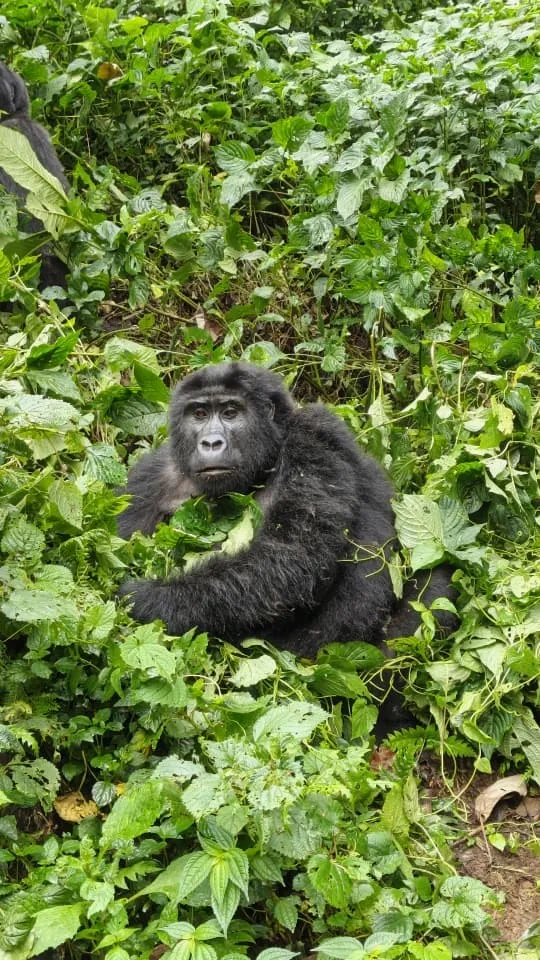
Every morning, the ranger follows the family to their nesting spot from the night before. It starts with distance: observing from 15-20 meters away, simply watching how the gorillas feed, play, groom, and interact without trying to get any closer.
Gradually, over months, the ranger moves closer only when the gorillas show no signs of stress or fear. He makes soft sounds so they learn to recognize his voice. He moves predictably, so his actions become familiar instead of alarming. He uses calm, non-threatening body language. The entire process is essentially one long, patient lesson repeated day after day: we’re not a threat.
Over time, the gorillas stop running when he approaches. They stop watching him nervously. They go about their daily routines: eating, playing, resting as if he’s simply become part of the forest. That’s the moment a family is considered habituated.
It Doesn’t Always Go Smoothly
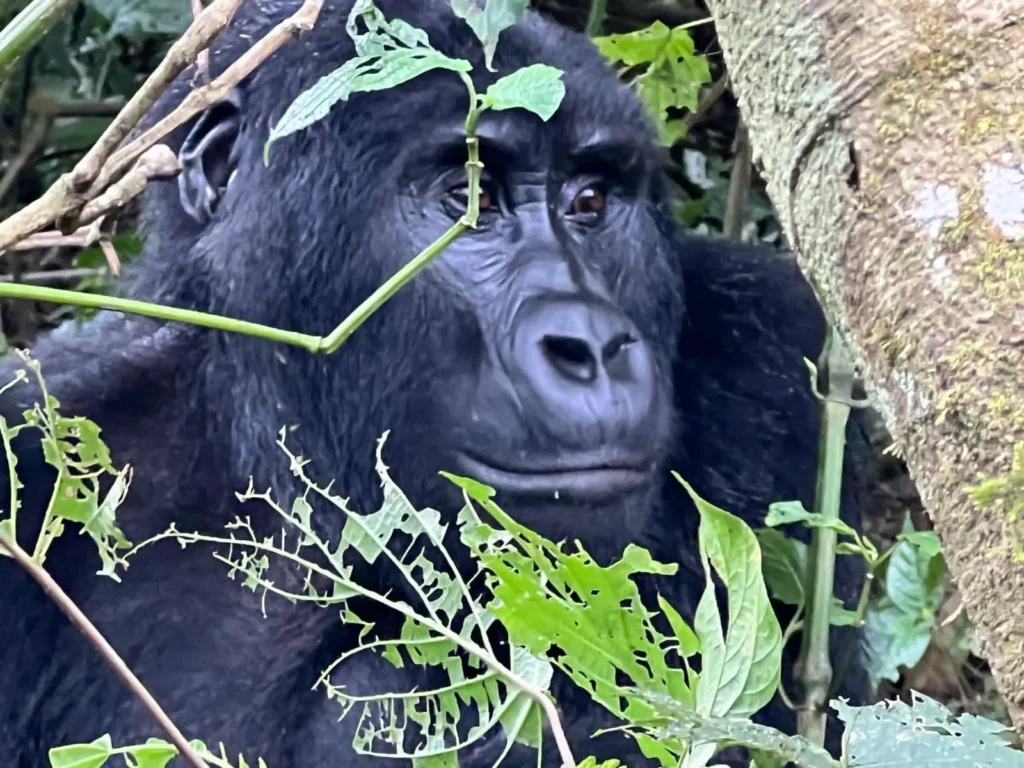
Habituation isn’t a straight line. The first time a wild gorilla charges you is, by every account, incredibly challenging. A full-grown silverback running directly at you, and the only correct response is to stand your ground until he stops and looks at you instead of through you.
Some families make it harder than others. One ranger who worked on a family with two silverbacks described both of them charging from different directions at once during the process, a level of intensity that would send most people running. It took relentless daily persistence, not a single dramatic breakthrough, to get that family to the other side.
Why It Matters for Every Trekker
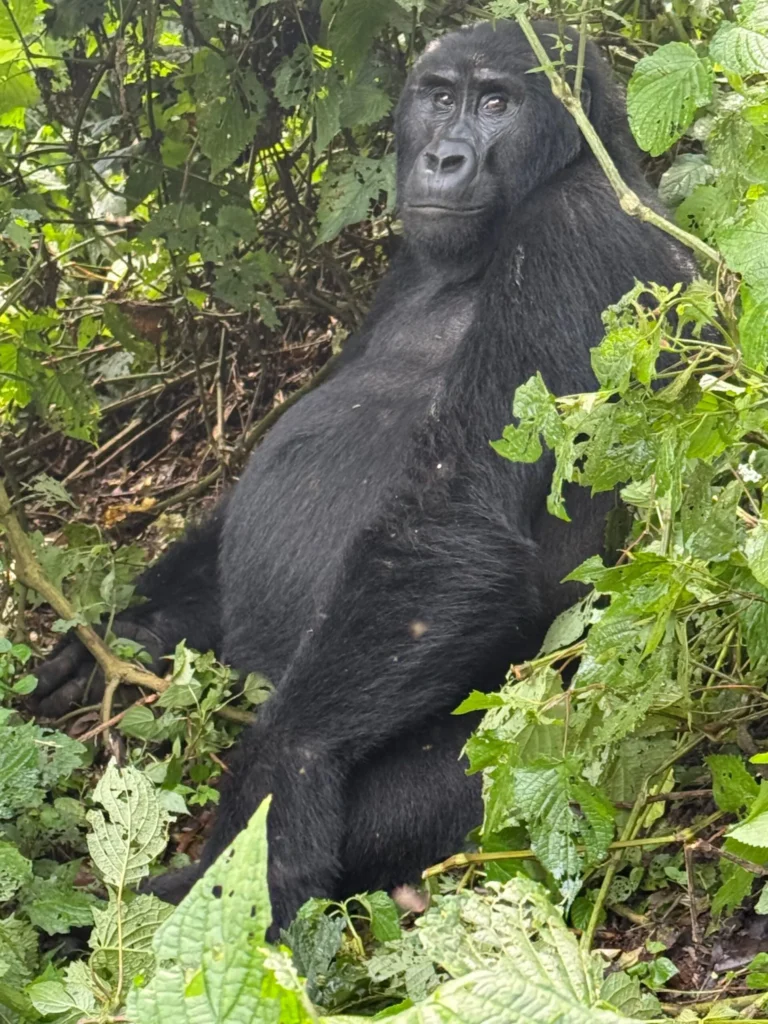
Habituated gorilla families are the backbone of gorilla tourism, and tourism is what funds conservation. Without habituation, there are no permits, no tourism revenue, and far less protection for these endangered animals. Habituation also allows researchers and veterinarians to monitor gorilla health more closely, respond quickly to injuries or illness, study behavior and social dynamics, and track population changes, all of which is essential to keeping the species alive.
The Numbers Behind the Work
Uganda alone is now home to more than 20 habituated gorilla families across its different trekking sectors. Each one represents years of a single ranger’s daily commitment. That’s part of what makes Uganda such a strong choice for travelers: more habituated families means more permit availability, smaller groups, and a wider range of trekking experiences, all built on the same patient process repeated over and over across the forest.
The hour you spend with a gorilla family isn’t just the result of a good guide and a lucky sighting. It’s the end product of years of someone showing up, every day, until a wild animal decided a stranger wasn’t a threat.
Photo Credit: Nicholus, UWA Ranger
Stories from the Road
Every journey has another story waiting to be discovered. Explore more experiences, cultures, wildlife, and people from around the world.