
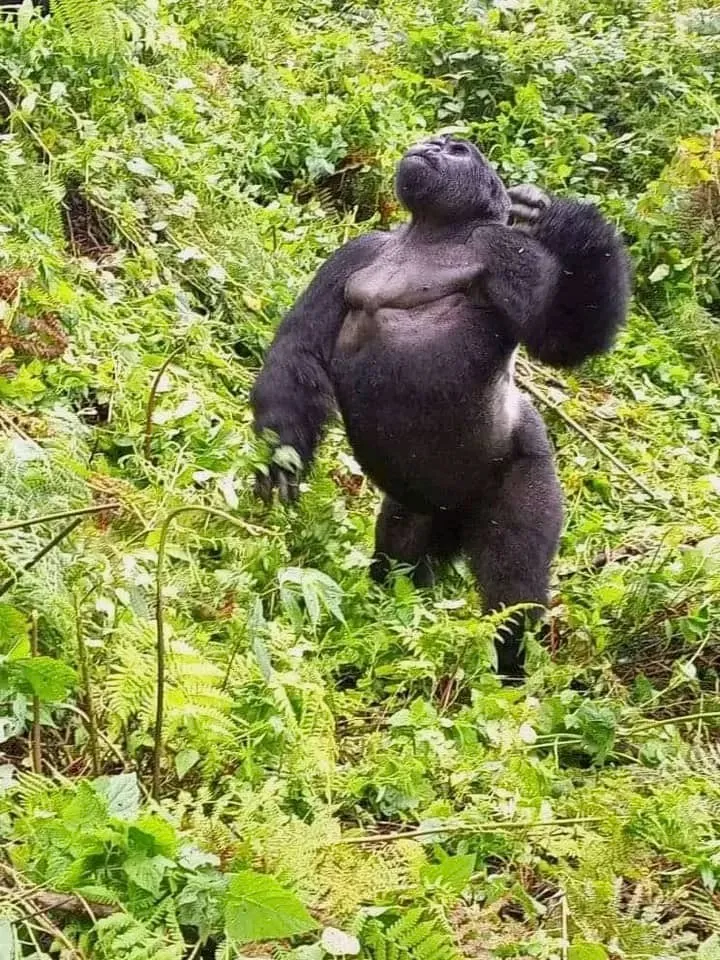
I asked Nicholas directly: Is it ethical to habituate wild animals this way?
“The gorillas we habituate are calm,” he explained. “They don’t run. They don’t show stress. They’ve learned that we mean no harm. Is it different from their natural life? Yes. But without tourism, without the money and attention it brings, we probably wouldn’t have gorillas at all.”
He’s right. In the 1980s, fewer than 300 mountain gorillas remained in the wild. Today, thanks to conservation efforts primarily funded by tourism, that number has grown to over 1,000.
Habituation changes gorilla behavior—they become comfortable around humans in a way wild animals typically aren’t. But when done carefully, ethically, and with strict limits, the benefits for conservation far outweigh the risks. Uganda’s regulations are rigorous, the conservation impact is genuine, and the experience leaves you with a deep sense of connection to these remarkable animals.
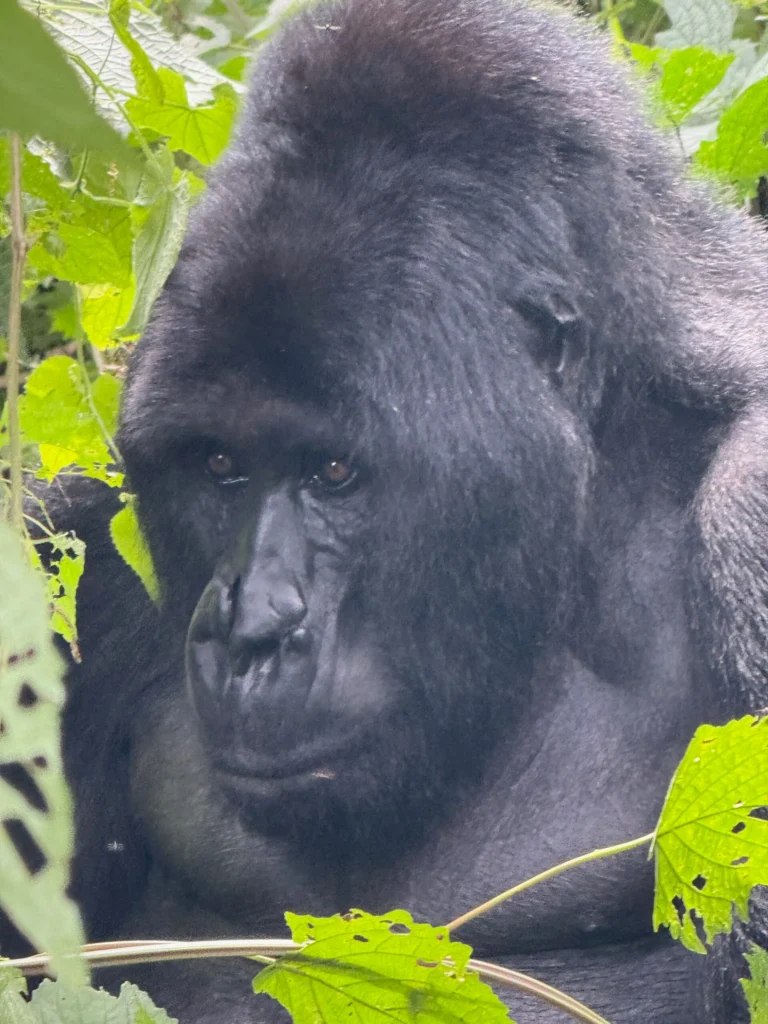
Habituation changes gorilla behavior—they become comfortable around humans in a way wild animals typically aren’t. But when done carefully, ethically, and with strict limits, the benefits for conservation far outweigh the risks. Uganda’s regulations are rigorous, the conservation impact is genuine, and the experience leaves you with a deep sense of connection to these remarkable animals.
The Rules That Protect
- Maximum of 8 tourists per family per day — This limits disturbance and stress.
- Masks required — Prevents transmission of human diseases.
- Health checks before trekking — Anyone showing symptoms of illness cannot trek. This rule is non-negotiable.
- 7-meter distance rule — Though not always possible in dense forest, guides enforce this carefully. The gorillas are wild and move freely; they don’t always respect the 7-meter rule themselves.
- One hour with the gorillas — Limits exposure time.
- No eating or drinking near gorillas — Prevents contamination and habituation to human food.
Personal Note: This is why my first trek was cancelled. I had a cold, and they wouldn’t let me go. It was disappointing, but absolutely the right call.
Nicholas put it: “These gorillas are ambassadors. Once you meet them, you’ll do anything to protect them. And that’s what keeps them alive.”
My takeaway:
Gorilla trekking can be ethical when conducted with care, respect, and in accordance with strict conservation guidelines. At Mi Bella Mondo, we work directly with our local partner at the Rushaga Community School to ensure that every tour we create supports not only the wildlife and the forest but also the communities that live alongside them. Responsible travel means everyone benefits: gorillas, nature, and the people who protect them.
Let’s Travel For GOOD.
Stories from the Road
Every journey has another story waiting to be discovered. Explore more experiences, cultures, wildlife, and people from around the world.