
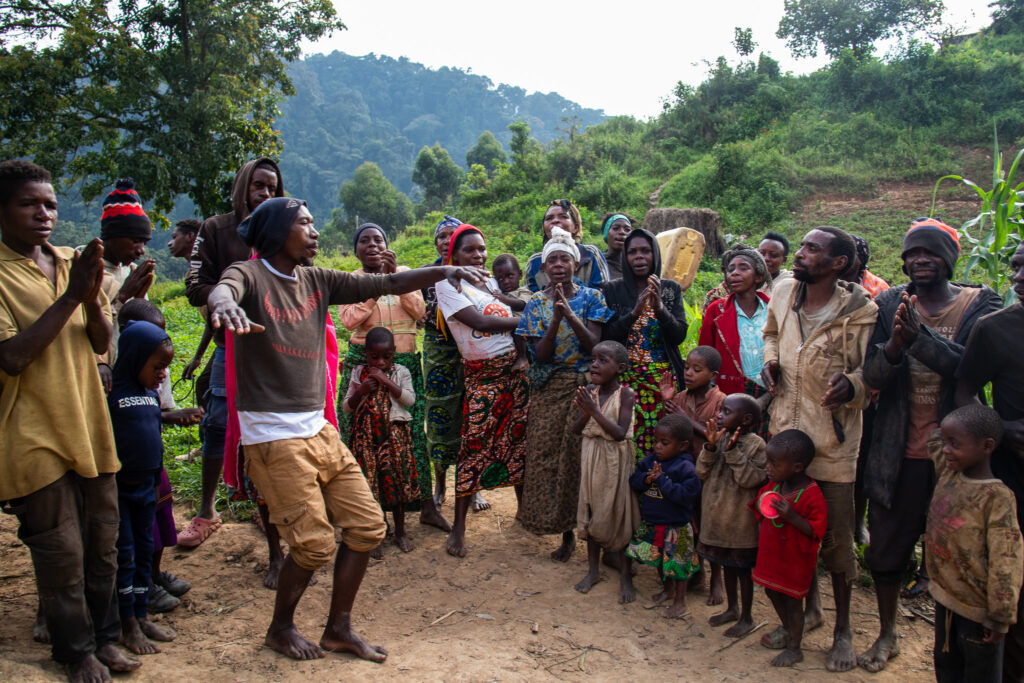
The Batwa: Original Keepers of the Forest
The Original Keepers of the Forest Long before Bwindi Impenetrable Forest became famous for the mountain gorilla, it was home to the Batwa, a community of hunter-gatherers believed to have lived in the forests of Uganda, Rwanda, and the wider Great Lakes region for centuries. Some estimates put it at more than 300 years in the Bwindi alone. Often called “Keepers of the Forest,” the Batwa built their entire way of life around the dense, high-altitude rainforest: tracking game, gathering wild fruit and honey, harvesting medicinal plants, and building temporary shelters from leaves and branches as they moved through the trees. Life Before 1991 For generations, the forest wasn’t just where the Batwa lived. It was the basis of their identity. Their knowledge of the ecosystem was intimate and practical: which plants healed which ailments, how to track animals through thick undergrowth, how to start a fire from dry wood using nothing but friction and patience. This wasn’t folklore passed down for its own sake; it was survival knowledge, refined over countless generations of daily use. The Eviction That changed in 1991. To protect the critically endangered mountain gorilla, of which roughly half the world’s population lives in Bwindi, the Ugandan government decided to designate Bwindi Impenetrable Forest and neighboring Mgahinga as national parks and, later, UNESCO World Heritage sites. The Batwa, who had never held formal legal title to land they’d occupied for generations, were classified as illegal squatters on their own ancestral home and evicted. In most accounts, with little notice, no compensation, and no consultation. Estimates vary, but researchers and advocacy groups such as Survival International put the number at roughly 800 Batwa families; around 4,000 people were displaced from Bwindi alone. Overnight, a community whose entire economy and culture depended on the forest was pushed to its edges with no land, no livelihood, and no plan for what came next. Life After Displacement The transition was brutal. Skills that had sustained the Batwa for centuries, such as tracking, foraging, and forest medicine, had little value in the cash economies of surrounding villages. Many ended up landless, working as day laborers or squatting on land owned by neighboring communities, often facing discrimination as one of the region’s most marginalized groups. Elders describe a profound sense of disorientation: a people who had defined themselves by their relationship to the forest were now barred from entering it except as visitors or as guides. Where Things Stand Now In the years since, a share of Bwindi’s tourism revenue, driven largely by gorilla tracking permits, among the most expensive wildlife tourism experiences in the world, has been directed toward Batwa communities through trusts such as the Mgahinga and Bwindi Impenetrable Forest Conservation Trust. Community-run initiatives, including cultural tourism experiences and local schools, have emerged as ways for the Batwa to generate income and pass on their traditions to a generation that never lived in the forest at all. But the deeper tension hasn’t disappeared. Conservation successes are real: mountain gorilla numbers have grown, and Bwindi’s ecosystem is protected. Yet that success was built, in part, on the removal of the people who had coexisted with it longest. Today the Batwa occupy a strange position in their own homeland: welcomed back into the forest as cultural guides and performers, but never again as residents. Stories from the Road Every journey has another story waiting to be discovered. Explore more experiences, cultures, wildlife, and people from around the world. EXPLORE ALL STORIES
The Batwa: Original Keepers of the Forest Read More »