Culture-Tradition

Pushkar Fair: A Fever Dream of Colors and Chaos

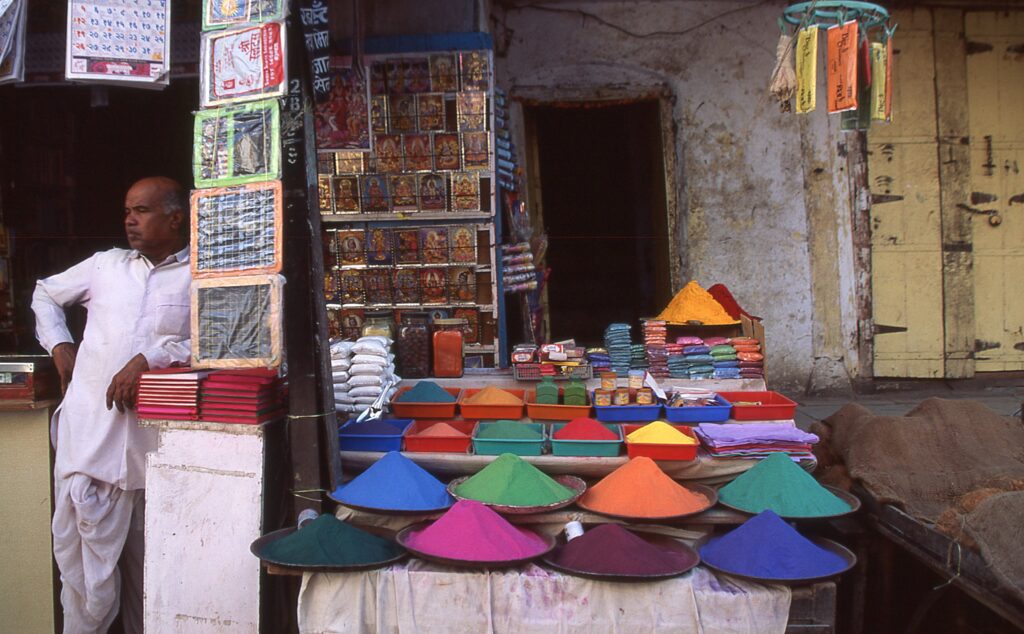
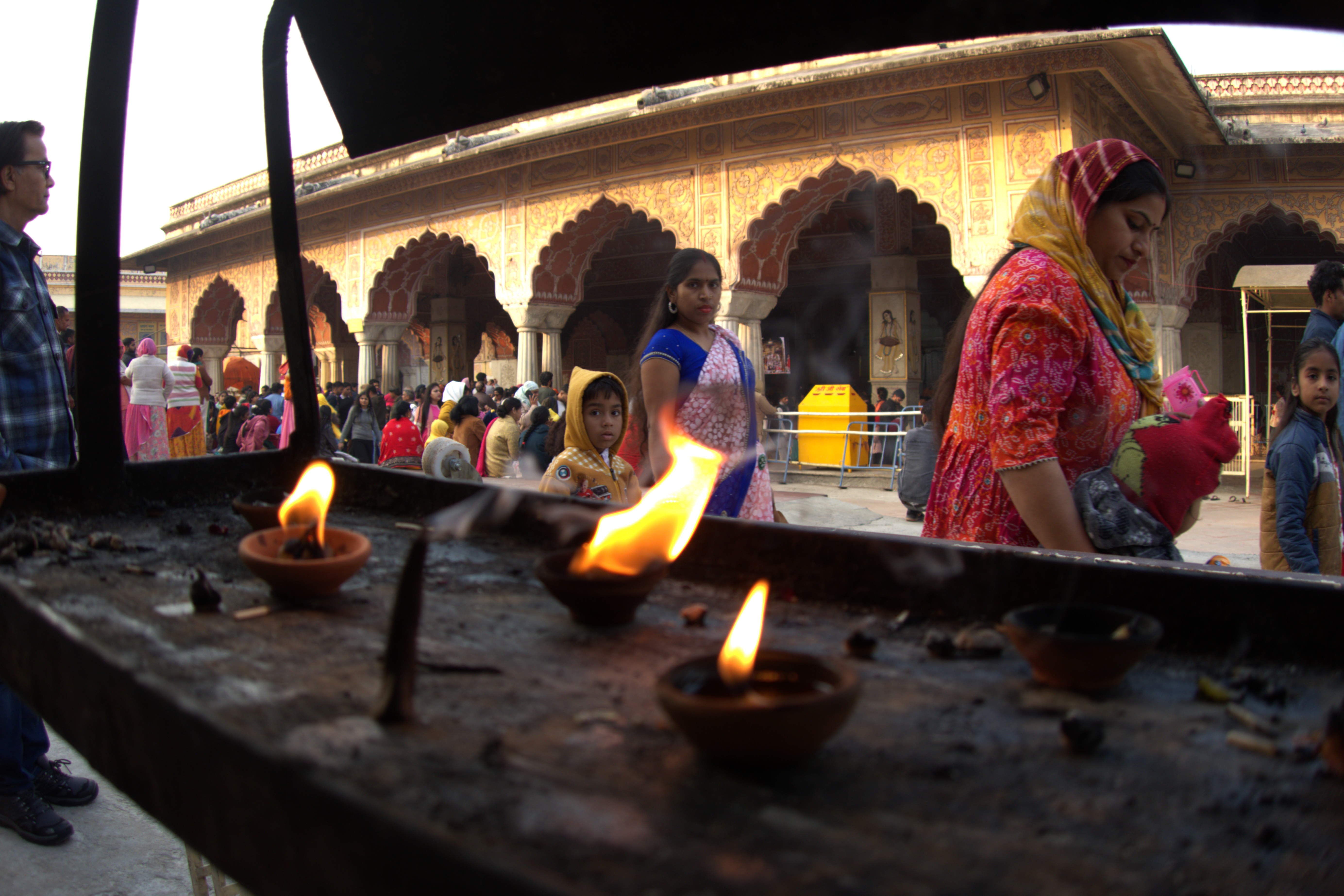
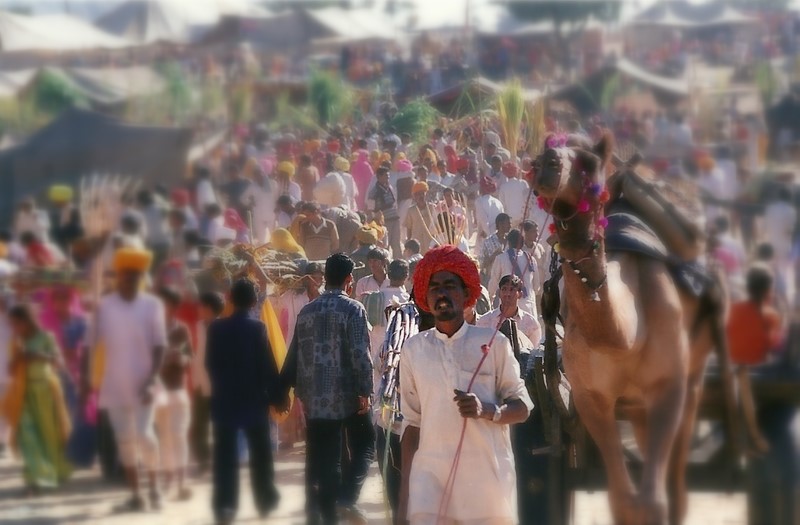
Bus to Pushkar GD, my new friend, took me to the Pushkar Fair. From Jaipur, an excursion right unto itself, we grabbed a bus. He cautioned me about how the bus would be crowded. He wasn’t kidding. We were buried in a throng of people, crammed between traders, pilgrims, and travelers.  We headed for Pushkar’s fabled fair. Every pothole sent us lurching against each other as the bus screamed down the road. The entire city of Rajasthan seemed to be traveling with us, ready to see the expected celebration! The smell of fried food, incense, and dust whirling permeated the dense air. Every glance we exchanged with another passenger revealed an underlying thrill, a shared knowledge that we were all headed toward something remarkable. I fainted when we exited the crowded bus. Luckily, GD was there to catch me! Colors and Chaos It seemed as though I had entered another planet. Less of a market, Pushkar Fair was more of a real, breathing carnival; a mix of history, business, and celebration unlike anything I had ever seen. Camels decked out in elaborate tassels and mirrored saddles, their owners proudly parading them for trade. Musicians played soulful Rajasthani tunes, the wail of their instruments rising above the crowd, and vendors hawked everything from delicate silver jewelry to steaming plates of sweet, sticky jalebis. The town in the desert had transformed into a vibrant explosion of hues. GD and I roamed across the field, my senses overwhelmed but delighted. I saw wide-eyed tourists haggling for embroidered shawls, snake charmers guiding cobras into hypnotic loops, and turbaned traders immersed in negotiations over animals. An unplanned sport was underway in the middle of the fair: camel races, their long-legged riders jumping furiously as the audience applauded, dust billowing in golden clouds. Past the excitement of the market, Pushkar’s holy side showed itself. Hindu visitors swarmed over the edges of the famous Pushkar Lake at the ghats. Their prayers spoke in quiet respect as they sank into the hallowed waters, the sound mixing with the noisy intensity of the fair. Believed to have been formed by Lord Brahma, the lake shimmered in the afternoon sun, mirroring the anarchy and dedication to coexistence here in perfect harmony. Pushkar Fair was an immersive experience that blurred the boundaries between the ancient and the modern, the sacred and the chaotic. As we returned to Jaipur, I finally looked at the brilliant fairground again. In that instant, I realized this was one of those locations I would always carry with me, marked in memory like the smell of camels and incense in cold desert air! Photo of GD, Mr. Desert Man, and me! Author and photo credit: Cristy Stories from the Road Every journey has another story waiting to be discovered. Explore more experiences, cultures, wildlife, and people from around the world. EXPLORE ALL STORIES

Pushkar Fair: A Fever Dream of Colors and Chaos Read More »
When Plans Fall Apart: Embracing the Unknown in India

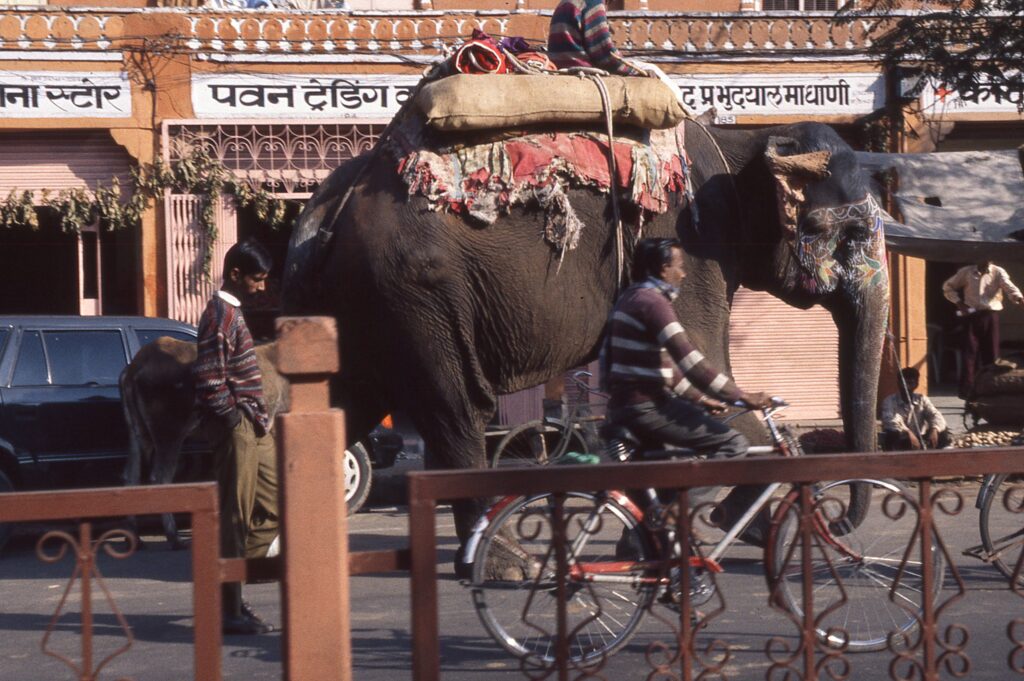
My Unplanned Trip to India I had planned an ambitious trip to five countries with a coworker I barely knew. We bought a round-the-world ticket to see Japan, Vietnam, Nepal, India, and Thailand. She oversaw our stay in Japan, arranging accommodations with her foster family, and used her previous experiences to plan our time in India. However, following our time in Japan, it became evident that we were unsuitable travel partners. Despite this, we continued our trip to Vietnam and Nepal. Finally, at the end of our Nepal trek, we parted ways. This journey did not go as I had planned. I was alone in Kathmandu for a few more days, struggling to decide what to do next. Traveling alone was not new to me, but India was uncharted territory. I had done little research and was mentally unprepared. Nonetheless, I followed my original plan and continued the trip to India. A quick call to a friend in the United States helped me book a flight to Goa, where I hoped to relax on the beach and plan the rest of my adventure. Arriving in New Delhi Two days later, I boarded a plane to New Delhi with no guidebook or maps, only a one-way ticket and an open mind! In 2025, we now have smartphones, GPS, and social media to navigate the world. Back then, we utilized payphones; there was no internet, Google Maps, or quick connections. Travel, in its simplest form, was an unforgettable and thrilling experience. When I arrived at Indira Gandhi International Airport, my first stop was at the gift shop, where I picked up a Lonely Planet guidebook and an India map. Because I traveled light, with only a few clothing items, trinkets, and my camera, I breezed through customs and stepped outside into a sea of vivid hues. The airport’s exit evoked a sensory explosion. Women dressed in beautiful saris, men in gorgeous turbans, and uniformed greeters awaited their guests. My friend had arranged for a car and driver for me, and I saw him holding a sign bearing my name. His kind smile immediately made me feel at ease. Before I knew it, he was putting my bag in the trunk of a black Hindustan Ambassador. Unfortunately, in my excitement, I forgot to photograph him with the automobile. The trip from the airport was chaotic yet captivating. The streets were alive with activity, with auto-rickshaws zipping through traffic alongside multicolored taxis and honking cars. Vehicles darted in and out of lanes with no discernible rhythm, and horns blared as continual background music. Buses rushed by while entire families, sometimes five people, sat precariously atop single motorcycles. Then, amidst the current chaos, I noticed elephants and camels gracefully ambling along the highway as if transported from another era. New Delhi’s airport was even busier in 2025. On our recent trip to India, although we only had to drive three kilometers to leave the airport, a single red light held us up for more than an hour. During our drive to the travel agency, I realized that the vehicle ride itself had been my first true insight into the spirit of India, vibrant, chaotic, and full of unexpected adventure. And I had only been in India for one hour. Travel Agency The driver led me across the busy market streets to a small, cramped office. Inside, an ancient computer and heaps of documents occupied the space. I handed her my passport and explained that I must fly to Goa. The agent frowned. “I apologize, but we have full flights to Goa for the next two weeks!” She looked at me momentarily before offering an alternative: “I can arrange your flight to Bangalore. From there, board the bus to Goa. It’s a long journey, but it’s the best option.” A bus? The thought unsettled me. Traveling by bus in an unfamiliar nation seemed intimidating, but perhaps this was the adventure I had been looking for. “Let’s do it,” I responded, unsure of what was ahead. After I acquired my ticket, my driver took me for a quick lunch before returning to the airport for my 3 p.m. departure to Bangalore. Author and photo credit: Cristy

When Plans Fall Apart: Embracing the Unknown in India Read More »

Almost Stranded in Bengaluru: An Unexpected Act of Kindness

No Hotel Reservations I landed in Bengaluru at about 6 p.m. and had no hotel reservations for the night. As reality set in, I found the payphone and started phoning hostels, budget hotels, and even five-star hotels, only to get the same response: they were all fully booked for the next seven days. Only then did I discover the Miss World Pageant was in town, taking up every available space. I observed two couples in a similar situation at the airport, looking for a place to stay. As the terminal emptied, we were among the few who remained. Overhearing their chat, I approached them and inquired whether they had had any success. With no solutions in sight, the three of us proceeded to plan our following actions together. I noticed a middle-aged man observing us in the distance as we spoke. He wore a perfectly fitted suit and had a subdued power that suited someone from executive circles. A few moments later, he walked over to us and spoke calmly. A Perfect Stranger “You won’t find a hotel tonight or anytime this week,” he told us. “Lodging is almost impossible with the Miss World Pageant in town.” Then, shockingly enough, he said, “If you have nowhere to stay, you are welcome to spend the night at my house.” The three of us exchanged glances as we considered our alternatives. We were stranded for the night. With nothing to lose, we decided to stick together and accompany him. Our strategy was simple: go to the next town in the morning and try our luck. By now, it was about 7:30 p.m., and darkness had descended. As we followed this man to the parking lot, he pointed to a waiting limousine with a chauffeur standing there. “This is the car,” he said. Wait, what? A limousine? Who was this man? Throughout the journey, he engaged us in conversation, asking about our travels and where we were from. However, he shared little about himself. All we knew was his name: Philipose Matthai. His calmness made us feel at ease, and we soon chatted easily. When we arrived at his home, our jaws sank. It was not just a house but a mansion. His wife graciously greeted us, and a maid took us to our rooms, explaining that supper would be ready in 30 minutes. Mr. Matthai informed us that, while he had to go early for work, we could take our time, have breakfast, and stay for a few days if necessary. He also arranged for his driver to transport us wherever we wanted the following morning. I knew very little about Mr. Philipose Matthai other than that he was the head of the Bangalore Coffee Board. What I do know is that he was a kindhearted and generous man. In our time of need, he opened his home to three strangers. He welcomed us warmly, as if we were family, and exhibited worry about my solo travels around India. And to think, I hadn’t even been in India for 24 hours yet. The following morning, I got up early to catch him before he left for work. “What are your plans?” he inquired. The truth was that I still had no clear plan; I was still trying to take the bus to Goa. “Stay a few more days,” he recommended. “The driver can take you sightseeing in the morning.” Before departing, he handed me his business card and stated, “If you need anything or get into trouble while traveling in India, please do not hesitate to contact me.” After breakfast, the driver took us sightseeing, and by lunchtime, we were at a local restaurant, enjoying a well-earned meal after a morning of exploration.  Kindness Goes a Long Way When we left Mr. Matthai’s home, kindness left a lasting impression. Sometimes, the unexpected moments shape our journey in ways we never anticipate. This remains one of my most cherished solo travel stories—a reminder that the best travel experiences aren’t always planned; they often find you when you least expect them. Author and photo credit: Cristy Stories from the Road Every journey has another story waiting to be discovered. Explore more experiences, cultures, wildlife, and people from around the world. EXPLORE ALL STORIES

Almost Stranded in Bengaluru: An Unexpected Act of Kindness Read More »

An Unexpected Trip to Puttaparthi – A Spiritual Curiosity

A Detour to Puttaparthi The Australian couple I met last night at Mr. Matthai’s house, Joe and Amy, make an annual journey to Puttaparthi in India. They were Sathya Sai Baba devotees who planned to take the afternoon bus to his ashram. That morning, we went sightseeing together. I expressed my plans for Goa, but interest in Puttaparthi arose. What kept them coming back year after year? I spontaneously inquired about joining them, vowing to depart if I didn’t find it captivating. And with that conversation, we were on the bus to Puttaparthi! During the bus ride, they explained Sai Baba’s origins, the ashram, and what I may expect. Who is Satya Sai Baba? The renowned spiritual leader of Puttaparthi, Satya Sai Baba, transformed a small village in Andhra Pradesh into a destination where people from around the globe learn about faith and service. Born in 1926, he was believed to possess divine powers. His teachings of love, peace, and selfless service attracted millions. His ashram, Prasanthi Nilayam, became a sanctuary for seekers by offering free medical care, education, and various forms of assistance. Standing out in his orange robe and curly hair, he advocated for unity among different faiths by emphasizing the importance of truth and compassion. Although he passed away in 2011, his legacy inspires people everywhere to love and support one another. Arriving at Prasanthi Nilayam Puttaparthi,  125 kilometers northeast of Bengaluru, is home to the ashram Prasanthi Nilayam—”The Abode of Supreme Peace”—and the birthplace of spiritual leader Sathya Sai Baba. When we arrived at 4 p.m., we were told to prepare for darshan (Satya Sai Baba’s appearance) at 6 p.m. The aroma of sandalwood and incense drifted through the air, mixing with the mumbled prayers of countless followers in the background. Darshan represents an outpouring of pure love. Each person receives this blessing from Sai Baba in a unique way that is beyond human comprehension. Walking through the ashram gates, I sensed an unearthly calmness in the air. The cold breeze held a peaceful force as if hundreds of prayers had soaked the ground beneath my feet. Prasanthi Nilayam’s architecture was humble, yet it emanated a quiet majesty. At check-in, I learned that single tourists received different rooms than married couples. That was when I said my goodbyes to Joe and Amy. They had a whole week of activities scheduled at the ashram, and after exchanging addresses, I never saw them again. Inside the Ashram The ashram’s arduous standards made me uneasy. Nonetheless, after freshening up, I went to the prayer hall, arriving shortly before 6 p.m. Thousands of followers filled the large auditorium, all clothed in white and sitting cross-legged with their eyes closed in concentration. A strong sense of yearning filled the air. These people weren’t simply there to watch; they came to experience something. Then something happened! When Sathya Sai Baba appeared, the crowd hummed. He moved forward in his distinctive saffron robe, unhurried but purposeful, as if each step held deep significance. Despite being a single man among millions, he appeared to see everyone, acknowledging each soul with a sweeping glance. I’d never seen anything like it in my life. As a Catholic, Sunday Mass did not look like this, and even seeing the Pope at the Vatican didn’t seem this intense. The excitement in the hall was intimidating. I felt as if I had walked into a cult. Everywhere I looked, eyes shone with a nearly trance-like devotion. As Satya Sai Baba approached the rear of the auditorium, close to where I sat, I felt my breath racing. A silence enveloped me, stretching the moment into infinity. Suddenly, he turned toward me and raised his hand in a small but commanding move. A weird feeling washed over me, like a silent wave of light, dismissing doubts I wasn’t aware I was harboring. The entire hall burst into chants. The name Satya Sai Baba echoed and swelled, blending into a single, vibrating buzz. Around me, faces shone with an almost divine light. I felt drawn into a cosmic rhythm, uncertain about my desire to participate. Then it struck me; I needed to leave. I rose softly, left the prayer hall, and went directly to my room. In a matter of minutes, I had my backpack thrown over my shoulder and was on my way to the railway station. As I exited Prasanthi Nilayam, I felt a jumbled mix of amazement, discomfort, and something else I couldn’t quite identify. As a passing visitor unfamiliar with Satya Sai Baba’s teachings, I had visited the ashram out of curiosity. I had no aspirations and no connection to the faith. However, there was a shift. I didn’t understand what I’d seen, but I couldn’t deny its impact. A whisper echoed in my mind, reminding me that life was more than simply moving from one place to another—it was about encounters such as these. There are moments when something beyond words prompts you to pause. I left Puttaparthi without devotion or answers. But I left with a feeling—a sight of something higher, a peace I had no idea I needed. Changing Course My original plan was simple: ride the next available bus to Goa. I could have gone through with it. But something inside me drew me in a different direction. The journey expanded beyond simply determining my destination. It was about allowing the journey to unfold as it desired. And so, I let go of my plans and prepared for whatever adventure lay ahead. Off to the railway station.   No Photos from Puttaparthi Photography was strictly prohibited inside the ashram, so I have no pictures to remember my time there. Additionally, my departure from the town was so rushed that I barely had the opportunity to capture any images of the surrounding area. All I have are vivid memories of that fleeting yet impactful experience, preserved only in my mind. Author and photo credit: Cristy Stories from the Road Every journey has another story

An Unexpected Trip to Puttaparthi – A Spiritual Curiosity Read More »

Udaipur: The City of Lakes and Serenity

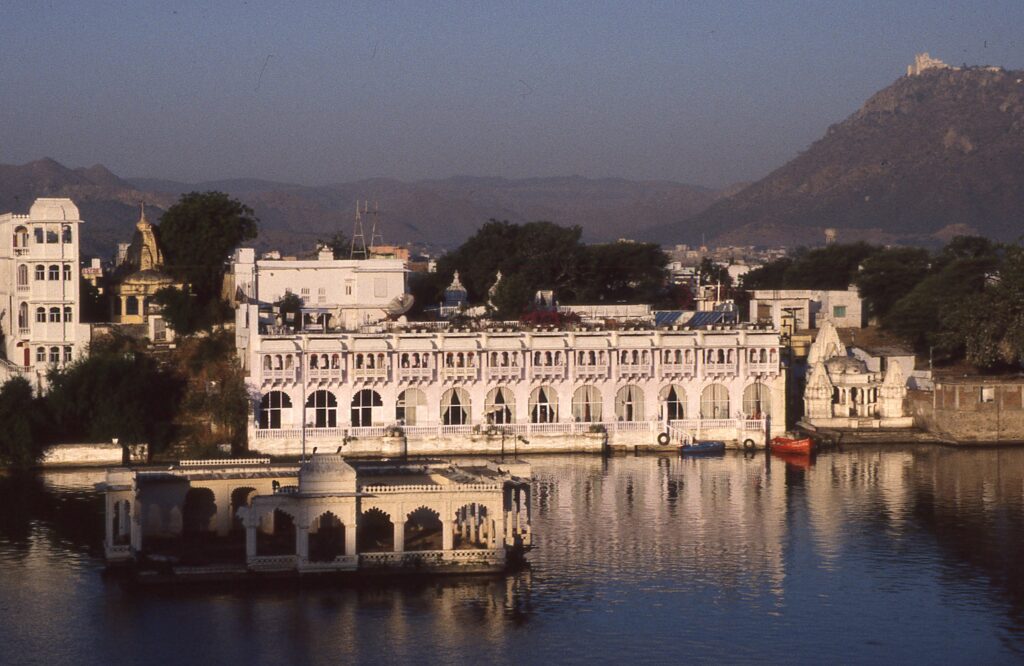
Udaipur, The White City I arrived at Udaipur, the City of Lakes, from the golden deserts of Jaisalmer. The difference was striking. Whereas Jaisalmer had been harsh and rugged, Udaipur was delicate, almost ethereal, with its whitewashed palaces and glistening waterways radiating simple grace. In 1996, Udaipur, the White City, felt ageless. Its appeal was played in tones of light and shadow. I meandered around its small pathways without a clear agenda, photographing events in black and white. The lack of color accentuated the contrasts—the complex lines of the antique havelis, the deep wrinkles of an old chai vendor observing the world go by, and the graceful shapes of ladies balancing brass pots on their heads. Best Show in Town Speaking with delight about Octopussy, the James Bond film made in Udaipur, the locals’ nightly screenings by restaurants and guesthouses reminded guests that Udaipur had hosted cinematic splendor. From my vantage point, I could see what the directors must have seen—a monochromatic masterpiece in which history and daily life melted together in a metropolis of royal palaces floating on peaceful lakes. Time seems to slow down in Udaipur, and I joyfully yield to its soft flow. The city’s defining characteristic was its lakes, right at its core. Lake Pichola was expansive and mirror-like, reflecting the magnificence of the palaces around its coast. The Lake Palace, situated near the lake’s center, evoked a fairytale vision. Udaipur’s evenings exuded pure magic. As evening fell, the city shone softly, its lights swinging in the breeze over rooftop cafés. The distant chime of the temple bells, mixed with the delicate notes of a sitar, created a song around me like a cozy hug. I cradled a cup of tea, discovered a rooftop view of the lake, and watched Udaipur disappear into its glittering mirror. Author and photo credit: Cristy

Udaipur: The City of Lakes and Serenity Read More »

Varanasi at Dawn: A Journey Through Time

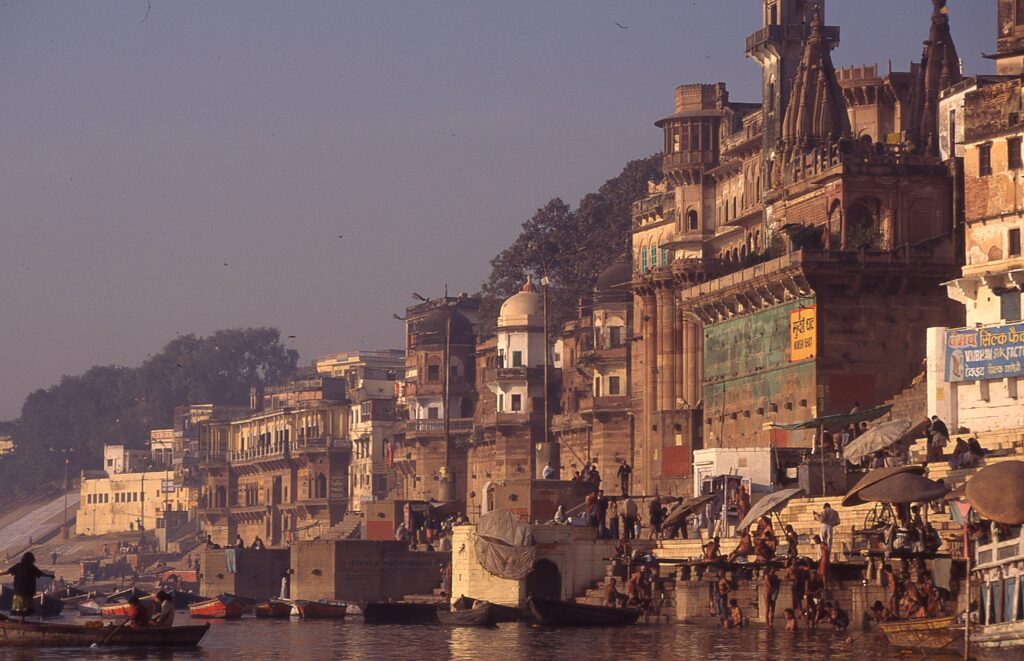
With my film camera in hand, I strolled along the ghats in Varanasi at the break of dawn, capturing the timeless energy of this sacred city. The air was clean, faintly smelling of incense and the smoke of burning oil lamps. Reflecting off the rippling Ganges, the first light of day illuminated the heavens in pink and gold. At the ghats, pilgrims entered the holy river with folded hands and silently dedicated themselves, whispering prayers that had been chanted here for hundreds of years. Cold and serene, the water embraced them as they sank and returned, feeling rejuvenated. My canvases were calm, focused, spiritual faces; each told a tale of faith, hope, and surrender. Varanasi is the core of Hindu spirituality. Hindus hold that dying here, or having one’s ashes buried in the Ganges, marks moksha—that is, release from the cycle of life and death. Funeral pyres burnt continually along the ghats, their flames linking the earthly and the holy. Gathering to carry out last rites, families yelled prayers before sending the ashes of their loved ones into the hallowed rivers. It was a somewhat poignant sight, a reminder of the fleeting character of existence and the continuous flow of faith. On my first trip to India in 1996, I visited Varanasi. I recently found photos of my journey. Grainy and flawed, these earliest pictures captured something digital photography could never capture—the warmth of recollection and the moment’s rawness. The individuals I met grinned when I showed them those pictures, knowing their city had an absolute character. Though they were constantly moving, the ghats radiated a calm silence. Sitting cross-legged, priests yelled mantras whose voices blended with the far-off ringing of temple bells. Draped in saffron robes, sadhus meditated with an ethereal calm, seeming unconcerned by time. Varanasi’s beauty sprang from its pulsing life and death, not only from its ancient buildings or the golden glow of its temples. As the sun rose, the mist over the river rose, exposing boats drifting gently across it. I was on one, staring at the city’s reflection in the holy river and experiencing extreme tranquility. Varanasi was an experience, a gateway to something everlasting, not only a place. And framing the Ganges in the beautiful morning light, I knew I would return—just as time continuously cycles around in this city that never ages, only deepens—one last picture. Namaste! Author and photo credit: CristyNOTE: All photos were taken on a Canon A2 with Kodachrome and Fuji Sensia slide film.

Varanasi at Dawn: A Journey Through Time Read More »

A Wet but Unforgettable Wagah Border Experience

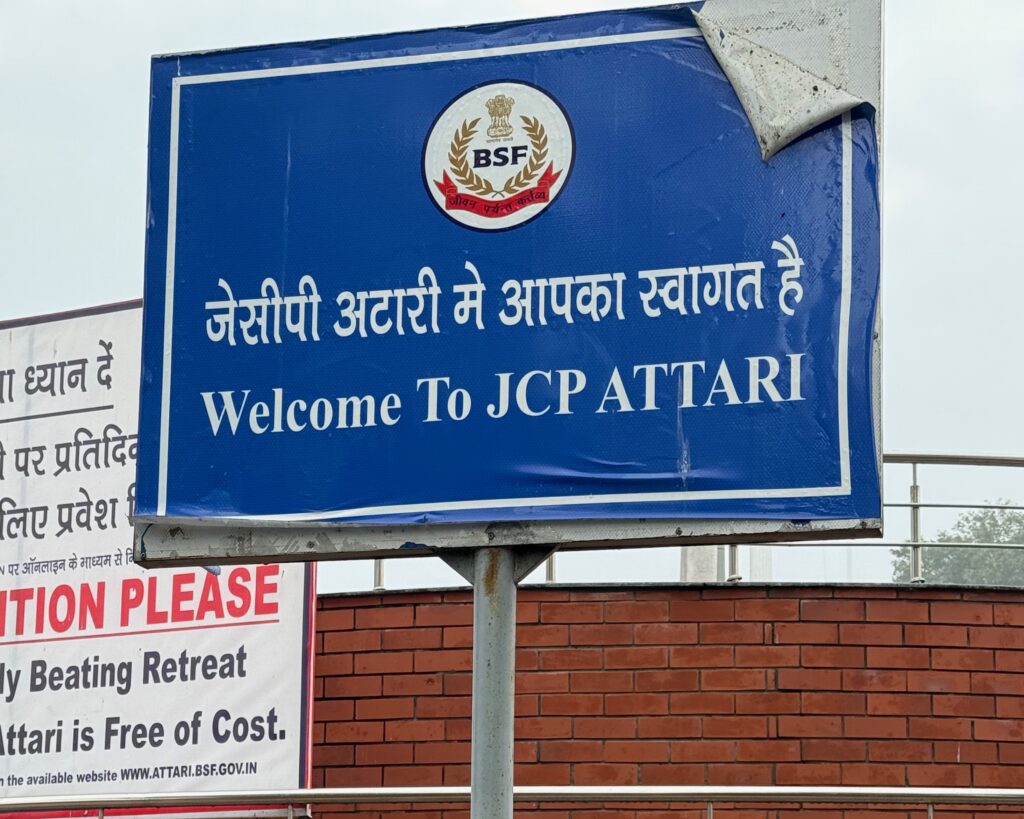
Long on our agenda was visiting the well-known Wagah Border, the crossing between India and Pakistan. We had much discussed the Beating Retreat Ceremony. This daily flag-lowering ritual draws thousands of viewers on both sides and transforms the border into a stadium of national pride. The atmosphere was cloudy, and the cold air smelled of approaching rain that afternoon as we headed near the border. Lush fields and scattered dhabas flanked the trip from Amritsar, transforming the landscape from busy city life to the expansive countryside. The energy was electrifying by the Wagah Border complex when we arrived. From speakers, loud patriotic music blared, the throng screaming “Bharat Mata Ki Jai!” and “Vande Mataram!” Men, women, and kids seated in the grandstands waiting for the ceremony started waving flags in the air. As we took our seats, the sky opened up. At first, it was a mild drizzle, but the rain came down in torrents in a few minutes, dousing everything in view. Drenched but Resolved There was hesitancy for a minute. While others hurried to hide under whatever meager cover they could, most of the throng stayed still. The rain seemed like another endurance test, another common experience drawing everyone together. We stood there grinning while totally wet. Our garments hung on our skin, and the cool water sprinkled down our faces, yet nobody paid attention. Instead, the rain accentuated the thrill; people laughed, kids splashed in puddles, and the chants got even louder, as if to question the storm itself. Looking across the border, we could see the Pakistani audience reflecting our excitement, their positions full, their cheers just as forceful. Two countries separated by history seemed bizarre, reflecting each other in passion and pride. The Event Starts The Border Security Force (BSF) men marched out with their trademark high kicks and aggressive gestures despite the rain. The coordinated show of force and discipline was hypnotic. Conversely, the Pakistan Rangers conducted aggressive drills, both sides moving accurately and their boots pounding in time. The tension in the air was evident, and the flags were lowered with great respect, but the whole experience was very human. There was also respect for all the aggressiveness in the performance, a realization that we are all simply people suffering the same rain under the same heavens regardless of boundaries and politics. Leave With a Full Heart As we returned, we were still wet, and I couldn’t help but think about the occasion. It was about experiencing the pulse of a nation, fostering a collective sense that transcended personal boundaries, and not merely witnessing a military event. The rain had washed away all discomfort, leaving just the raw beauty of the moment, one in which strangers stood together, soaking but unmoved, supporting their nation with all their hearts. Maybe the rain reminded us that we are all still standing under the same sky, feeling the same rain, and linked in ways we sometimes overlook, regardless of how many lines are drawn on a map or whether a border exists. Author and photo credit: Cristy Stories from the Road Every journey has another story waiting to be discovered. Explore more experiences, cultures, wildlife, and people from around the world. EXPLORE ALL STORIES

A Wet but Unforgettable Wagah Border Experience Read More »

The Golden Temple: A Journey of Humanity and Humility

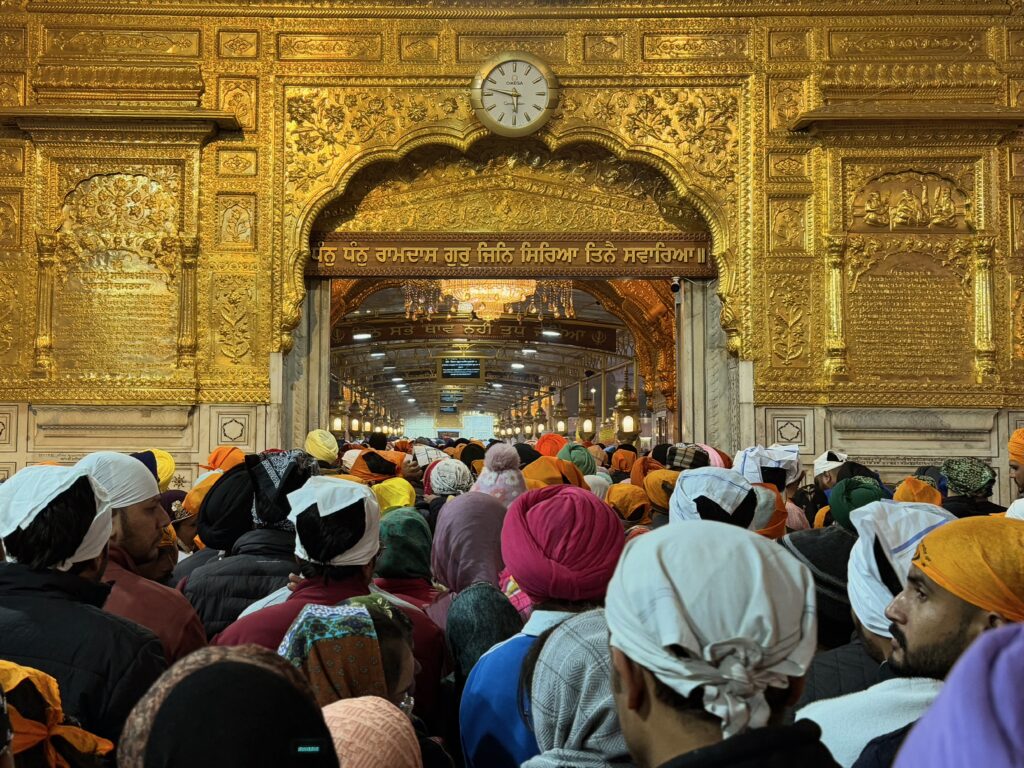
The Heart of Punjab Amritsar, the heart of Punjab, is a city steeped in history, faith, and an unshakable sense of devotion. When we arrived, I felt an energy shift, something deeply spiritual yet welcoming, as if the entire city carried an air of sacredness. Our destination was the Golden Temple, the holiest site of Sikhism. This place is known not only for its stunning beauty but also for its unwavering commitment to the values of equality and selfless service. As I approached the temple complex, I was astounded by its shining golden domes, reflecting the mild morning sun. The temple is positioned in the middle of the Amrit Sarovar, encircling the holy pool. Its bright gold façade, a stunning contrast to the calm blue of the Sarovar, makes the temple appear to float on the water. Seeing the Golden Temple in Amritsar was a trip into the core of humanity. This was live evidence of the values of equality, humility, and selfless service, not only a place of worship. The Road to the Sanctum: An Education in Humility and Patience Before entering the Golden Temple, guests must perform an essential but significant rite: leaving their shoes behind, covering their heads, and cleaning their feet in the holy water. These deeds were emblems of humility, reminding everyone that riches and ego must be left behind in the presence of divine status. They were more than just tradition. We waited more than two hours to enter the temple. Still standing there, though, I could hear the soul-stirring kirtan (devotional singing) echoing through the complex. I understood that this wait was not a hardship but a natural experience. It allowed us to see, think, and be in the moment. The scene inside the sanctum was magnificent: the golden construction glistening in the sunlight, its reflection dancing in the Amrit Sarovar holy water tank. The air smelled like incense, prayers were audible, and thousands of pilgrims silently revered their country. People lowered their heads and completely surrendered their weight to the floor. There was only patience, respect, and dedication—no rushing or pushing. Faith here, I realized, was about little, daily acts of devotion, a bent head, a muttered prayer, a silent offering—rather than big gestures. The Langar: Courtesy Beyond National Boundaries Following our visit to the sanctum, we headed to the langar, the world’s most significant free community kitchen. It serves over 100,000 people daily, regardless of religion, caste, or origin. As we arrived, I was overwhelmed by the sheer scope of the operation: massive vats of dal being churned, hundreds of volunteers rolling out chapatis, people quickly delivering plates of food, and an unbounded flow of people seated down to eat. The idea of langar is simple: Everyone, regardless of position, sits on the floor together and eats the same food. In that instant, people share meals as equals, neither rich nor poor, neither higher nor lower. It is an instruction in humility and kindness. Volunteers crept in, replacing plates to ensure no one went hungry. The most amazing part is that this operation depends solely on donations and voluntary work.   There is neither a “giver” nor a “receiver” since actual generosity eliminates the boundaries between the two. It is about sharing because you believe in plenty, in kindness, in the idea that we rise by helping others, and it is not about donating what you have extra. Faith: A Force That Transcends Religion The Golden Temple is Sikhism’s holiest shrine, yet it welcomes everyone. No matter your faith, background, or beliefs, you are embraced here as a visitor and a fellow human being. As I stood near the Amrit Sarovar, watching people sip the sacred water, I saw faith in their eyes and the idea that despite our differences, we are all connected. The continuous devotional singing, the volunteers tirelessly serving food, and the people walking barefoot across the marble floors in quiet reverence all spoke of a faith that is not loud or boastful but gentle and unwavering. This faith does not need to be proved; it is only lived. Leaving with More Than I Came With As I stepped out of the Golden Temple complex, the golden domes glowing under the evening sky, I realized I was leaving with something far more significant than just memories. I had come here as a visitor, yet I never felt like an outsider. Humanity embraced me with a warm meal. Humility reminded me that no one is above another. Generosity showed me that faithful giving asks for nothing in return. Faith reassured me that there is still goodness in the world if only we choose to see it. Perhaps that is the true power of the Golden Temple: not just its breathtaking beauty but its ability to leave a mark on your soul, to remind you that we are not so different from one another. Author and photo credit: Cristy Stories from the Road Every journey has another story waiting to be discovered. Explore more experiences, cultures, wildlife, and people from around the world. EXPLORE ALL STORIES

The Golden Temple: A Journey of Humanity and Humility Read More »

A Journey to Find the Best Biryani in Lucknow

Finding the Best Biryani in Lucknow If you love food, particularly Biryani, visiting Lucknow is like embarking on a pilgrimage to the heart of Awadhi cuisine. Known for its rich Mughlai heritage and aromatic flavors, the biryani in Lucknow is a delight for the senses. It blends tender meat, fragrant rice, and exquisite spices that linger in your memory long after the meal. My search for the best biryani in the city took me to three of its most renowned spots—Naushijaan Chicken Biryani in Hazratganj, Idris Awadi Biryani in Chowk, and Lalla’s Lucknowi Biryani. Each offered a distinct take on the beloved dish, but ultimately, I had to choose my favorite. The Search for the Ultimate Biryani: A Flavorful Adventure Lucknow has many restaurants and roadside stalls where biryani enthusiasts flock to taste this delectable dish. The quest for the best biryani often starts with a list of contenders, some famous for their historical roots and others beloved by locals for their secret recipes. Among these names, the well-known Idris Awadi Biryani in the Chowk, Naushijaan Chicken Biryani in Hazratganj, and Dastarkhwan have long been staples for biryani lovers. However, food lovers and experts highly recommend Lalla Biryani for those seeking something less commercial and more distinct. Naushijaan Chicken Biryani, Hazratganj My journey began at Naushijaan, a well-regarded eatery known for its Mughlai delights. Their Awadhi biryani was fragrant, delicately spiced, and perfectly balanced in flavor. The meat was tender, the rice fluffy, and every bite a harmonious blend of aroma and taste. I also ordered different kebabs to try, but I did not care too much for them. While it set a high standard, I knew there were more places to explore before making my final judgment. Idris Awadi Biryani, Chowk Next, I ventured into the old lanes of Chowk to try the legendary Idris Biryani. This no-frills, flavor-packed institution has served Lucknow’s food lovers for decades. The biryani was rich and robust in flavor, carrying an unmistakable rustic charm. Cooked in a large pot over a wood fire, the smoky essence infused into the rice and mutton gave it its character. While it was undoubtedly an outstanding experience, there was still one more contender to go. Lalla’s Lucknowi Biryani, Chowk Finally, I arrived at Lalla’s, a lesser-known gem that has quietly built a loyal following. One bite in, and I knew I had found my winner. Lalla’s biryani was a masterclass in balance—it had the right amount of spice, the perfect texture of rice, and meat so tender it melted in my mouth. The nuanced layering of flavors and the subtle saffron notes made it stand out above the rest. After a tasty expedition across the city, one place stood out for me: Lalla Biryani, the restaurant where the search for the perfect biryani finally came to a victorious end. While all three biryanis had unique appeal, my ranking was clear. Naushijaan came in third for its refined but slightly understated flavors. Idris secured second place with its robust, street-style biryani, which left a lasting impression. However, Lalla won the crown, as its biryani perfectly encapsulated the essence of Lucknow in every bite. The search for the best biryani in Lucknow is never over, but Lalla’s remains my top pick. If you ever find yourself in the city, do yourself a favor and embark on your biryani journey—you might discover your favorite. More on Things to Do and See in Lucknow. Author and photo credit: Cristy Stories from the Road Every journey has another story waiting to be discovered. Explore more experiences, cultures, wildlife, and people from around the world. EXPLORE ALL STORIES

A Journey to Find the Best Biryani in Lucknow Read More »

Scroll to Top