Rajasthan

Things To Do and See in Jaipur

Jaipur: The Pink City of India Jaipur, the capital of Rajasthan, beautifully combines heritage, culture, and modernity. Known as the Pink City due to its trademark pink-colored buildings, Jaipur is part of the Golden Triangle tourist circuit alongside Delhi and Agra. This UNESCO World Heritage city offers visitors grand palaces, majestic forts, bustling bazaars, and rich Rajasthani traditions. Top Things to Do and See in Jaipur Amber Fort (Amer Fort)   Why Visit: A magnificent hilltop fort, blending Rajput and Mughal architecture. The fort offers panoramic views of Maota Lake. Highlights: The Sheesh Mahal (Mirror Palace), Diwan-e-Aam, and sound-and-light shows at night. Tip: Opt for a guided tour to learn about its rich history. City Palace   Why Visit: The residence of Jaipur’s royal family, showcasing a stunning fusion of Rajput, Mughal, and European architecture. Highlights: The Chandra Mahal (Royal Palace), museums, and the Peacock Gate. Tip: Purchase a composite ticket to access additional palace sections. Hawa Mahal (Palace of Winds)   Why Visit: A five-story palace with 953 intricately designed windows, originally built to allow royal women to observe street life unnoticed. Tip: Visit early morning for golden lighting or late evening to see it illuminated. Jantar Mantar Why Visit: It is a UNESCO World Heritage Site and the world’s largest stone astronomical observatory. Built by Maharaja Jai Singh II, it houses instruments for timekeeping and star alignment. Tip: A guide can make the visit more engaging by explaining the scientific aspects. Nahargarh Fort Why Visit: Perched on the Aravalli Hills, this fort offers breathtaking views of Jaipur City, especially at sunset. Highlights: Step inside the Madhavendra Palace for royal murals, and check out the restaurant for snacks with a view. Jal Mahal (Water Palace)   Why Visit: A stunning palace that floats in the middle of Man Sagar Lake. Tip: While you can’t enter the palace, a lakeside walk or boat ride offers picturesque views. Albert Hall Museum   Why Visit: The oldest museum in Rajasthan, showcasing art, artifacts, and relics across the region. Highlights: Its Indo-Saracenic architecture and exhibits like ancient coins and traditional costumes. Birla Mandir (Lakshmi Narayan Temple) Why Visit: A serene, modern temple dedicated to Lord Vishnu and Goddess Lakshmi, made entirely of white marble. Tip: Visit at dusk to see it beautifully illuminated. Shopping and Local Markets Jaipur is a shopper’s paradise, offering everything from jewelry to textiles: Johari Bazaar: Famous for traditional Kundan and Meenakari jewelry. Bapu Bazaar: Ideal for camel leather shoes, Rajasthani mojris, and textiles. Tripolia Bazaar: Known for lac bangles and brassware. Cultural Experiences in Jaipur Chokhi Dhani: Experience traditional Rajasthani village life with folk performances, camel rides, and authentic cuisine. Raj Mandir Cinema: Watch a Bollywood movie at this iconic, royal-style cinema. Delicacies to Try Jaipur’s cuisine is a treat for the senses: Dal Baati Churma: A traditional Rajasthani dish. Laal Maas: Spicy lamb curry. Ghewar and Mawa Kachori: Sweet delicacies to savor. Best Time to Visit Jaipur October to March: The pleasant weather makes sightseeing more enjoyable. Festivals: Jaipur Literature Festival (January): Celebrating global literature. Gangaur Festival (March/April): A colorful Rajasthani celebration. Teej Festival (July/August): This festival is marked by processions and traditional rituals. Tips for Visiting Jaipur Carry comfortable footwear for exploring forts and markets. Stay hydrated, especially in the summer. Book tickets and guided tours in advance for popular attractions like Amber Fort and City Palace. Consider hiring a local guide or using an audio guide for historical landmarks. From its majestic architecture to its lively cultural experiences, Jaipur promises an unforgettable journey for every traveler. Whether you explore its grand palaces or savor its street food, the Pink City will leave you enchanted!   Stories from the Road Every journey has another story waiting to be discovered. Explore more experiences, cultures, wildlife, and people from around the world. EXPLORE ALL STORIES

Things To Do and See in Jaipur Read More »
Serendipity in Jaipur: A Journey Back in Time

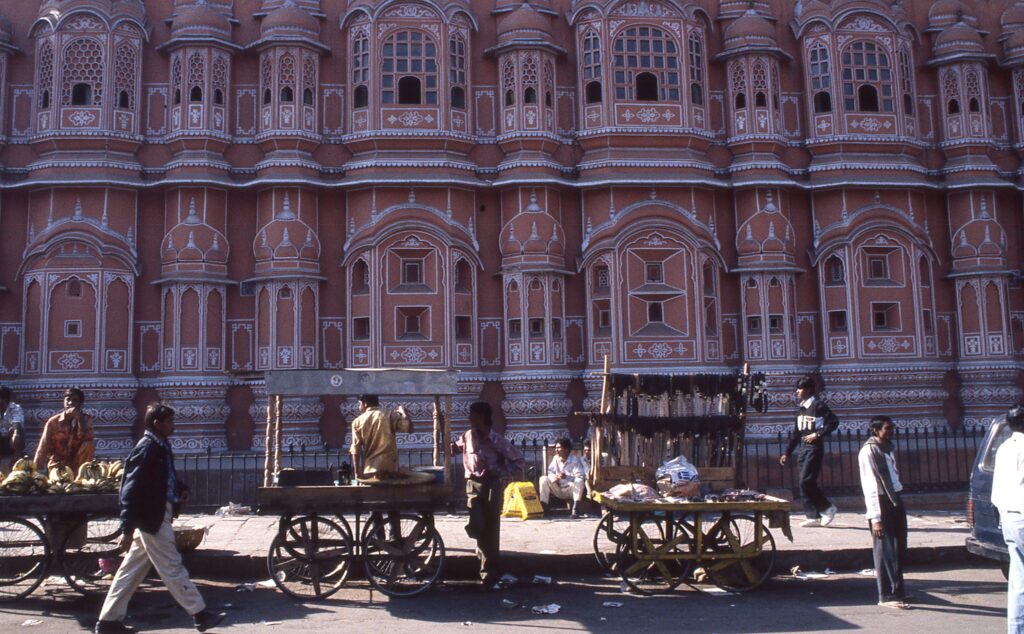
 My Journey Back in Time I took the night bus from Udaipur to Jaipur, leaving behind the city’s shimmering lakes as we rolled onto the dark highway. The journey was filled with sleep, jolts from bumpy roads, and occasional stops at roadside dhabas (restaurants), where truck drivers huddled around fires, sipping hot chai. Wrapped in a blanket, I slept through the night. By 10 a.m., I arrived in Jaipur for the first time on a clear, cold winter morning. Traveling from city to city without plans was the ultimate freedom in experiencing India. I arrived with no reservations or itinerary—just curiosity and a willingness to see where the journey took me. Some places instantly captivate me, drawing me in with their stories, streets, and unspoken magic. Other areas, while beautiful, don’t resonate in the same way. And that’s the beauty of traveling like this—there’s no pressure, no commitments, just the freedom to wander, explore, and linger where it feels right. The only plan is to keep moving until something tells me to stop! Along the way, I encountered numerous people—locals and travelers, mostly backpackers—each adding a narrative to my trip. Some friendships lasted a few hours, others days, and a lifetime. Knowing our paths might never cross again, we ate, laughed, and shared travel stories. Still, this travel, in its raw form—a never-ending flow of movement and connection—is a testament to the friendliness of human interaction. There were no expectations or tearful goodbyes. This is the true essence of travel: not following a checklist or a strict schedule but simply being present and allowing the adventure to unfold as it will. India showed me that the best strategy is sometimes none, even with all its charm and mayhem. I stepped off the bus with a backpack and no real plan except for a vague idea of finding a place called Evergreen, where I planned to stay while in Jaipur. Arriving by Bus Madness started the minute I stepped off the bus in Jaipur. I had grown accustomed to handling conflict and dealing with the locals by now. Touts crowded like bees, yelling over each other and attempting to sell me anything—an autorickshaw ride, a guesthouse, a day trip, anything. It was frightening and unpleasant to deal with early in the morning. But I ignored them! Evergreen was where backpackers camped—at least, that was a suggestion in the Lonely Planet guidebook! I had heard about it from Elise, a Dutch backpacker I had met earlier on my trip. “Come to Jaipur, and I will be staying at Evergreen,” she had advised. “I’ll introduce you to my friends!” But I knew she had probably left by now; weeks had passed since I last saw her. On my way to Evergreen, I spotted Elise as I wandered the labyrinth of streets, avoiding rickshaws and street merchants. She came toward me with effortless elegance. “You made it!” she remarked. “I will see you later at Evergreen.” I recall little about my first visit to Jaipur. Not how one remembers sites or an itinerary. I remember emotions. I remember walking around the Pink City and feeling the sandstone buildings sparkle in the midday sun. Entering the bazaars, the air smells earthy from the streets, mixed with spices, tea, and incense. I remember sitting in Evergreen’s courtyard, surrounded by backpackers, sharing stories of our travels through India. When Elise returned to Evergreen, she introduced me to her friends. I remember meeting GD and Fahim first, then Sunny and Bobby later. While Fahim was quiet and focused, GD was friendly and bursting with stories. We talked about travel, Jaipur, and life itself. Looking back, I remember the feeling—especially with Bobby—but not many specifics of what happened. There was something more profound than words, an unconscious connection that existed. On that journey, I never anticipated more than fleeting friendships; nevertheless, life had other plans, showing me the beauty of unexpected connections. This is My Story of India! An accurate tale of eating, praying, and finding love when you least expected it. What began as an uncertain journey, with no clear plan and only an open heart filled with adventure, led me to something far greater than I could have imagined. India was more than just a place I visited; it became a pivotal moment in my life. At the time, I didn’t realize the significance of the connection. It was effortless and natural—two strangers brought together by fate in a city with two million people (1996).  Something deeper took root in a whirlwind of shared stories, late-night conversations, and spontaneous adventures. Less than a year later, Bobby and I were married, and what started as a chance encounter became the foundation of a lifetime together, a testament to the transformative power of travel. And now, almost 28 years later, we are still together. Through every high and low, every twist and turn, that moment in India remains the beginning of a story that never stopped unfolding. What was once a leap of faith turned into a lifetime of love— Proving that the most unexpected journeys sometimes lead us exactly where we are meant to be. Since that first visit, I have returned to Jaipur several times, but those trips were different. We centered our trips around family, bringing our kids to visit family and sharing glimpses of the city. Those visits evoked feelings of nostalgia and responsibility, a stark contrast to the carefree wandering of my early travels. Neal’s first visit to India at 6 months old. With Neal and Nathan in 2007. Chai drinkers in training! Now, 17 years later, I am back again. This time, it’s different. There are no obligations and no hurried schedules. My husband and I are rediscovering Jaipur together, walking through its bustling streets and taking in its chaos and charm. The city has changed—grown and modernized—but it remains the same in many ways. Author and photo credit: Cristy Note: Cover photo of Hawa Mahal in 1996. Stories from the Road

Serendipity in Jaipur: A Journey Back in Time Read More »

Savoring Jaipur: The Ultimate Rajasthani Thali Experience

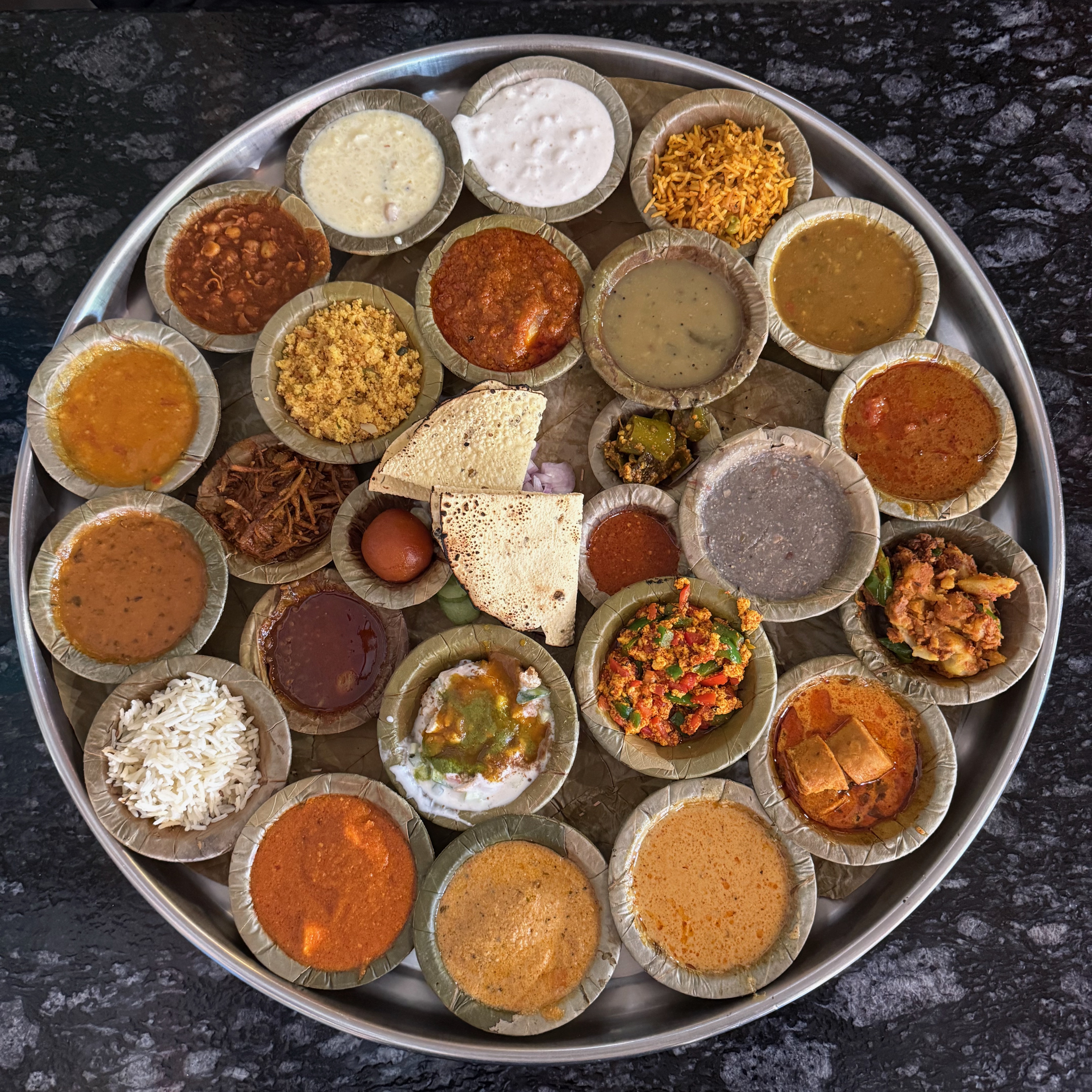
Exploring Jaipur’s Best Thali Experiences Amid Jaipur’s bustling streets and majestic palaces, the thali custom unites the essence of Rajasthan’s rich culture and hospitality. One of my greatest pleasures was discovering the range of thalis available in Jaipur. This gastronomic adventure felt as much like a celebration as a meal, and it was a perfect way to spend time between our temple visits and wandering the city streets. The Hindi word “thali” means “plate.” A thali typically has several tiny bowls of these foods and multiple refills (particularly in Rajasthan), so you never go hungry. It is a balanced meal that exhibits Indian cuisine’s diversity and complexity. Rajasthani thalis showcase the state’s culture and hospitality. This hearty, savory feast features many dishes that reflect the region’s rich and colorful spices. The thali balances salty, spicy, acidic, and sweet flavors. A Rajasthani thali often includes: Dal Baati Churma is the star of the Rajasthani thali. Baatis are baked wheat buns served with dal (lentils) and churma, a sweet, crumbly concoction of crushed baatis, ghee, and sugar. It is a must-try, rich, and filling mix. Gatte ki Sabzi: A spicy curry made from gram flour dumplings. The thali gets a peculiar texture from this savory dish. Ker Sangri is a Rajasthani meal made with wild berries and beans from the arid desert region. This acidic side dish is seasoned with dry seasonings. Laal Maas: Spicy lamb or mutton curry. The red chili-based gravy gives it a rich, smoky flavor. A Rajasthani tradition, but the heat is too much for some! Ghevar is a delicious delicacy of flour, sugar syrup, and ghee, commonly eaten during festivals. Crispy, sweet, and the perfect finale to a delightful dinner. Roti or Paratha: Warm, ghee-drenched rotis or parathas are served in numerous cuisines. Kadhi is a yogurt-based curry with gram flour, turmeric, and other spices. Its refreshing flavor balances the spices’ spiciness. Chutneys and Pickles: Rajasthani thalis typically have a variety of chutneys and pickles, including garlic or mango pickle, for a spicy kick. Rice: Plain or cumin-flavored jeera rice provides a gentle base for spicy foods. Traditional Rajasthani thalis are served on massive plates, and the range of flavors—from spicy to sweet—makes every taste unique. They are also a meal that celebrates Rajasthan’s rich flavors and traditions. Constant refills and large dishes show the state’s hospitality. Sri Motu Ram Prasadam The trip started at Sri Motu Ram Prasadam, which offered Jaipur’s largest and most extravagant thali. Presented on a big, shiny metal plate, the thali appeared as a never-ending collection of bowls, each containing a unique treasure of Rajasthani cuisine. If you order the biggest thali on the menu, call and inform them beforehand.  It takes 45 minutes to prepare. And this is not the biggest thali; you need at least 10 people in your group for the biggest thali! Here, we had the classic dal baati churma—piping hot baatis with a dab of ghee accompanied by thick dal and a sweet, crumbly churma. With its subtle mix of spices, the chutney gave the gatte ki sabzi a spicy kick. With each bite, the soft, warm roti—glued with ghee—melted on my lips and guaranteed never-ending refills. This thali was more than simply food; it was a sensory extravaganza honoring the kind hospitality of Rajasthan. Mohan Mahal at Leela Palace The Mohan Mahal transformed the thali into a royal occasion, offering a more refined experience. Here, the grandeur of the surroundings matched the richness of the cuisine. The five-star version of a Rajasthani thali, albeit with a sophisticated touch, presented a blend of traditional cuisine. While the gatte ki sabzi was served in intricate arrangements, highlighting the chef’s culinary expertise, dishes like dal baati churma were garnished beautifully. The thali included the always-famous Dhania Patta Paneer and Laal Maas, a hot red meat dish. This thali combined Rajasthan’s tastes with a grace suited for its opulent surroundings. Make sure you make a reservation. A Vegetarian Thali A Non-Vegetarian Thali The non-vegetarian thali is similar to the vegetarian thali except for additional dishes like chicken and mutton. Inside the Mohan Mahal More Thalis But the street markets of Jaipur presented a different sort of thali—humble yet incredibly real. Food sellers presented thalis at little booths in the energetic anarchy of the bazaars, each capturing the local taste and friendliness of the people. Despite lacking the grandeur of fine dining restaurants, these establishments embodied the city’s essence. A basic dal, sabzi, and a couple of rotis accompanied by a side of spicy chutneys and a spoonful of kadhi were enough to satiate the heart and the appetite. Sitting on little stools surrounded by the bustle of Jaipur at these times, I developed a close relationship with Rajasthani cuisine and culture. Still, the most intimate and valuable thali experience occurred at a home-cooked dinner in a neighborhood kitchen. They served this thali on modest dining tables, not at upscale hotels or restaurants. Though simple, the dishes exuded love and attention. The sabzi—whether a seasonal vegetable or a spiced aloo-gobi—was fresh and tasty; the rotis were soft, and the dal was rich and consoling. Made from scratch and shared with one of our dear friends. This thali reminded me that Rajasthani cuisine is more about tradition, love, and hospitality than mere ingredients. The Thali functions as a microcosm of Rajasthan itself. This encounter honors the state’s richness in terms of its history and culture as much as its cuisine. Every thali, whether from the grandeur of a temple kitchen or the coziness of a neighborhood house, tells a story. The variety of tastes reflects the soul, from the spicy laal maas to the creamy dal baati churma. Thali is my favorite type of Indian food because it allows me to enjoy many different tastes simultaneously. It is served in a range of little bowls, each loaded with a different dish. You get to taste a bit of everything—savory curries, spicy chutneys, relaxing dals, crunchy breads, and sweet treats—all in perfect

Savoring Jaipur: The Ultimate Rajasthani Thali Experience Read More »

Daily Turmoil: The Unchanging, Timeless Chaos of Jaipur

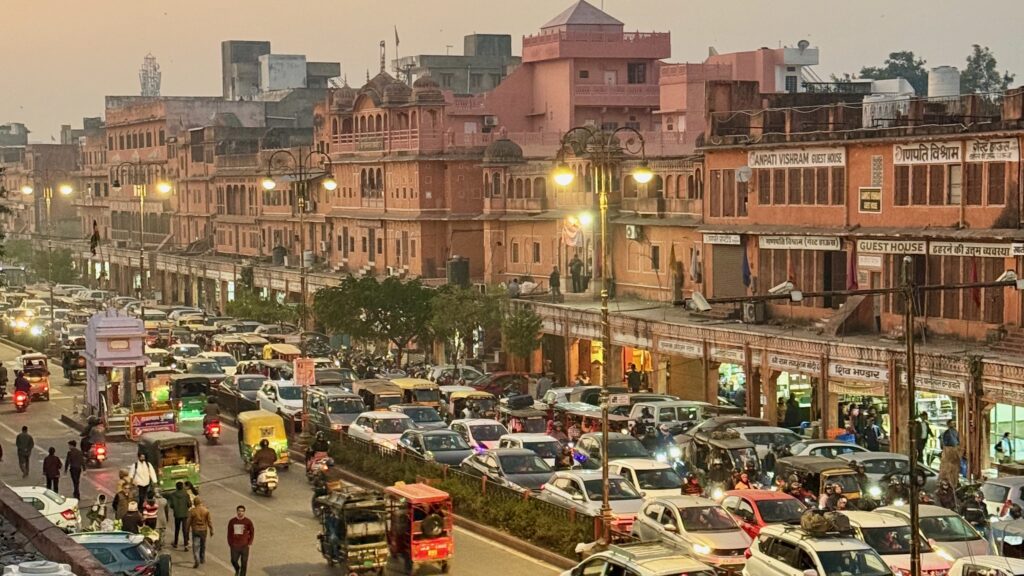
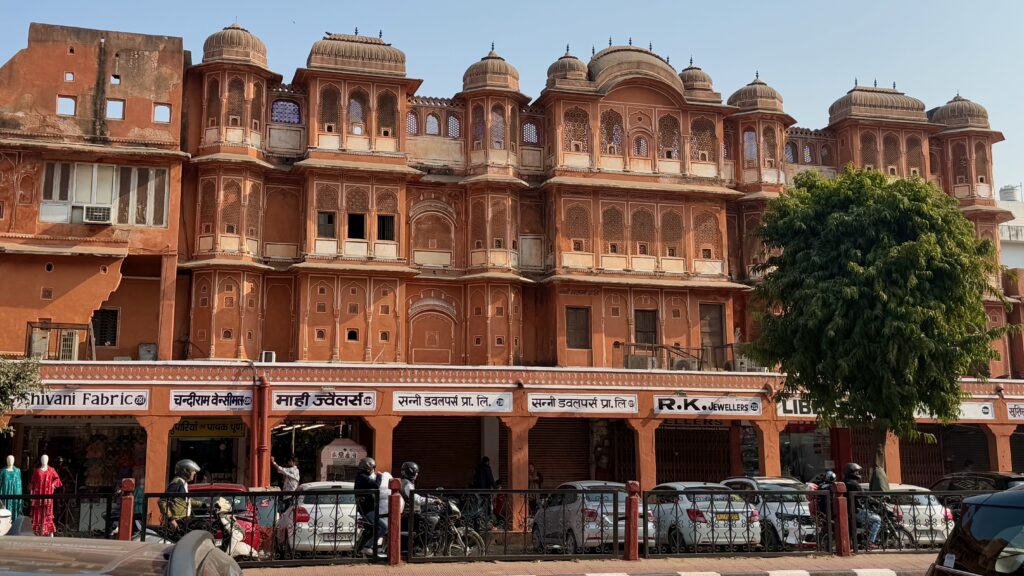
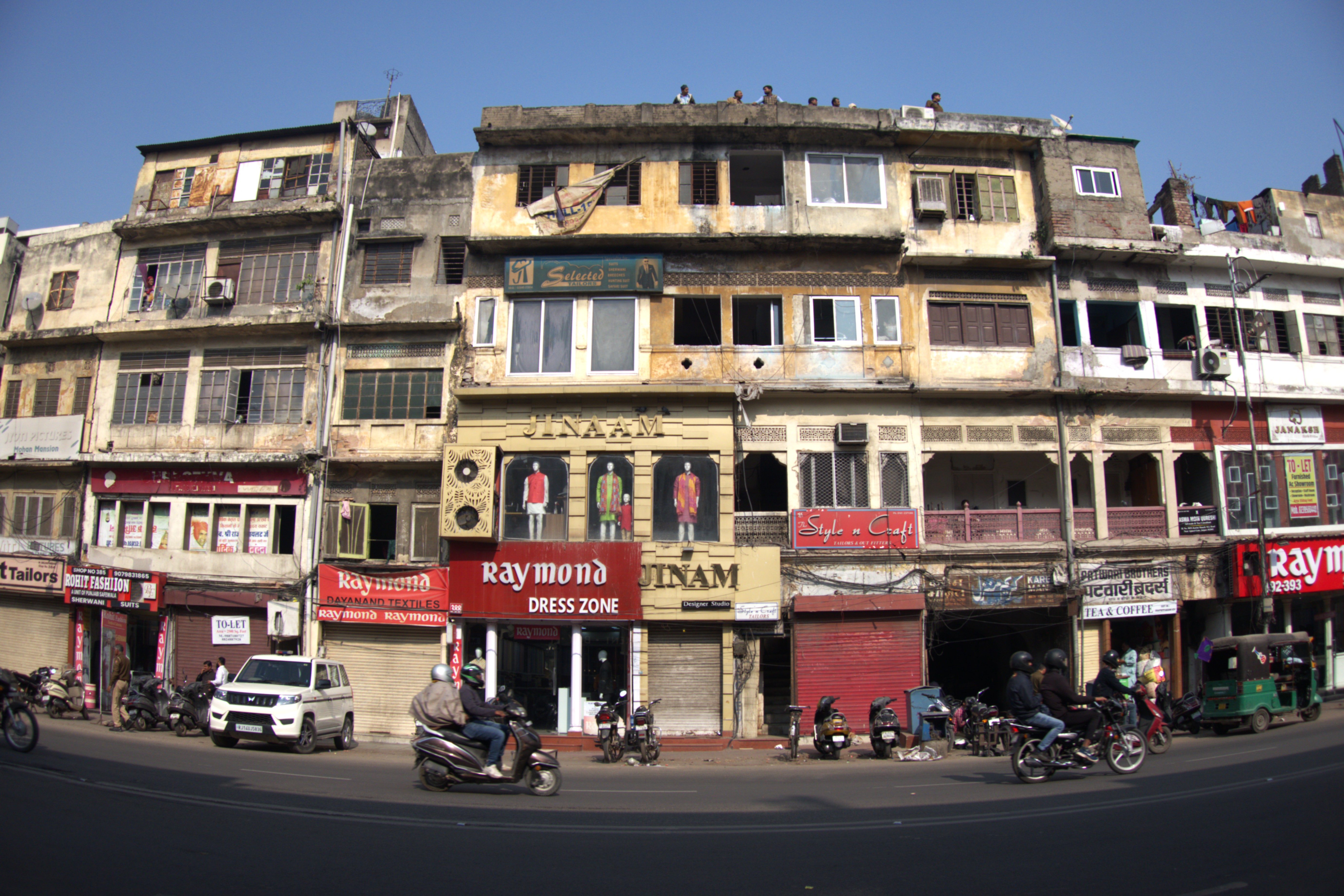
Despite Jaipur’s advancements, luxury malls, and modern conveniences, Jaipur still clung to its age-old chaos. Crossing the Street Crossing the street in Jaipur is not for the faint-hearted. There are no actual rules—just instincts and divine intervention. It took me a week to acclimate, but having my husband as a shield also worked. There were no actual pedestrian crossings—just an unspoken rule: you had to walk confidently, pray, and hope that the sea of motorbikes, rickshaws, and cows would somehow see you coming. And somehow—it does. Most of the time! It felt like a survival game, one where hesitation could mean defeat. Riding an Uber, a Taxi, and an Autorickshaw Then came riding the Uber—a task that should have been simple but turned into an unpredictable adventure. Some drivers abruptly canceled their rides, others refused to switch on the air conditioning, and some became so chatty that they resembled tour guides rather than drivers. “You are from America?” one asked me excitedly. “Why are you here? America is better!” And let me tell you—they are the most maniacal drivers! That is a story I will save for another time. Dealing with the Locals: Time is an Illusion If I quickly learned one thing, it was that time in Jaipur operates on its own rhythm—it is flexible, unpredictable, and utterly detached from any fixed schedule. Someone tells you they’ll be there in five minutes? That could mean twenty. Maybe an hour. Maybe never. And if you call to check, you’ll hear the ever-reassuring, “I’m just reaching,” which could mean they haven’t even left yet. They say yes when they mean no, they say no problem when there’s a problem, and they tell you what you want to hear, even if it isn’t true—but it’s not a lie, either. It’s just the Indian way! Our Uber driver said he knew exactly where our hotel was, so we trusted him. Thirty minutes later, we were in a random alley with no hotel. “Are we close?” I asked. He nodded enthusiastically, “Yes, yes, very close!”  We drove for another forty minutes. Despite their constant hurry, they consistently arrive late. You eventually learn to adapt to changing circumstances. You stop expecting things to be on time, waiting for straightforward answers, and surrender! Negotiating with a rickshaw driver or a vendor is an art form—a delicate dance where both sides pretend to be entirely baffled by the other’s price. ‘500 rupees? Too much!’ you say, shaking your head. They scoffs. “Very far, madam! Special price for you: 450!” Eventually, you settle for something in between, knowing that a local would’ve paid half. Strangely, that’s part of India’s charm—the unpredictability, the contradictions, the way everything feels like it’s on the verge of collapse, but somehow, miraculously, it all works out. India doesn’t adapt to you, you adapt to India. You stop expecting logic, stop fighting the chaos, and just let it sweep you up. And that’s when India truly reveals itself—not as a city to be controlled but as an experience to be embraced. Either you love it, or you don’t! There’s no in-between! Jaipur is a city where you lose yourself in temples, stuff yourself with thalis, risk your life crossing the street, and accept that time, logic, and reason are merely suggestions. As we left the city, I realized Jaipur hadn’t changed much. But maybe, just maybe, it had changed me. Author and photo credit: Cristy Stories from the Road Every journey has another story waiting to be discovered. Explore more experiences, cultures, wildlife, and people from around the world. EXPLORE ALL STORIES

Daily Turmoil: The Unchanging, Timeless Chaos of Jaipur Read More »

Riding Through Time: A Camel Safari in Jaisalmer

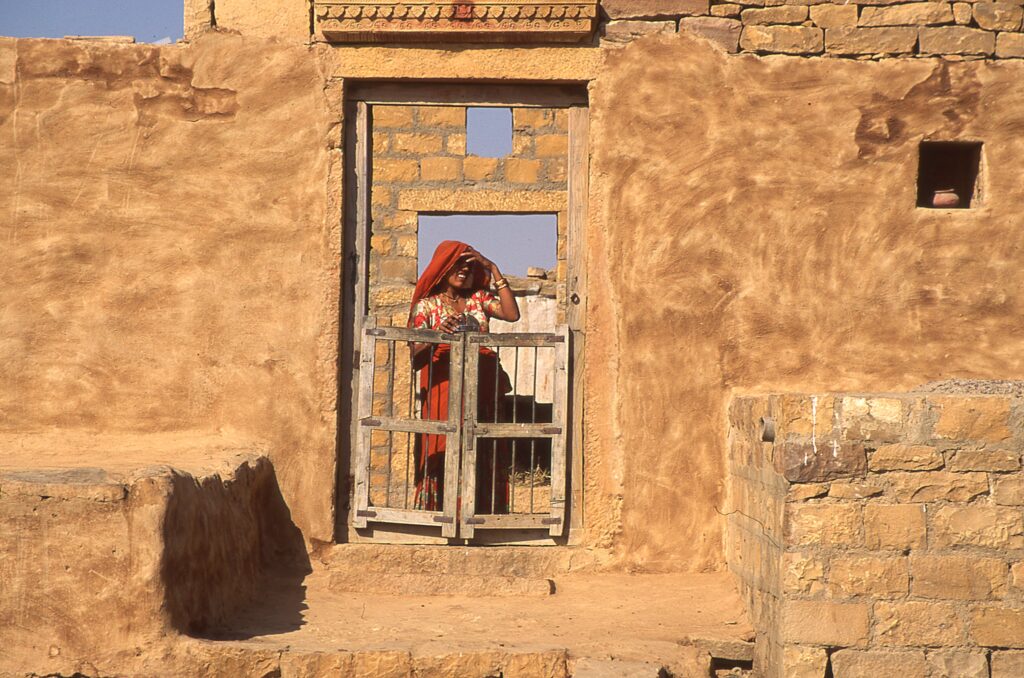
The Golden City Rajasthan is a land of contrasts, with each city uniquely expressing the Thar Desert’s vast and changing landscape. My journey began in Jaisalmer, the Golden City, with sandstone towers rising against a gorgeous azure sky. The appeal of camel camping had built a beautiful picture of a quiet night under the desert sky. The truth was far less idyllic. The Lonely Planet Guidebook describes Jaisalmer as a golden sand mirage, with an ancient fortification gleaming in the desert light. For any visitor to Rajasthan, a camel ride in the vast Thar Desert and a night under the stars seemed like must-see events. So, despite my reservations, I signed up for only a one-night camel camping trip, believing it would be an adventure worth having. Camel Camping Trip In the late afternoon, our tiny group went from the city’s edge, wobbling atop a camel caravan. Jay and Kate, American travelers touring India, were among the group. We connected over mutual misery and hilarity as our camels stubbornly refused to be steered. We shared travel experiences over steaming cups of chai while our guides cooked a simple lunch of chapatis and dal. Before us spread an unending desert, interrupted by parched plants and rippling dunes. My camel muttered with each step as if it represented the land’s stubbornness. He smelled like fermented hay and an old, damp carpet, snorting and spewing foul odors. The steady, repetitive rocking initially felt meditative, but my legs yearned for a break after an hour! Camel Break! We stopped on a dune just as the sun dipped below the horizon, illuminating the desert in rich golden orange. Our experienced desert traveler guides started a fire and prepared tea before cooking a basic supper of chapatis and dal. The silence was profound—there were no honking automobiles, no city buzz, just the whisper of wind moving grains of sand. Then, the temperature plummeted quickly. The arid night ate up every ounce of the day’s warmth. Wrapped in a small blanket, I huddled near the fire, watching steam rise from our food and fill the cool night air. Above us, the endless sky twinkled with stars brighter than I’d ever seen. However, the beauty of the event was overwhelmed by the bitter cold. I huddled inside my sleeping bag, which was insufficient for the desert chill. Sleep remained elusive, robbed by the cold air and the odd guttural sigh of adjacent camels. The morning came as a great respite. With stiff limbs, I gripped a hot cup of chai, letting the first rays of sunlight thaw my cold bones. The encounter had been simultaneously raw, beautiful, and uncomfortable. When I returned to town, I deeply respected the desert’s harsh beauty and was unmistakably grateful for the comfort of a comfortable bed. The others decided to spend another night. On the other hand, I learned a valuable lesson. Next time, I’d view the desert from a rooftop patio, chai in hand, and no camels in sight.   After leaving Jaisalmer, I would meet Jay and Kate through Rajasthan, visiting Udaipur and Jaipur. By the time we left, I felt our friendship would endure beyond this trip. Jay and Kate flew to California a year later to attend my wedding. As we reminisced about our trip through Rajasthan, we realized that travel uniquely fosters profound and lasting friendships. What began as a casual encounter on a camel ride in Jaisalmer had evolved into a lifelong bond. Author and photo credit: CristyNOTE: All photos were taken on a Canon A2 with Ilford slide film. Stories from the Road Every journey has another story waiting to be discovered. Explore more experiences, cultures, wildlife, and people from around the world. EXPLORE ALL STORIES

Riding Through Time: A Camel Safari in Jaisalmer Read More »

Raghunath Haveli: A Tale of Restoration and History

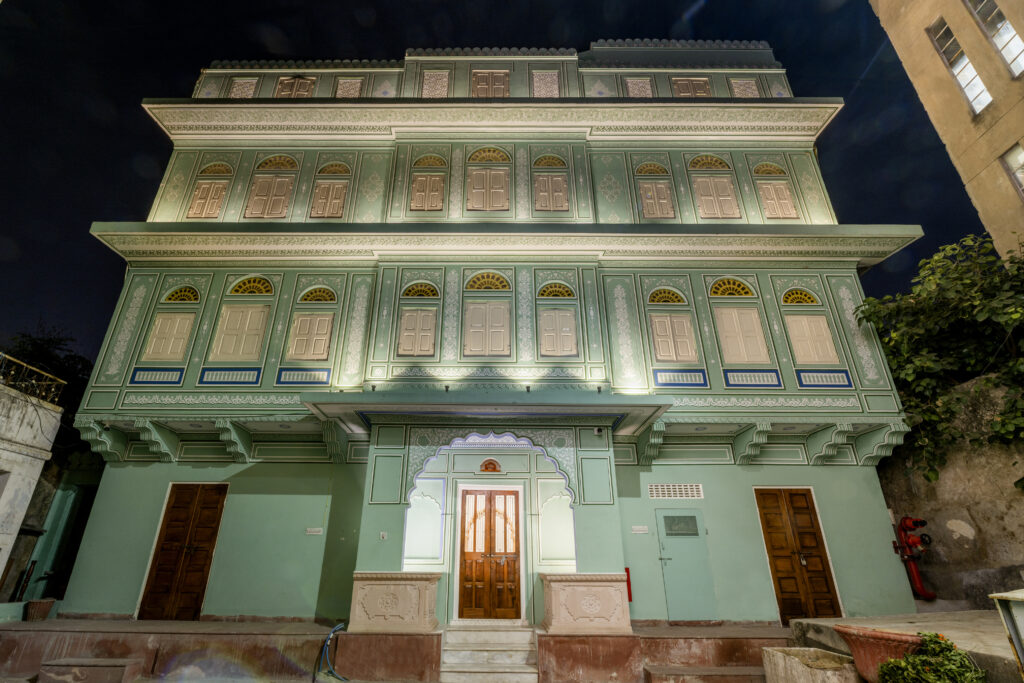
Tucked away in the vibrant heart of Jaipur lies Raghunath Haveli, a hidden jewel that whispers tales of heritage and resilience. With its timeworn walls and intricate jaali windows, this majestic haveli once reflected a shadow of its glorious past. Today, it stands proudly—a symbol of history lovingly restored, breathing life into a bygone era. The beginning of Raghunath Haveli’s narrative is a vision. Our friend Madho spotted a sanctuary poised for revival rather than a crumbling building. Driven by his love and relentless dedication to preserving Jaipur’s architectural legacy, he started a project to rebuild the haveli one brick at a time. A Family Affair It was not a solo endeavor. His wife, Alka, was the hub of the house, and her unparalleled kindness brought the kitchen alive with the smells of regional spices and family recipes. Their two sons, Mohit and Ram, bursting with young energy and commitment, assumed control of daily operations. Every visitor that passed the grand entrance felt like a dear friend. And they made sure of it. Inside the Haveli Walking inside Raghunath Haveli, one feels they have entered a different realm. The warm colors of Rajasthan adorn the walls, while the furniture tells tales of the life once lived within its boundaries. The central courtyard, drenched in soft sunlight, calls you to take a seat and sip tea while the sounds of Jaipur’s vibrant streets fade in the background. But Raghunath Haveli is a living narrative, not just a building. Every space is a tribute to the effort put into it, reflecting the dreams of the person who repaired it and their family. Though they go as part of the presented narrative, visitors arrive as tourists drawn by the idea of staying in a haveli. A Room with a View Raghunath Haveli is a haven for travelers seeking peace and serenity amidst the vibrant chaos of Jaipur. It offers a tranquil retreat with stunning views and timeless charm. In addition to providing comfort, it fosters a connection with the city, its customs, and the family that has dedicated their lives to creating this stunning Haveli. Here is a special room with a view of the Tiger Fort! Raghunath Haveli is a chapter in your path where the past meets the present. Every moment vibrates with the soul of Jaipur. Come for the adventure, stay for the friendliness, and go with memories imprinted in your heart. Mi Bella Mondo highly recommends Raghunath Haveli! Visit their website for more information. Please don’t hesitate to contact them directly. They are more than happy to help with reservations, provide details on availability, and help you plan the perfect stay. Whether you’re looking for a relaxing getaway or a full exploration of Rajasthan, they’re here to ensure your seamless and unforgettable experience. If you’re considering traveling to India, specifically to Rajasthan, we can create a personalized travel experience tailored just for you. Forget the hassle of big, impersonal travel companies—our approach is more intimate and customized to your preferences. We will help you plan the perfect itinerary, and if you wish, a local guide can accompany you throughout your journey, ensuring you experience Rajasthan’s rich culture and history. Book now, and let us help you discover the magic of Rajasthan without the stress of dealing with travel agencies. Author and photo credit: Cristy and Raghunath Haveli Stories from the Road Every journey has another story waiting to be discovered. Explore more experiences, cultures, wildlife, and people from around the world. EXPLORE ALL STORIES

Raghunath Haveli: A Tale of Restoration and History Read More »

Health Safety

Health Safety Health Safety in India: A Practical Guide for Travelers India offers diverse experiences, but ensuring your health and well-being during your trip is crucial. Here’s a comprehensive guide to staying healthy in India. Water and Food Safety   Water Safety Drink Bottled Water: Always choose sealed, branded bottled water. Popular brands like Bisleri, Kinley, or Aquafina are reliable. Avoid Tap Water: Tap water should not be consumed unless it is filtered or boiled. Be Careful with Ice: In places where water quality is questionable, avoid consuming drinks with ice. Food Safety Street Food: Enjoy India’s vibrant street food with caution. Choose visibly clean, busy vendors (indicating fresh food and quick turnover). Cooked Food: Opt for freshly cooked, steaming hot food rather than pre-prepared dishes. Fruits and Vegetables: Eat fruit that can be peeled (e.g., bananas, oranges), and avoid raw salads in places where hygiene standards are uncertain. Dairy Products: Ensure milk-based foods like lassi or yogurt are made with pasteurized milk. Common Health Risks   Traveler’s Diarrhea This is the most common ailment among travelers to India. Prevention: Stick to safe drinking water and avoid risky food. Treatment: Carry oral rehydration salts (ORS) to prevent dehydration and consult a doctor if symptoms persist. Mosquito-Borne Diseases India is home to diseases like malaria, dengue, and chikungunya. Prevention: Use mosquito repellents with DEET or picaridin. Wear long-sleeved clothing and pants in the evening. Stay in accommodations with screens or air conditioning. Use mosquito nets, especially in rural or jungle areas. Vaccines and Prophylaxis: Consult a healthcare professional about malaria prophylaxis before traveling. Air Pollution Major cities like Delhi and Kolkata may have poor air quality, particularly during winter. Prevention: Check the AQI (Air Quality Index) daily and avoid outdoor activities during high pollution levels. Wear an N95 or N99 mask if pollution is severe. Heat and Sun-Related Risks India can get extremely hot, especially during the summer months. Prevention: Stay hydrated and avoid prolonged exposure to the sun. Wear a hat, sunglasses, and sunscreen with SPF 30 or higher. Plan outdoor activities early in the morning or late afternoon to avoid the peak heat. Rabies India has a high prevalence of stray animals, particularly dogs. Prevention: Avoid petting or feeding stray animals. Treatment: If bitten or scratched, wash the wound thoroughly with soap and water and seek medical attention immediately for a post-exposure rabies vaccine. Vaccinations and Preventive Healthcare Consult your doctor or a travel clinic at least 4–6 weeks before your trip to India to receive necessary vaccinations. Recommended vaccines include: Hepatitis A and B Typhoid Tetanus and Diphtheria Rabies (for extended stays or those visiting remote areas) Japanese Encephalitis (if visiting rural areas during the monsoon) Yellow Fever (required only if you’re from a yellow fever-endemic country). Personal Hygiene Carry hand sanitizer and use it often, especially before eating. Use toilet paper or tissues, as they may not always be available in public restrooms. Pack wet wipes for cleaning hands or surfaces. Medical Facilities and Emergency Care Pharmacies are easily accessible in most cities and towns. Many medications are available over the counter, but ensure you purchase them from reputable stores. Hospitals: India has world-class hospitals in major cities like Delhi, Mumbai, and Bengaluru. Look for private hospitals such as Apollo, Fortis, or Max Healthcare for quality care. Travel Insurance: Ensure that comprehensive travel insurance covers medical emergencies and evacuation. COVID-19 and Infectious Diseases COVID-19 Precautions: While the situation has eased, safety protocols, such as wearing masks in crowded areas, should be followed. Tuberculosis (TB): TB is common in India. Avoid prolonged exposure to crowded, poorly ventilated areas. Mental Health and Well-Being India’s sensory-rich environment can be overwhelming for some travelers. Take breaks from crowded areas or busy itineraries. Practice meditation, yoga, or mindfulness for relaxation. Emergency Numbers Medical Emergencies: 108 Police: 112 Ambulance Services: 102 Final Tips for Health Safety Pack a basic first-aid kit with essentials like pain relievers, antiseptics, bandages, and prescribed medications. Avoid overly adventurous activities (like eating extremely spicy or exotic dishes) early in your trip to allow your body time to adjust. Stay alert to your body’s needs—whether hydration, rest, or recovery. Taking these precautions allows you to enjoy India’s beauty and cultural richness while staying safe and healthy! Stories from the Road Every journey has another story waiting to be discovered. Explore more experiences, cultures, wildlife, and people from around the world. EXPLORE ALL STORIES

Health Safety Read More »

Health Insurance

Health Insurance Health Insurance When traveling to India, it is recommended to obtain comprehensive health insurance covering all potential medical expenses incurred abroad. The healthcare system in India can vary in quality, and medical costs can be significant, particularly for foreign nationals. Having reliable health insurance is essential to ensure access to timely and adequate medical care without the added burden of exorbitant expenses. India, with its diverse landscapes and vibrant culture, offers many experiences for travelers. However, it is crucial to be prepared for any unforeseen health-related circumstances. The risk of illness or accidents can never be eliminated, and having valid health insurance provides peace of mind during your journey. Medical emergencies can occur anytime, and without appropriate insurance coverage, one may face challenges in accessing necessary treatments. In India, private hospitals often offer excellent medical care, but the costs can be high. Health insurance provides financial protection and ensures you receive the required medical attention without worrying about substantial medical bills or being denied treatment due to insufficient funds. Additionally, in severe cases where advanced medical treatment is necessary, medical evacuation to a nearby country may be required. This can incur substantial expenses. However, with comprehensive health insurance, such as international coverage, you can rest assured that the costs associated with medical evacuation and repatriation will be taken care of, allowing you to focus on your recovery. Before You Travel Review and understand the coverage provided by your health insurance policy. Ensure that it includes emergency medical care, hospitalization, medications, and potential medical evacuation. Familiarize yourself with the reimbursement procedures and the insurance provider’s contact details should you require assistance during your trip. For more information about travel insurance, read our travel tips, Travel Insurance 101.  

Health Insurance Read More »

Travel By Air in India

Travel By Air International Airports India is home to numerous international airports, serving as gateways to the country and facilitating global connectivity. These airports play a crucial role in the nation’s economy, tourism, and transportation. Below is an overview of some of the major international airports in India: Indira Gandhi International Airport (IGIA), Delhi (DEL) The busiest airport in India and South Asia, IGIA is a significant hub for domestic and international travel. It boasts world-class facilities, including Terminal 3, one of the largest passenger terminals in the world. The airport’s passenger capacity is over 60 million annually. Chhatrapati Shivaji Maharaj International Airport (CSMIA), Mumbai (BOM), Maharashtra The second busiest airport in India, serving as a hub for major airlines and connecting Mumbai, India’s financial capital, with the world. Terminal 2 is renowned for its cutting-edge design and art installations showcasing Indian culture. Passenger Traffic: Approximately 50 million annually. Kempegowda International Airport, Bengaluru (BLR), Karnataka The primary airport for the IT capital of India caters to business travelers and leisure passengers alike. It is known for its green initiatives, including solar-powered operations. Passenger Capacity: Over 33 million annually. Chennai International Airport (MAA), Tamil Nadu One of the oldest airports in India, it serves as a central hub for travelers to and from South India. It is undergoing upgrades to handle higher passenger capacity and enhance its infrastructure. Passenger Traffic: It handles approximately 22 million passengers annually. Netaji Subhas Chandra Bose International Airport, Kolkata (CCU), West Bengal A key airport for travelers to eastern and northeastern India, named after the famous Indian freedom fighter. Expanded terminal facilities to accommodate increasing passenger loads. Passenger Capacity: Over 22 million annually. Rajiv Gandhi International Airport, Hyderabad (HYD), Telangana It is recognized for its efficient operations and passenger-friendly infrastructure, serving as a southern and central India hub. Regularly ranked among the best airports in its category for service quality. Passenger Traffic: Approximately 21 million annually. Cochin International Airport (COK), Kerala The first airport in the world to run entirely on solar power. It is a gateway to Kerala, India’s tourist hotspot known as “God’s Own Country.” Passenger Traffic: Handles over 10 million annually. Goa International Airport (GOI) Primarily catering to leisure travelers visiting Goa’s beaches and cultural landmarks. New Addition: Mopa International Airport, also known as Manohar International Airport, complements operations in Goa and handles additional traffic. Passenger traffic is around 8 million annually. Sardar Vallabhbhai Patel International Airport, Ahmedabad (AMD), Gujarat A key gateway to Gujarat, facilitating business and tourist travel to cities like Ahmedabad and Gandhinagar. Passenger Traffic: Approximately 11 million passengers are handled annually. Jaipur International Airport (JAI), Rajasthan It is a gateway for international tourists visiting Rajasthan, known for its forts, palaces, and heritage sites. Though it handles international traffic, many domestic flights cater to the state’s booming tourism industry. Major Domestic Airports Across India   Classification of Domestic Airports Indian domestic airports are classified based on their location, size, and traffic: Tier-1 Airports: Located in major metropolitan areas and state capitals. Examples: Pune, Lucknow, and Thiruvananthapuram airports. Tier-2 and Tier-3 Airports: Smaller airports connecting non-metropolitan cities, such as Gorakhpur, Surat, and Madurai airports. Kempegowda International Airport, Bengaluru While primarily serving as an international hub, its domestic terminal handles significant passenger traffic. Pune Airport (PNQ), Maharashtra Located in Lohegaon, it serves one of India’s fastest-growing cities, linking major domestic destinations. Lucknow’s Chaudhary Charan Singh Airport (LKO), Uttar Pradesh A central hub for air travel in northern India, serving the state capital and surrounding regions. Chandigarh International Airport (IXC), Punjab and Haryana Serves as the primary airport for Chandigarh, Panchkula, and Mohali, handling domestic connections to key Indian cities. Trivandrum International Airport (TRV), Kerala Besides international flights, it links Kerala’s capital to major Indian cities like Mumbai and Delhi. Emerging Domestic Airports As part of India’s regional connectivity program under the UDAN scheme (Ude Desh ka Aam Nagrik), several new domestic airports have been developed to connect underserved and remote regions. Notable airports include: Durgapur Airport (RDP), West Bengal: Boosting industrial and academic connections. Bareilly Airport (BEK), Uttar Pradesh: This connects smaller cities to hubs like Delhi and Mumbai. Darbhanga Airport (DBR), Bihar: A significant addition to the north Bihar region, helping meet passenger demand. Key Airports by Zones North India: Amritsar (ATQ), Varanasi (VNS), Dehradun (DED), and Srinagar (SXR). South India: Coimbatore (CJB), Mangalore (IXE), Vijayawada (VGA), and Vizag (VTZ). West India: Udaipur (UDR), Rajkot (RAJ), Surat (STV), Aurangabad (IXU). East and Northeast India: Bagdogra (IXB), Silchar (IXS), Imphal (IMF), Dimapur (DMU).   Back to the Timeless India. 

Travel By Air in India Read More »

Travel By Rail India

Travel By Rail Train travel in India is one of the most extensive, affordable, and culturally enriching ways to explore the country. The Indian Railways, operated by the Ministry of Railways, is one of the largest railway networks in the world and plays a pivotal role in the nation’s connectivity, economy, and daily life. Here’s an in-depth look into train travel in India: Indian Railways: A Vast Network Scale: Over 67,850 kilometers of track, connecting more than 7,300 stations. Daily Operations: Approximately 13,000 passenger trains operate daily, carrying over 23 million passengers. Geographic Coverage: The network spans from the Himalayan foothills in the north to the southern tip of Kanyakumari and from the deserts of Rajasthan in the west to the lush forests of the northeast. Types of Train Services Indian Railways offers diverse train services to cater to different budgets and travel preferences: Luxury Trains Designed for high-end travel experiences, often focusing on historical and scenic tourism. Notable trains: Palace on Wheels: A royal experience through Rajasthan. Maharajas’ Express: A luxurious train offering heritage routes. Deccan Odyssey: Showcasing the beauty of the Deccan Plateau. Premium Trains Rajdhani Express: High-speed, fully air-conditioned trains connecting major cities to Delhi. Shatabdi Express: Short-distance, high-speed intercity travel. Duronto Express: Non-stop services between major cities, known for efficiency. Vande Bharat Express: India’s first semi-high-speed train, offering modern features and speed. Superfast and Mail/Express Trains Widely used for medium- and long-distance travel with fewer stops. Examples: Kerala Express, Tamil Nadu Express. Passenger and Local Trains Serve commuters traveling short distances, including suburban areas and small towns. Examples: Mumbai Local Trains, Chennai Suburban Railway. Regional Trains Connect smaller towns and rural areas to more significant railway hubs, such as Jan Shatabdi and Intercity trains. Classes of Travel Indian trains offer multiple classes to suit various preferences: First Class AC (1A): Premium, spacious cabins with privacy and air-conditioning. Second AC (2A): Air-conditioned compartments with curtained bunks. Third AC (3A): Air-conditioned, affordable berths in an open-plan layout. Sleeper Class (SL): Non-air-conditioned berths for budget travelers. General Class (GS): Unreserved seating, extremely economical but often overcrowded. Iconic Train Journeys Some train routes are famous for their scenic beauty and unique experiences: Darjeeling Himalayan Railway (Toy Train): A UNESCO World Heritage Site offering spectacular views of the Eastern Himalayas. Konkan Railway: Travels through the picturesque Western Ghats, coastal regions, and tunnels. Nilgiri Mountain Railway: Another UNESCO World Heritage Site known for steep climbs and stunning vistas in Tamil Nadu. Modernization and Advances Indian Railways has seen significant advancements to improve passenger experience: High-Speed Rail (Bullet Trains): The Mumbai-Ahmedabad corridor is set to be India’s first bullet train route. Electrification: Most of the network is transitioning from diesel to electric traction for sustainability. Smart Coaches: Equipped with GPS, CCTV, and bio-toilets. Onboard Services: E-catering, Wi-Fi, and improved hygiene standards. Benefits of Train Travel in India Affordable: Ideal for budget-conscious travelers. Cultural Immersion: Interact with fellow travelers, enjoy local snacks, and witness the diversity of India. Scenic: Many routes provide breathtaking views of mountains, forests, rivers, and fields. Challenges Overcrowding, particularly in general compartments and popular routes. Punctuality Issues: Delays are standard on some routes, especially during extreme weather conditions. Infrastructure: While modernization is underway, some stations and trains still face cleanliness and maintenance issues. Tips for Train Travel in India Book tickets well in advance, especially during festivals or peak travel seasons. Travel light for convenience in crowded trains. Keep essentials like water, food, and entertainment handy during long journeys. Opt for AC coaches for comfort in extreme weather conditions. Ticket Booking Online Booking: Tickets can be reserved on the official IRCTC website or mobile app. Tatkal Scheme: Last-minute ticket bookings are available under this system. Season Passes: Frequent travelers use season tickets for local and suburban trains. Train travel in India offers an unparalleled experience, blending affordability, connectivity, and adventure. Whether you’re a local commuter or a tourist savoring India’s rich heritage, the railway system offers a unique insight into the nation’s essence. As modernization continues, train travel in India is set to become even more efficient, comfortable, and enjoyable.   Back to the Timeless India. 

Travel By Rail India Read More »

Scroll to Top